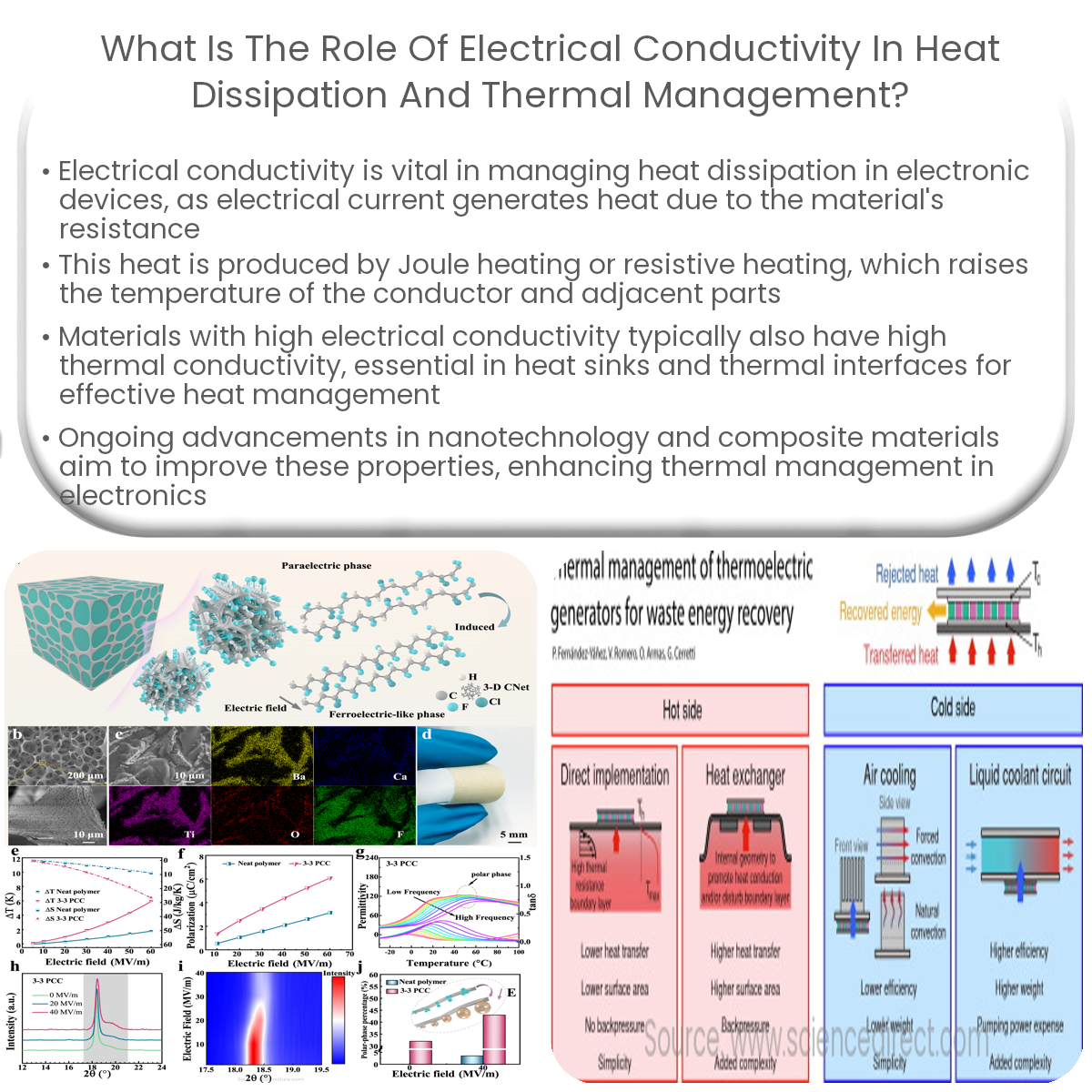
Electrical conductivity affects heat dissipation, ensuring optimal performance and longer lifespan of electronic components through thermal management.
Role of Electrical Conductivity in Heat Dissipation and Thermal Management
Electrical conductivity plays a crucial role in heat dissipation and thermal management of electronic devices and systems. As electrical current flows through a conductor, it generates heat due to the electrical resistance of the material. Efficient heat dissipation is necessary to prevent overheating, ensure optimal performance, and extend the lifespan of electronic components.
Heat Generation in Electronic Components
When an electrical current passes through a conductor, some of the electrical energy is converted into heat energy due to the collisions between electrons and the conductor’s atoms. This process, known as Joule heating or resistive heating, increases the temperature of the conductor and surrounding components.
Thermal Conductivity and Electrical Conductivity
Thermal conductivity and electrical conductivity are closely related properties of materials. Materials with high electrical conductivity usually have high thermal conductivity, as both properties depend on the ability of electrons to move freely within the material. Metals, for example, are good conductors of both electricity and heat due to their free electrons.
Heat Dissipation and Thermal Management
Efficient heat dissipation is vital for the optimal performance and reliability of electronic devices. Excess heat can cause components to degrade, malfunction, or fail entirely. To manage heat effectively, engineers use materials with high electrical and thermal conductivities in critical areas, such as heat sinks and thermal interfaces.
- Heat sinks: These are specially designed components made from materials with high thermal conductivity, like copper or aluminum. Heat sinks absorb and dissipate heat generated by electronic components, like processors and power transistors, to maintain a safe operating temperature.
- Thermal interfaces: Thermal interface materials (TIMs), such as thermal paste, pads, or adhesives, are used to fill microscopic gaps between the heat-generating component and the heat sink. TIMs improve the heat transfer efficiency by reducing the thermal resistance at the interface.
Improving Electrical Conductivity for Enhanced Thermal Management
Engineers continually strive to develop new materials and techniques to improve the electrical and thermal conductivity of electronic components. Advancements in nanotechnology and composite materials have led to the creation of materials with enhanced thermal and electrical properties, further improving heat dissipation and thermal management in electronics.