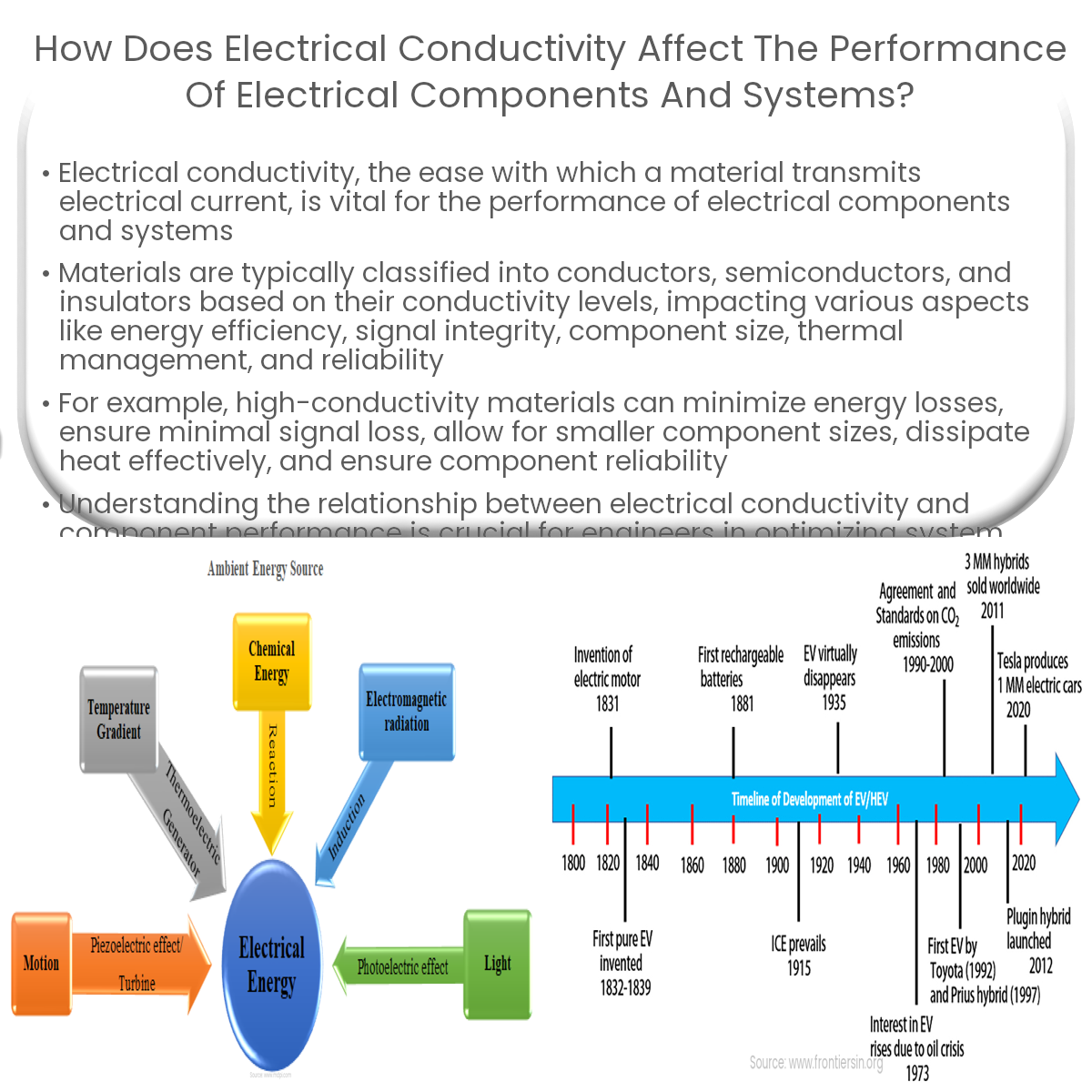
Electrical conductivity affects component performance in energy efficiency, signal integrity, component size, thermal management, and reliability.
Electrical Conductivity and its Impact on Component Performance
Electrical conductivity is a critical property of materials used in the design and fabrication of electrical components and systems. It refers to the ease with which a material can transmit an electrical current. The performance of electrical components and systems is directly influenced by the electrical conductivity of the materials used.
Conductors, Semiconductors, and Insulators
Electrical materials are typically classified into three categories based on their conductivity: conductors, semiconductors, and insulators. Conductors, like copper and aluminum, have high electrical conductivity, enabling them to transmit electrical current efficiently. Semiconductors, such as silicon and germanium, have intermediate conductivity that can be controlled by manipulating their composition or external conditions. Insulators, like plastic and glass, have low conductivity, effectively preventing the flow of electrical current.
Implications for Electrical Components
- Energy efficiency: The choice of materials with the appropriate conductivity can significantly impact a component’s energy efficiency. High-conductivity materials minimize energy losses due to Joule heating and improve overall system efficiency.
- Signal integrity: In communication systems, the conductivity of materials affects signal transmission and reception quality. Conductive materials ensure minimal signal loss and distortion, while insulators help prevent crosstalk and interference between adjacent conductors.
- Component size: High electrical conductivity allows for smaller component sizes, as it reduces the amount of material required to achieve a specific level of performance. This can lead to more compact, lightweight systems.
- Thermal management: Electrical conductivity is often closely related to thermal conductivity. Materials with high electrical conductivity can dissipate heat more effectively, reducing the risk of overheating and component failure.
- Reliability: The appropriate choice of materials with suitable conductivity ensures a component’s reliable operation under different environmental conditions, such as temperature and humidity variations.
Optimizing System Performance
Understanding the relationship between electrical conductivity and component performance is crucial for designing and optimizing electrical systems. Engineers must consider various factors, including the intended application, environmental conditions, and cost constraints, to select the most appropriate materials for each component. Balancing these considerations can lead to systems with enhanced efficiency, reliability, and longevity.