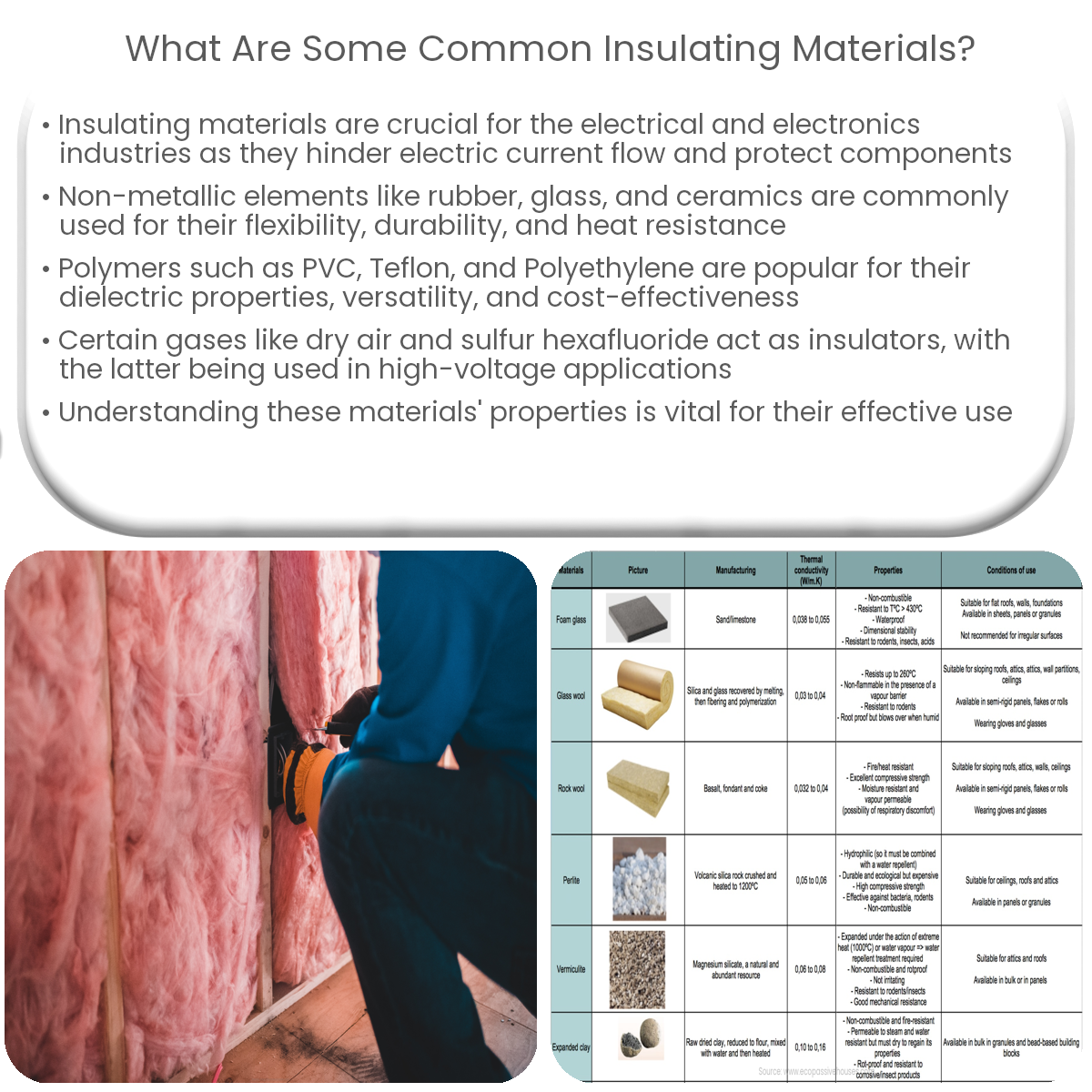
Common insulating materials include rubber, glass, ceramics, polymers like PVC, Teflon, polyethylene, and gases such as dry air and sulfur hexafluoride.
Common Insulating Materials: An Overview
Insulating materials play a critical role in the electrical and electronics industries, as they effectively prevent the flow of electric current and protect electrical components. This article discusses some of the most common insulating materials, highlighting their properties and applications.
1. Non-Metallic Elements
Several non-metallic elements serve as excellent insulating materials due to their high resistance to electrical flow. Common examples include:
- Rubber: Rubber is a flexible and durable insulator, widely used in electrical wiring, cables, and protective equipment, such as gloves and boots.
- Glass: Glass has good insulating properties and high temperature resistance, making it suitable for use in insulators for power lines and electrical components.
- Ceramics: Ceramics, such as porcelain and alumina, offer high resistance to electrical flow, heat resistance, and mechanical strength, making them ideal for insulators in high-voltage applications.
2. Polymers
Polymers, which are long-chain molecules, are commonly used as insulating materials due to their excellent dielectric properties. Some popular examples are:
- PVC (Polyvinyl Chloride): PVC is a versatile and cost-effective insulating material used in electrical cables, wire insulation, and conduit systems.
- Teflon (Polytetrafluoroethylene): Teflon has excellent electrical insulation properties, high temperature resistance, and chemical resistance, making it suitable for high-performance electrical components and wire insulation.
- Polyethylene: Polyethylene is a lightweight and flexible insulator used in various applications, such as cable insulation, electrical connectors, and protective equipment.
3. Gases
Some non-ionized gases act as insulating materials, providing electrical insulation and preventing the flow of electric current. Common examples include:
- Dry Air: Dry air is a natural insulator, offering good resistance to electrical flow. It is used in low-voltage applications and as an insulating medium in some switchgear.
- Sulfur Hexafluoride (SF6): Sulfur hexafluoride is a highly effective insulator and arc-quenching medium, often used in high-voltage switchgear and circuit breakers.
In summary, various materials exhibit insulating properties, including non-metallic elements, polymers, and gases. These materials are essential for protecting electrical components and ensuring the safe operation of electrical systems. Understanding the properties and applications of common insulating materials is crucial for their effective utilization in the electrical and electronics industries.