
A vertical electrostatic separator uses electric fields to separate materials based on their conductivity, improving efficiency in various industries.
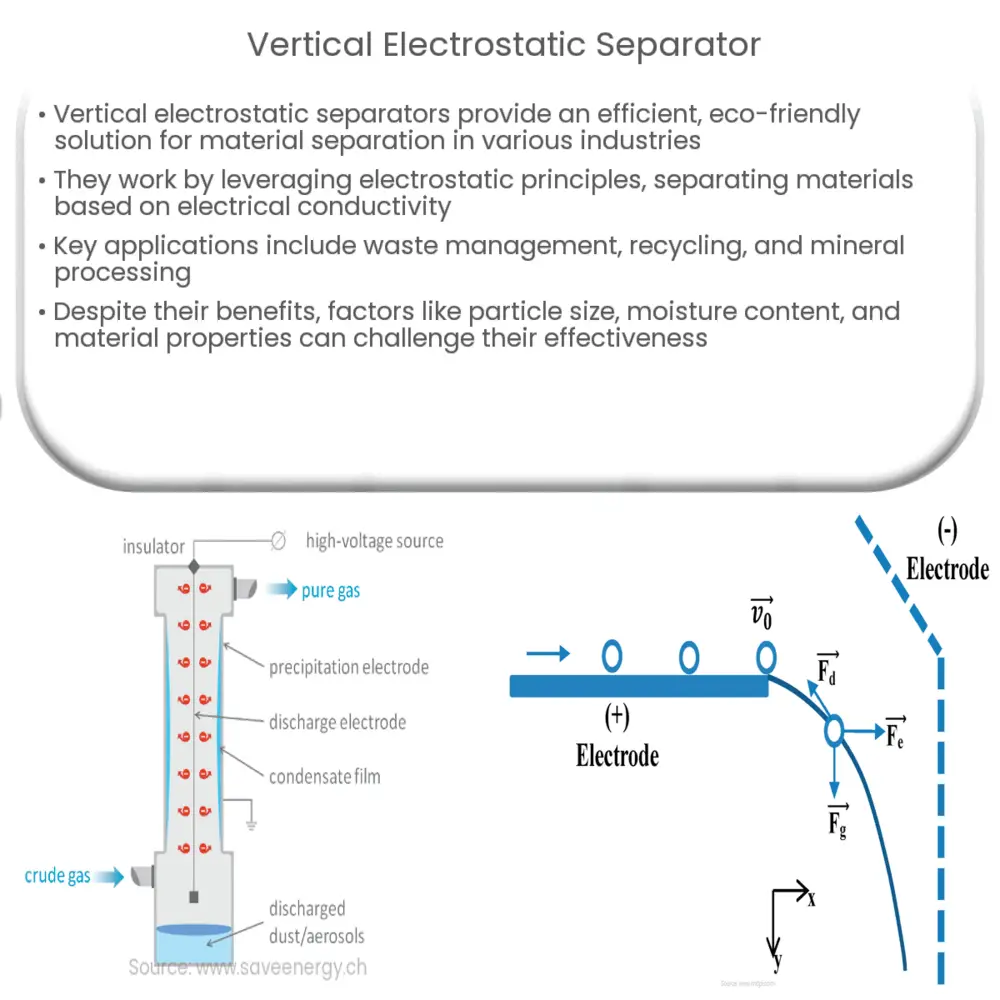
Vertical Electrostatic Separator: A Revolutionary Solution for Efficient Material Separation
In today’s increasingly industrialized and technology-driven world, the need for efficient and sustainable methods of material separation is more pressing than ever. Vertical electrostatic separators have emerged as a promising solution to this challenge. These advanced separators are designed to provide high levels of separation efficiency, reducing waste and enhancing productivity in various industries. In this article, we will discuss the fundamentals of vertical electrostatic separation, its applications, and the benefits it brings to the table.
Understanding Vertical Electrostatic Separation
Vertical electrostatic separation is a process that leverages the principles of electrostatics to separate materials based on their electrical conductivity. The process involves applying an electric field to a mixture of particles, which causes them to become charged. The charged particles are then subjected to an electrostatic force that separates them from the rest of the mixture. This force is proportional to the difference in electrical conductivity between the particles, allowing for effective separation of materials with varying levels of conductivity.
Components of a Vertical Electrostatic Separator
A typical vertical electrostatic separator consists of several key components that work together to achieve effective material separation. These components include:
- Feeding system: This component is responsible for delivering the material to be separated into the separator. It often includes a vibrating feeder or a conveyor belt to ensure a consistent and controlled flow of particles.
- High voltage generator: The high voltage generator produces the electric field necessary for the separation process. It supplies the required voltage to the electrode system, which can range from several kilovolts to tens of kilovolts, depending on the specific application and materials being separated.
- Electrode system: The electrode system consists of a series of vertically aligned electrodes that generate the electric field within the separator. This field induces charges on the particles, causing them to separate based on their electrical conductivity.
- Discharge system: Once the particles have been separated, the discharge system collects and removes them from the separator. This may include a series of hoppers, chutes, or conveyor belts that transport the separated materials to their respective storage or processing areas.
Applications of Vertical Electrostatic Separators
Vertical electrostatic separators have a wide range of applications across various industries, including:
- Waste management and recycling: Electrostatic separators are commonly used to separate different types of materials in recycling processes, such as plastics, metals, and glass. This aids in reducing waste and improving the efficiency of recycling facilities.
- Mining and mineral processing: In mining operations, vertical electrostatic separators can be used to extract valuable minerals from ores, leading to more efficient mineral processing and increased profitability.
Advantages of Vertical Electrostatic Separators
There are several benefits associated with the use of vertical electrostatic separators in various industries, including:
- High separation efficiency: Vertical electrostatic separators offer a high degree of separation efficiency, capable of separating materials with even slight differences in electrical conductivity. This results in reduced waste and improved product quality.
- Environmentally friendly: As a dry separation process, vertical electrostatic separation does not require the use of water or chemicals, reducing the environmental impact of the operation. Additionally, the process helps promote recycling efforts, further contributing to environmental sustainability.
- Energy-efficient: Electrostatic separators consume relatively low amounts of energy compared to other separation methods, making them a more energy-efficient option for industries looking to minimize their energy consumption.
- Versatile: Vertical electrostatic separators can be adapted to a variety of applications and industries, offering a flexible solution to material separation challenges.
Challenges and Limitations
Despite the numerous advantages of vertical electrostatic separators, there are some challenges and limitations to consider:
- Particle size and shape: The efficiency of the separation process can be affected by the size and shape of the particles in the mixture. Extremely small or irregularly shaped particles may not separate as effectively, potentially reducing the overall efficiency of the process.
- Moisture content: High moisture content in the material being processed can negatively impact the efficiency of the electrostatic separation process, as it can reduce the conductivity differences between particles.
- Material properties: The effectiveness of vertical electrostatic separation is highly dependent on the electrical properties of the materials being processed. As a result, it may not be suitable for all materials or applications.
Conclusion
Vertical electrostatic separators offer a highly efficient, environmentally friendly, and versatile solution for material separation across various industries. By leveraging the principles of electrostatics, these separators can effectively separate materials with differing electrical conductivities, resulting in improved product quality, reduced waste, and increased operational efficiency. However, it is essential to consider the limitations and challenges associated with this technology, ensuring that it is the most suitable option for the specific application and materials being processed.



