
What is the capacitance of a cylindrical capacitor?
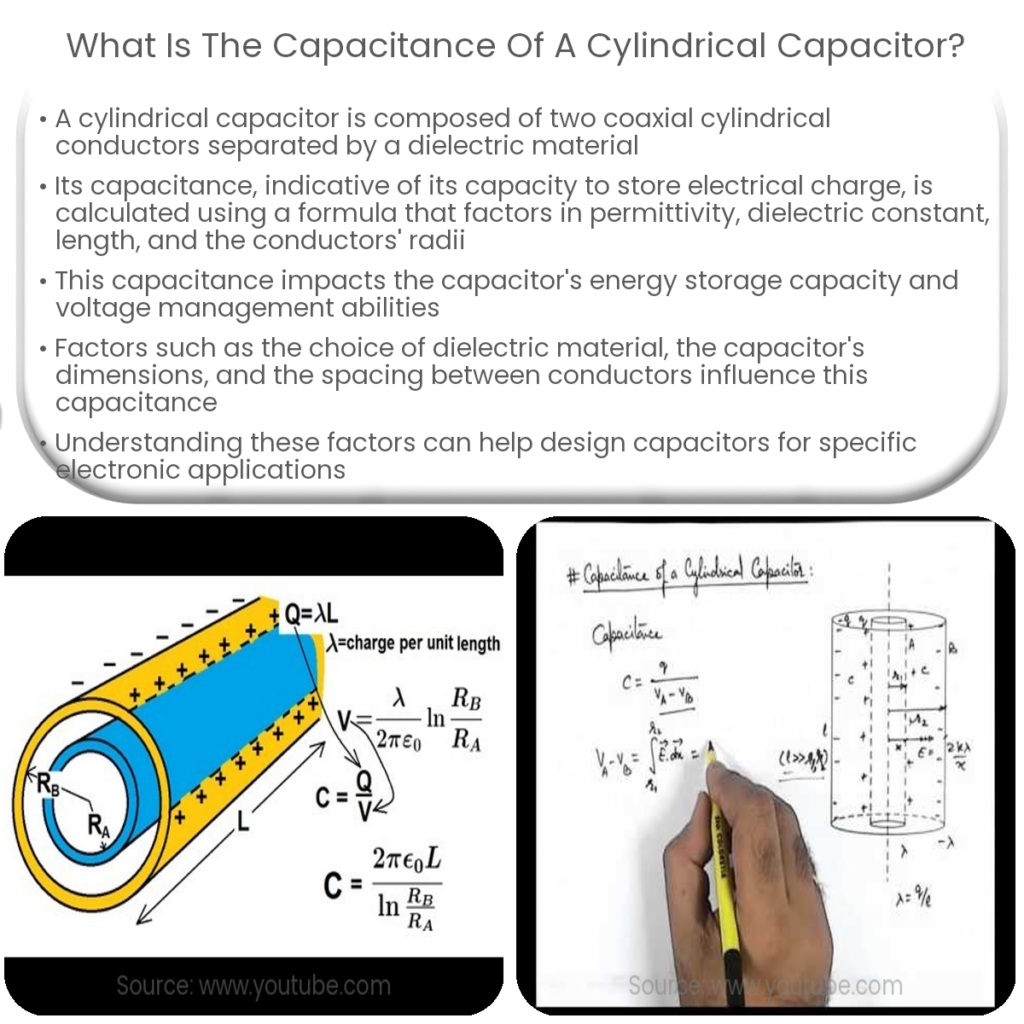
The capacitance of a cylindrical capacitor depends on the dielectric material, dimensions, and spacing between its conductors, affecting its performance.
The capacitance of a cylindrical capacitor depends on the dielectric material, dimensions, and spacing between its conductors, affecting its performance.
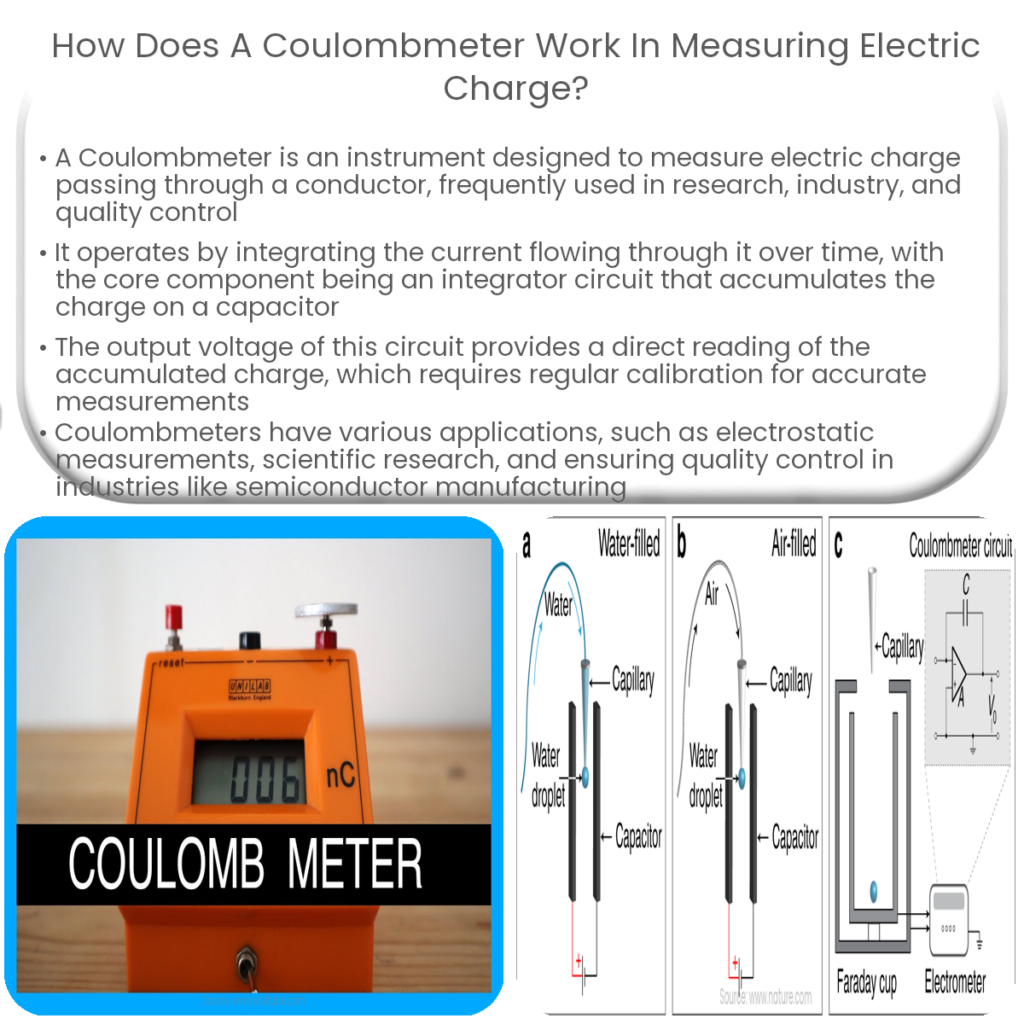
A Coulombmeter measures electric charge by integrating current over time using an integrator circuit with an op-amp and a capacitor.
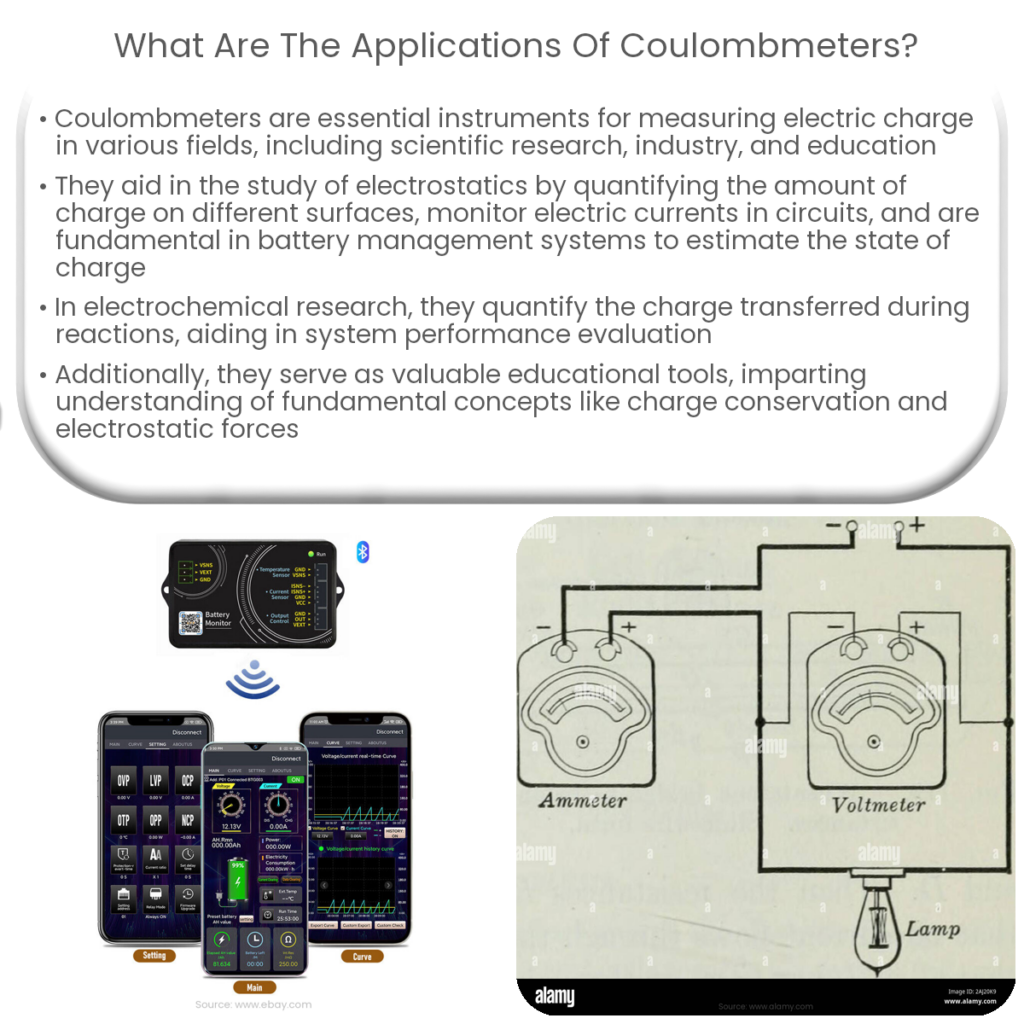
Coulombmeters are used in electrostatics, electric current monitoring, battery management, electrochemical experiments, particle detectors, and education.

Coulomb counters are used in battery management systems, smart grids, industrial equipment, portable electronics, energy harvesting systems, and EV charging stations.
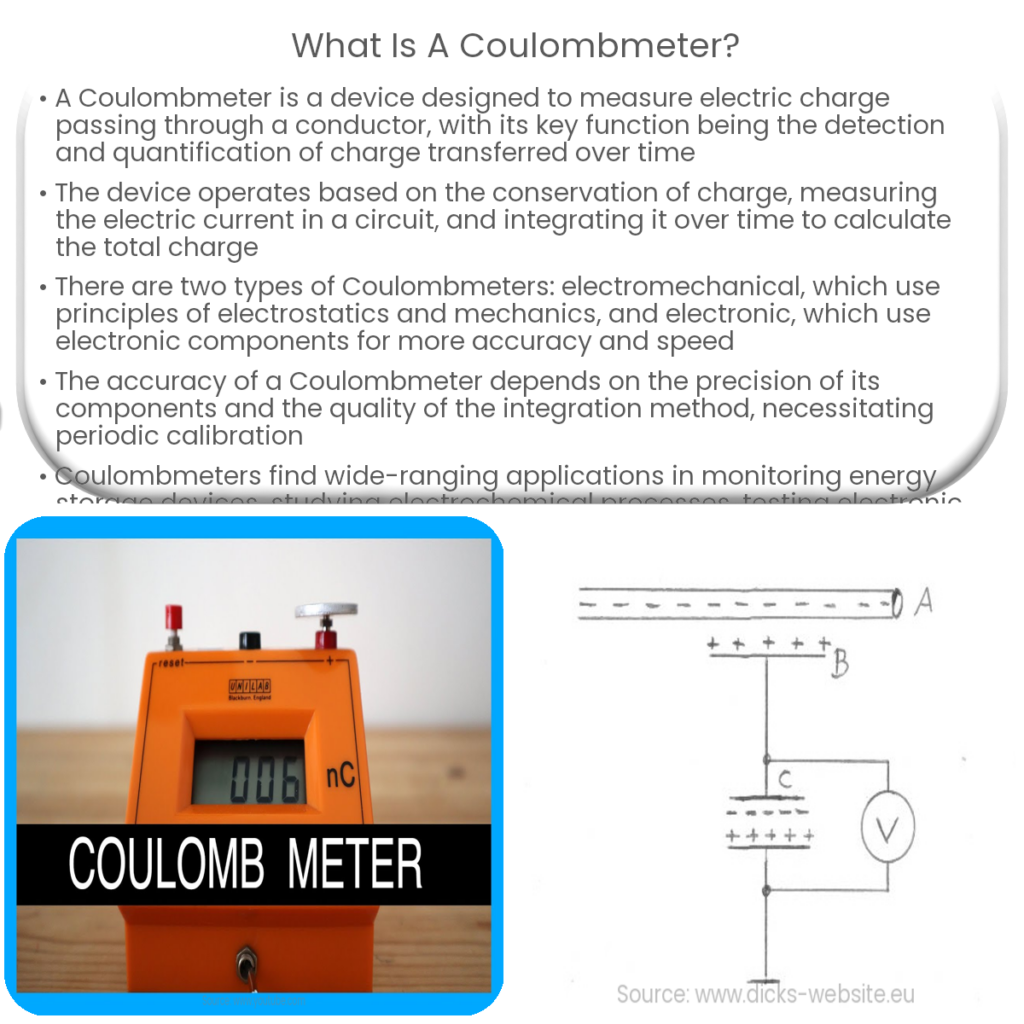
A Coulombmeter is an instrument that measures electric charge passing through a conductor or circuit element, used in research and industrial applications.

A Coulomb counter is an electronic device that measures the electric charge passing through a circuit, crucial for monitoring and controlling battery systems.

Coulomb counters measure current in a circuit, integrate it over time to calculate charge, and multiply by voltage to estimate energy consumed.
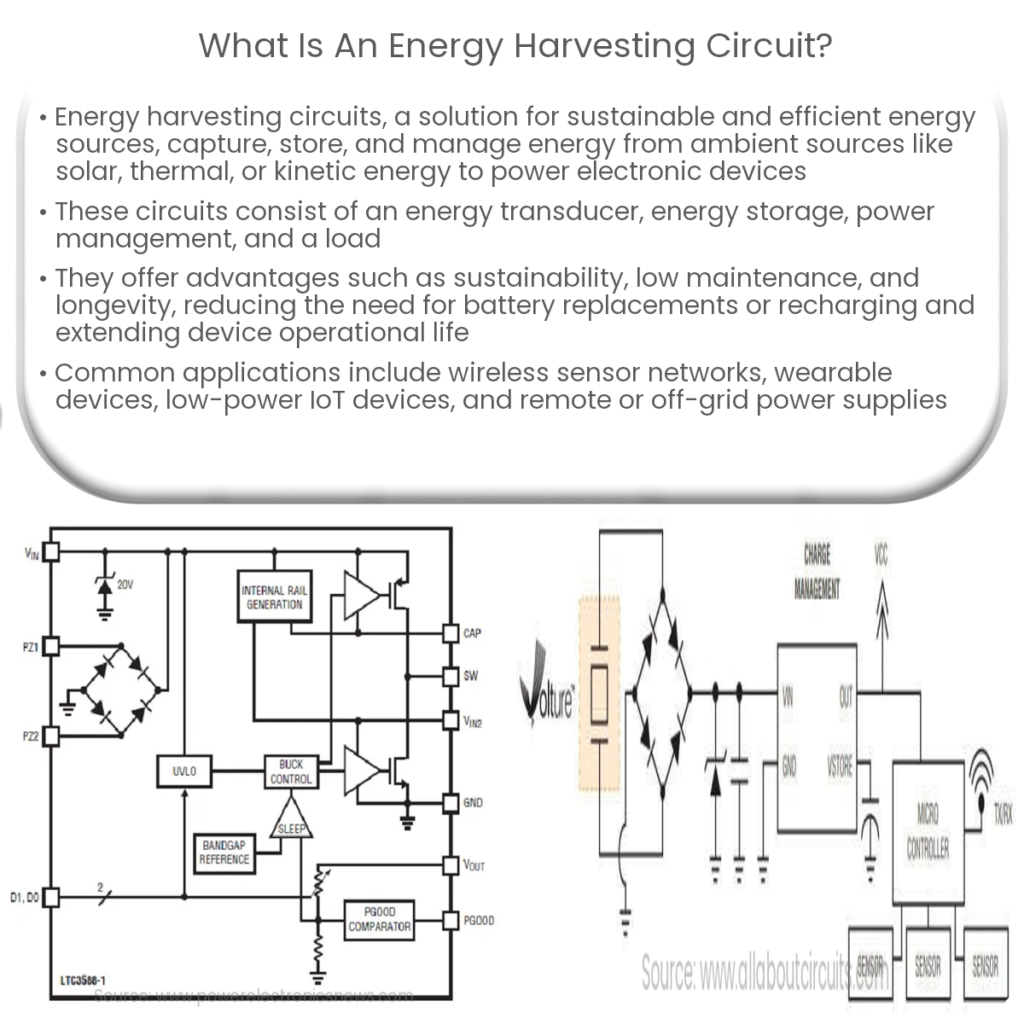
An energy harvesting circuit captures, stores, and manages energy from ambient sources to power electronic devices, promoting sustainability and low maintenance.
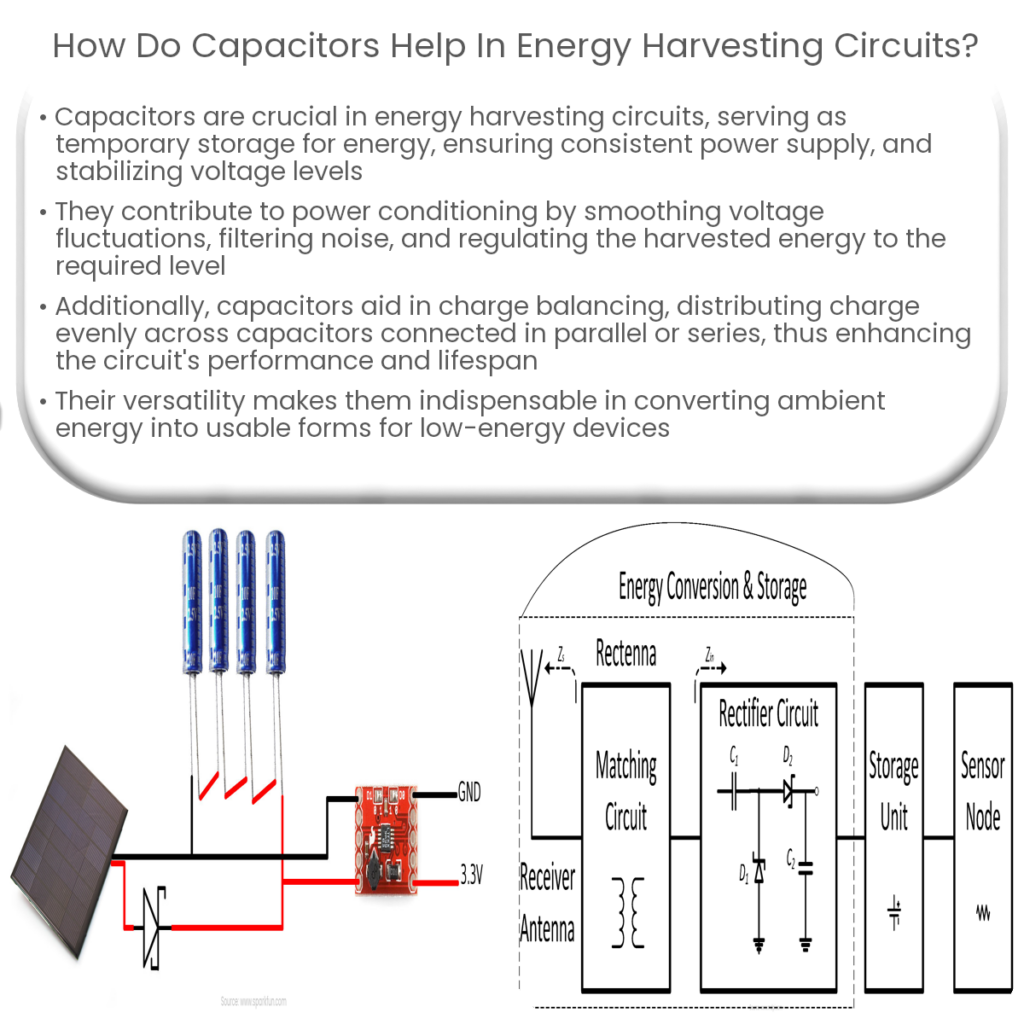
Capacitors in energy harvesting circuits store energy, regulate voltage, condition power, and facilitate charge balancing, improving efficiency and stability.
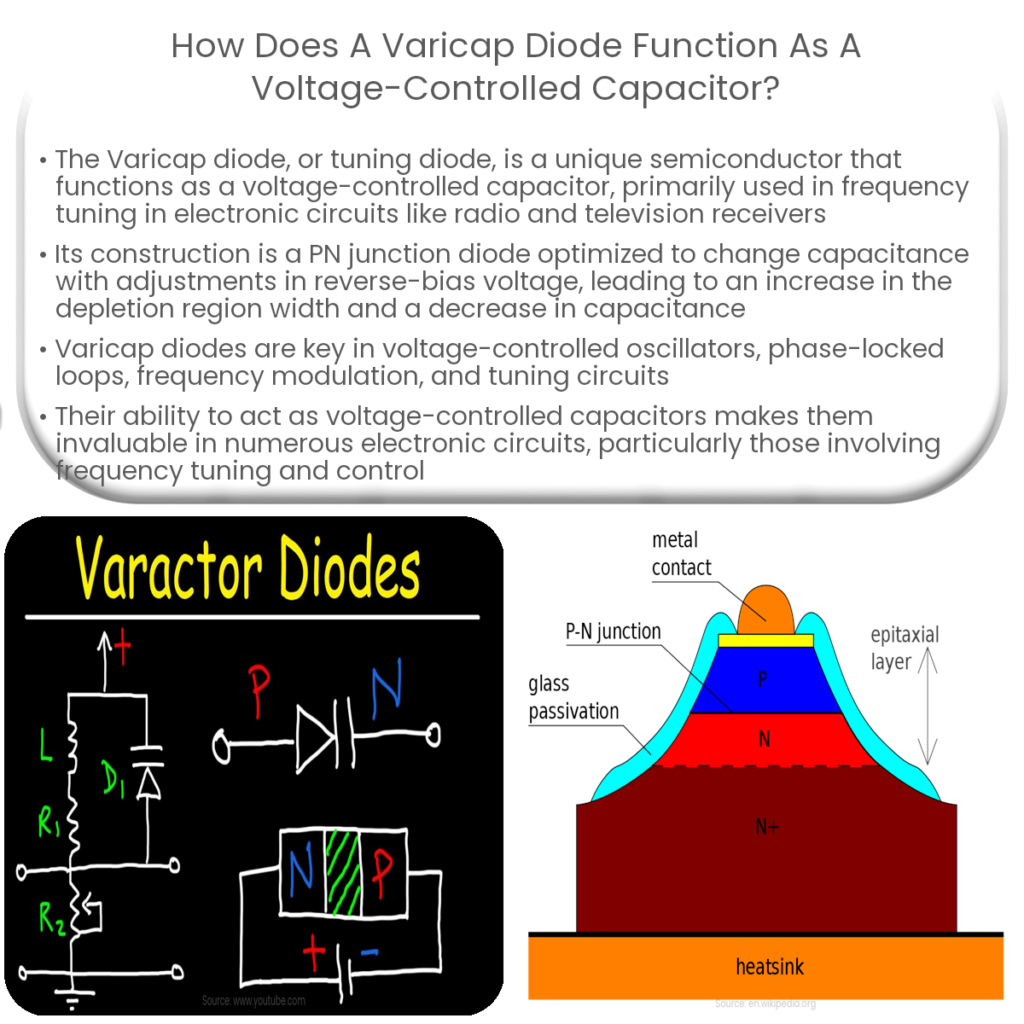
A Varicap diode functions as a voltage-controlled capacitor by varying its capacitance based on the applied reverse-bias voltage in a circuit.

The primary purpose of this project is to help the public to learn some exciting and important information about electricity and magnetism.
Our Website follows all legal requirements to protect your privacy. Visit our Privacy Policy page.
The Cookies Statement is part of our Privacy Policy.
The information contained on this website is for general information purposes only. This website does not use any proprietary data. Visit our Editorial note.
It’s simple:
1) You may use almost everything for non-commercial and educational use.
2) You may not distribute or commercially exploit the content, especially on another website.
