
What is a Wien bridge oscillator?
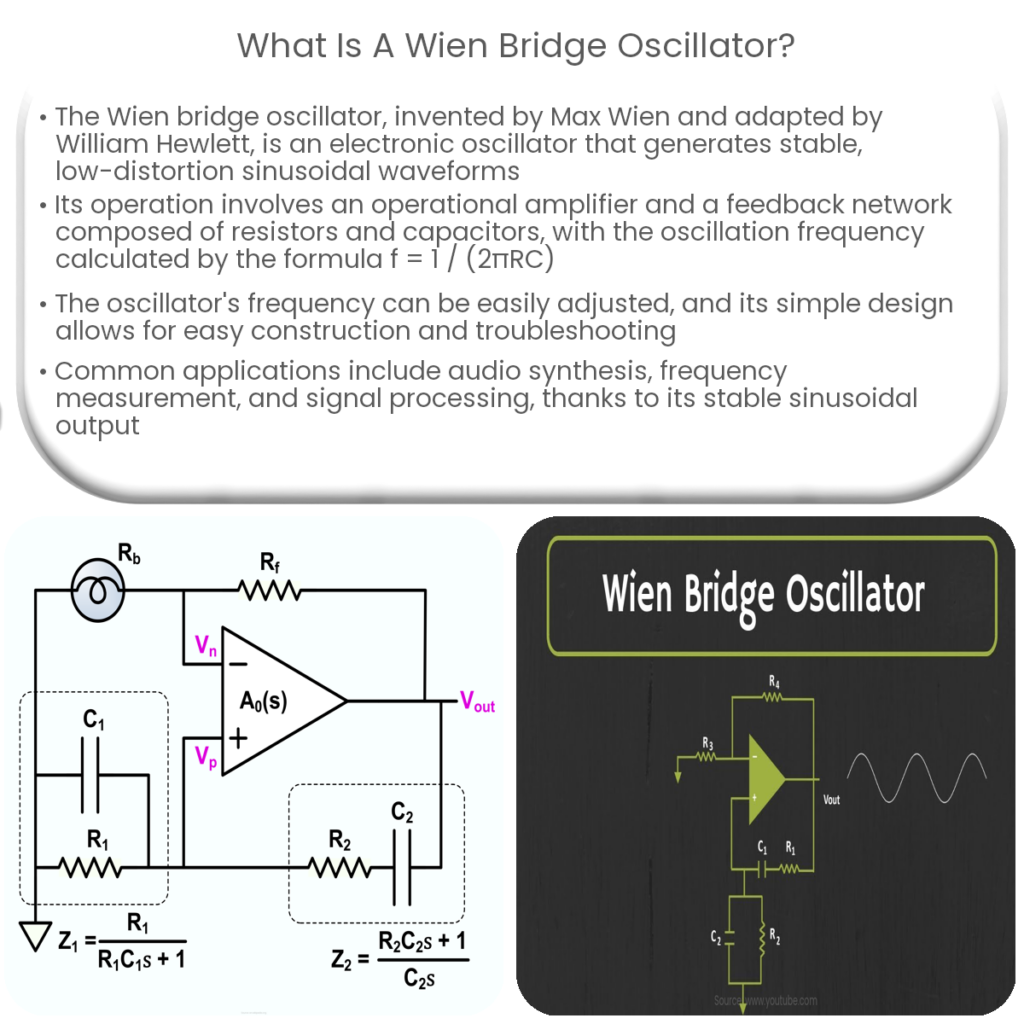
A Wien bridge oscillator is an electronic oscillator that generates stable, low-distortion sinusoidal waveforms, used in audio synthesis, frequency measurement, and signal processing.
A Wien bridge oscillator is an electronic oscillator that generates stable, low-distortion sinusoidal waveforms, used in audio synthesis, frequency measurement, and signal processing.
A phase-locked loop (PLL) is a feedback control system that generates an output signal with a phase related to an input signal, used in frequency synthesis and clock recovery.
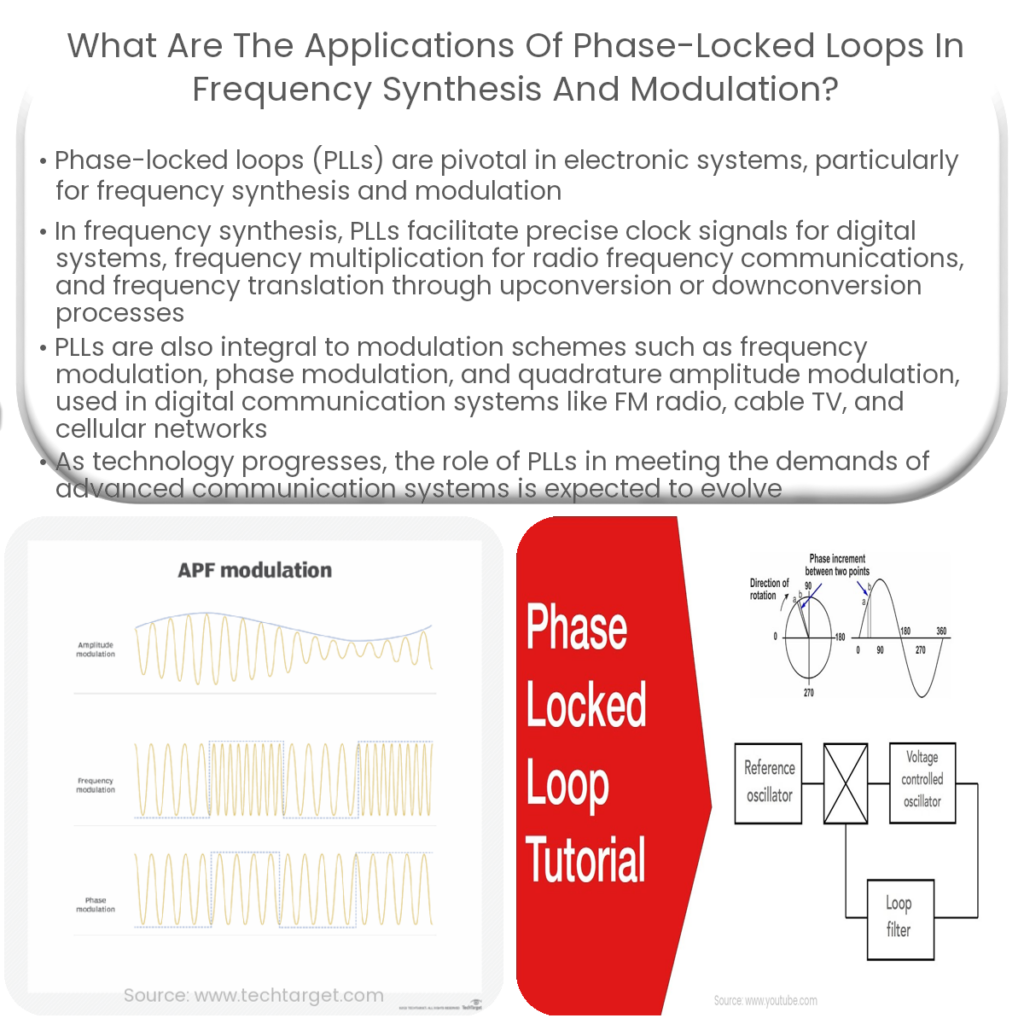
PLLs are used in frequency synthesis for clock generation, multiplication, and translation, as well as modulation techniques like FM, PM, and QAM.
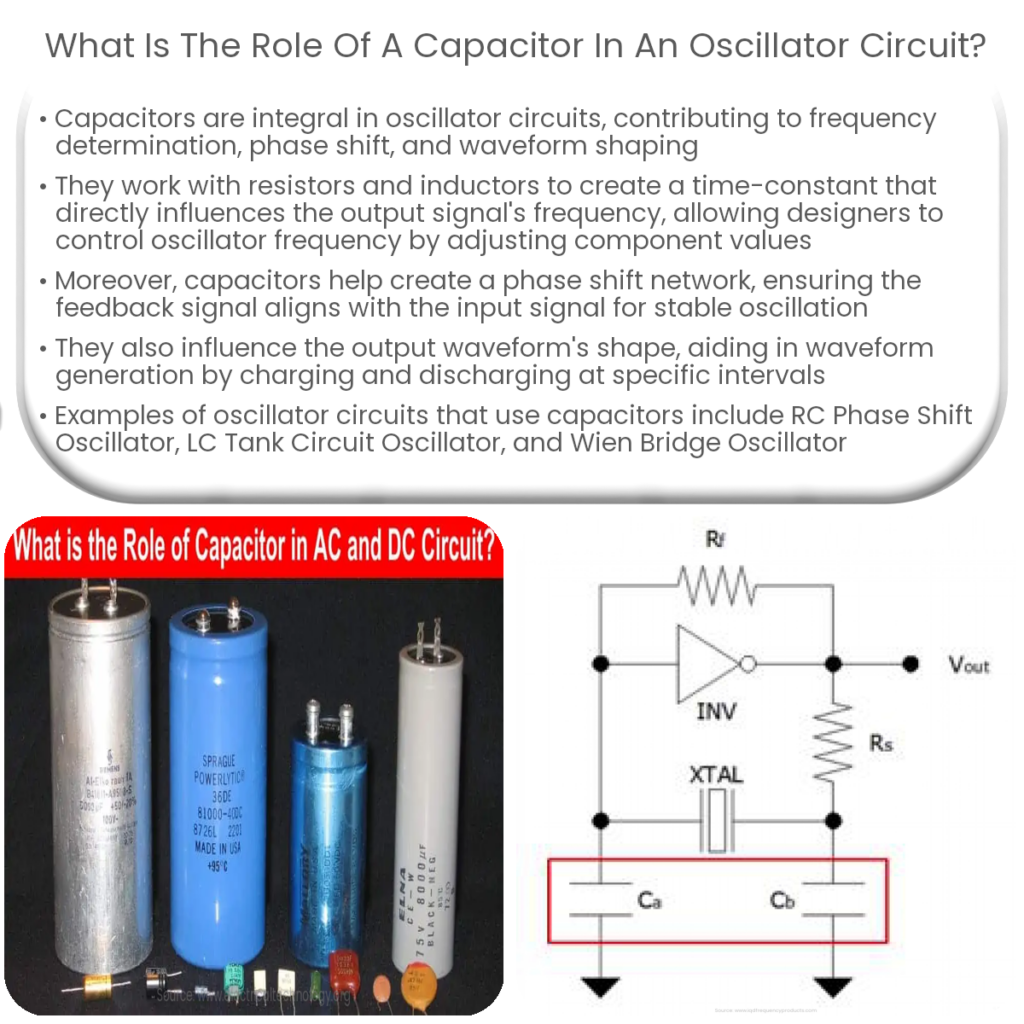
Capacitors in oscillator circuits control frequency, shape output waveforms, and provide the necessary phase shift for feedback, enabling stable oscillations.

Different oscillator types include RC oscillators, LC oscillators, crystal oscillators, relaxation oscillators, and voltage-controlled oscillators.
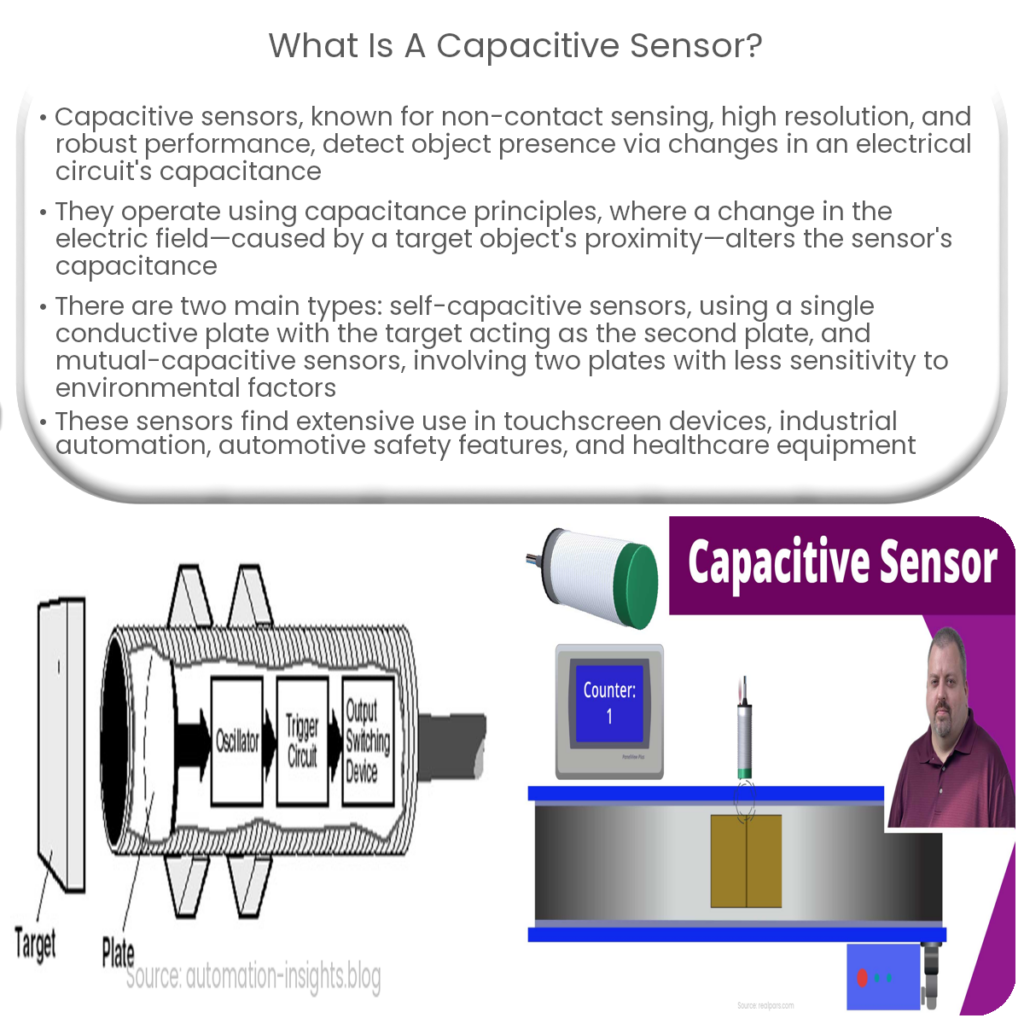
A capacitive sensor is a proximity sensor that detects objects based on changes in capacitance, used in touchscreens, automation, automotive, and healthcare.

Capacitive sensors are versatile devices that detect changes in capacitance, offering a wide range of applications across various industries. This article will discuss some common applications of capacitive sensors.
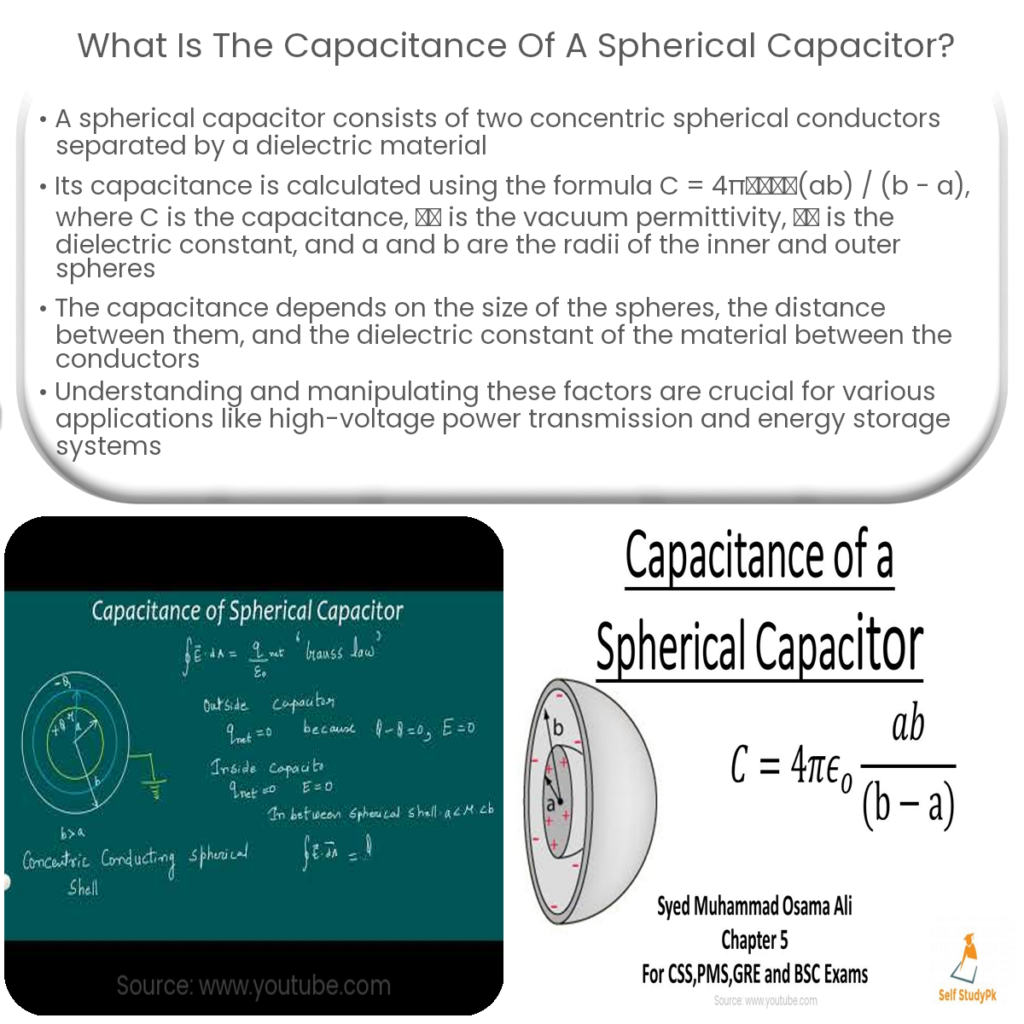
The capacitance of a spherical capacitor is calculated using C = 4πε₀εᵣ(ab) / (b – a), where ε₀ is vacuum permittivity, εᵣ is relative permittivity, and a and b are sphere radii.
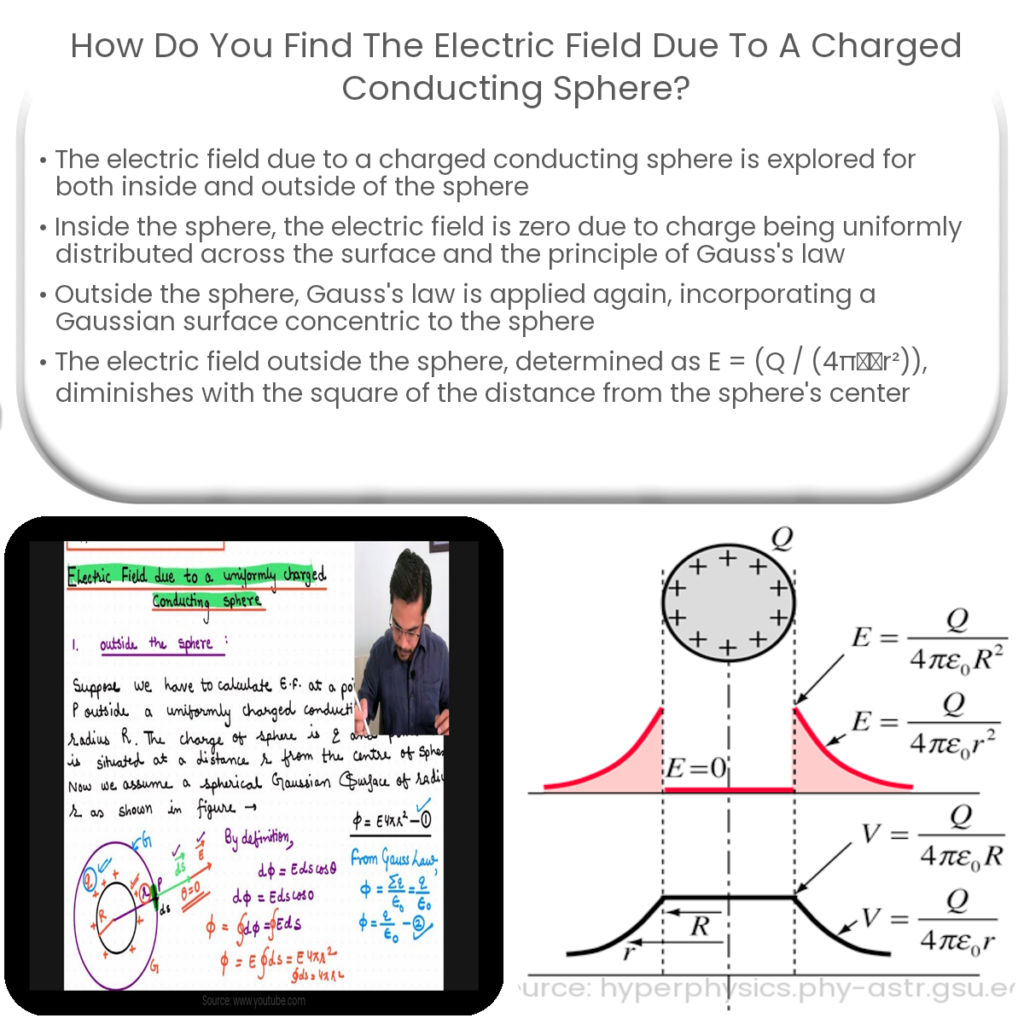
Inside the sphere, the electric field is zero. Outside, it’s calculated as E = (Q / (4πε₀r²)), where Q is charge, ε₀ is vacuum permittivity, and r is radius.

To calculate the electric force between two charged plates, find the electric field (E = V/d) and then use Coulomb’s Law (F = q * E) to determine the force.

The primary purpose of this project is to help the public to learn some exciting and important information about electricity and magnetism.
Our Website follows all legal requirements to protect your privacy. Visit our Privacy Policy page.
The Cookies Statement is part of our Privacy Policy.
The information contained on this website is for general information purposes only. This website does not use any proprietary data. Visit our Editorial note.
It’s simple:
1) You may use almost everything for non-commercial and educational use.
2) You may not distribute or commercially exploit the content, especially on another website.
