
What are the applications of electromagnetic waves in radar systems?
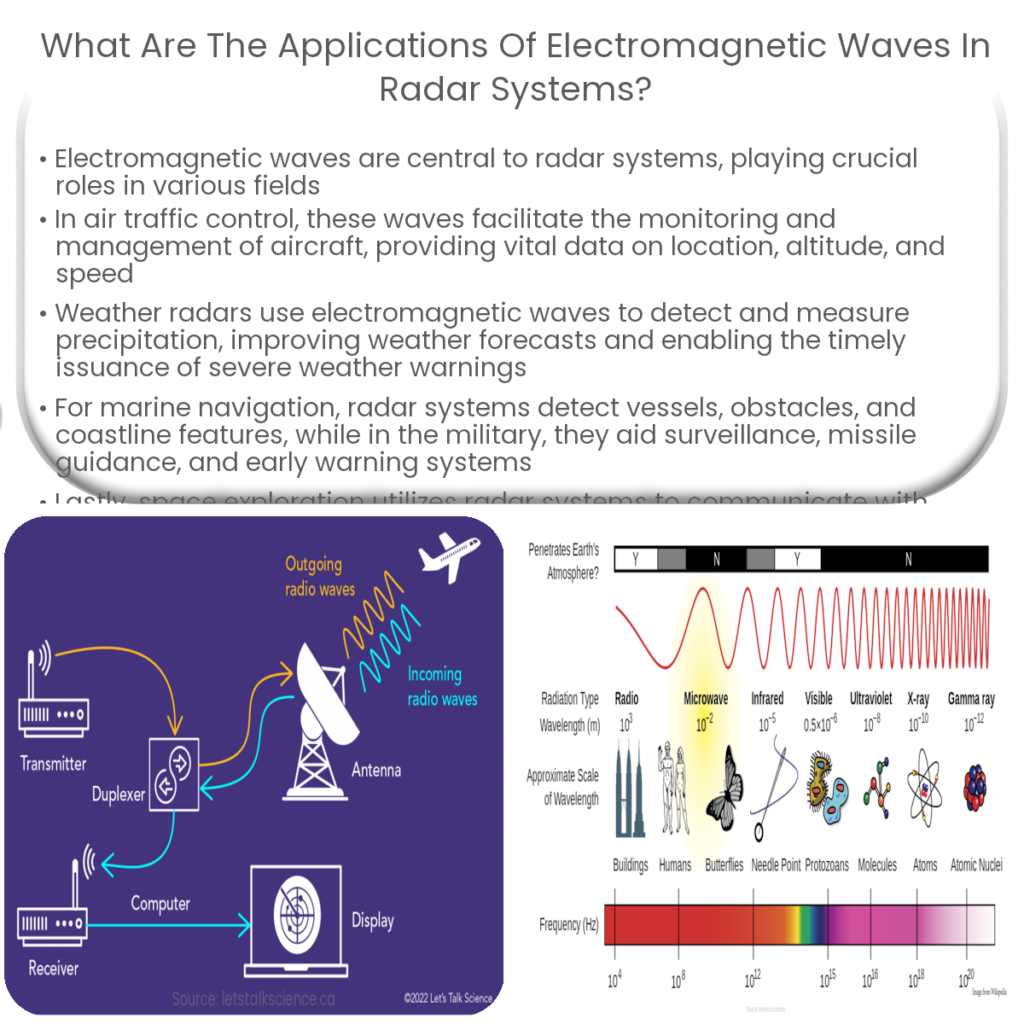
Electromagnetic waves in radar systems are used for air traffic control, meteorology, marine navigation, military applications, and space exploration.
Electromagnetic waves in radar systems are used for air traffic control, meteorology, marine navigation, military applications, and space exploration.

Designing an antenna involves defining frequency range & application, selecting antenna type, calculating dimensions, optimizing performance, and testing the design.
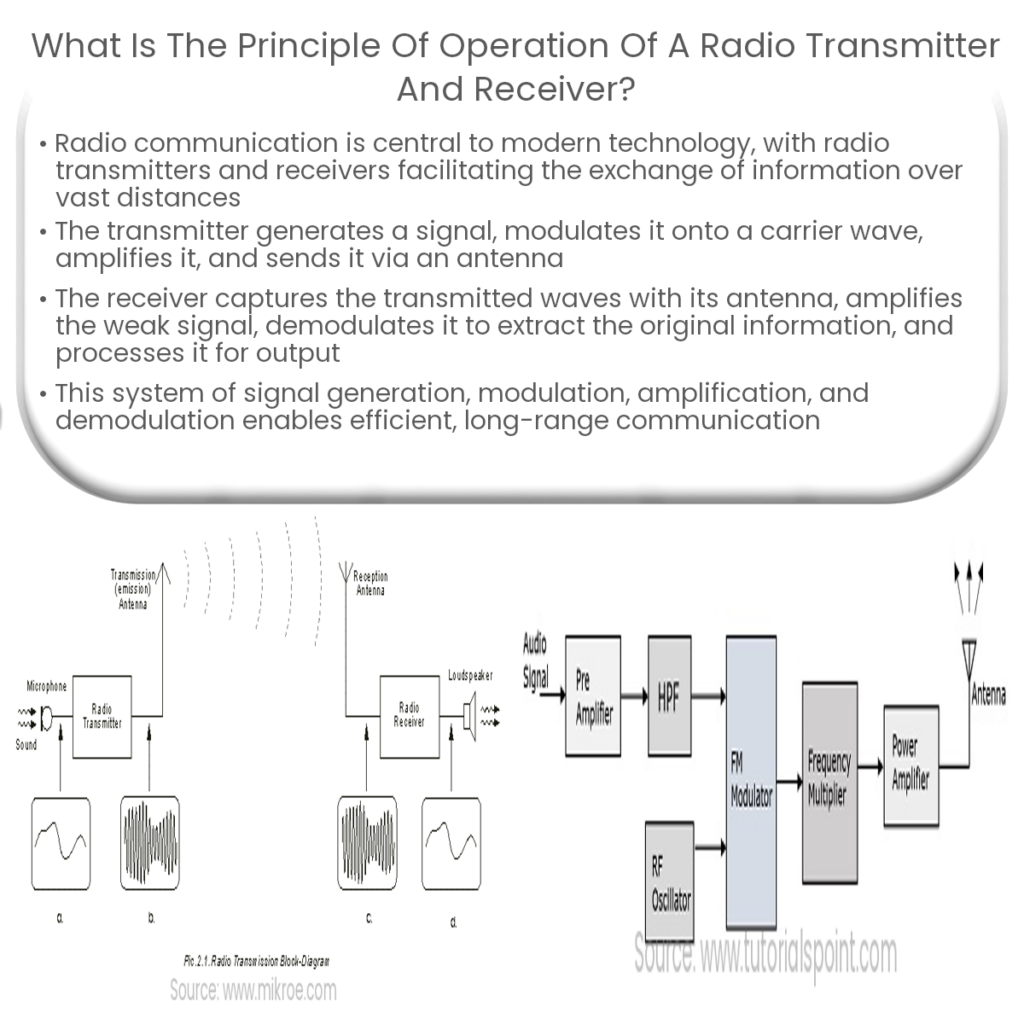
A radio transmitter encodes info onto a carrier wave, while a receiver captures, amplifies, and demodulates the signal to retrieve the original data.
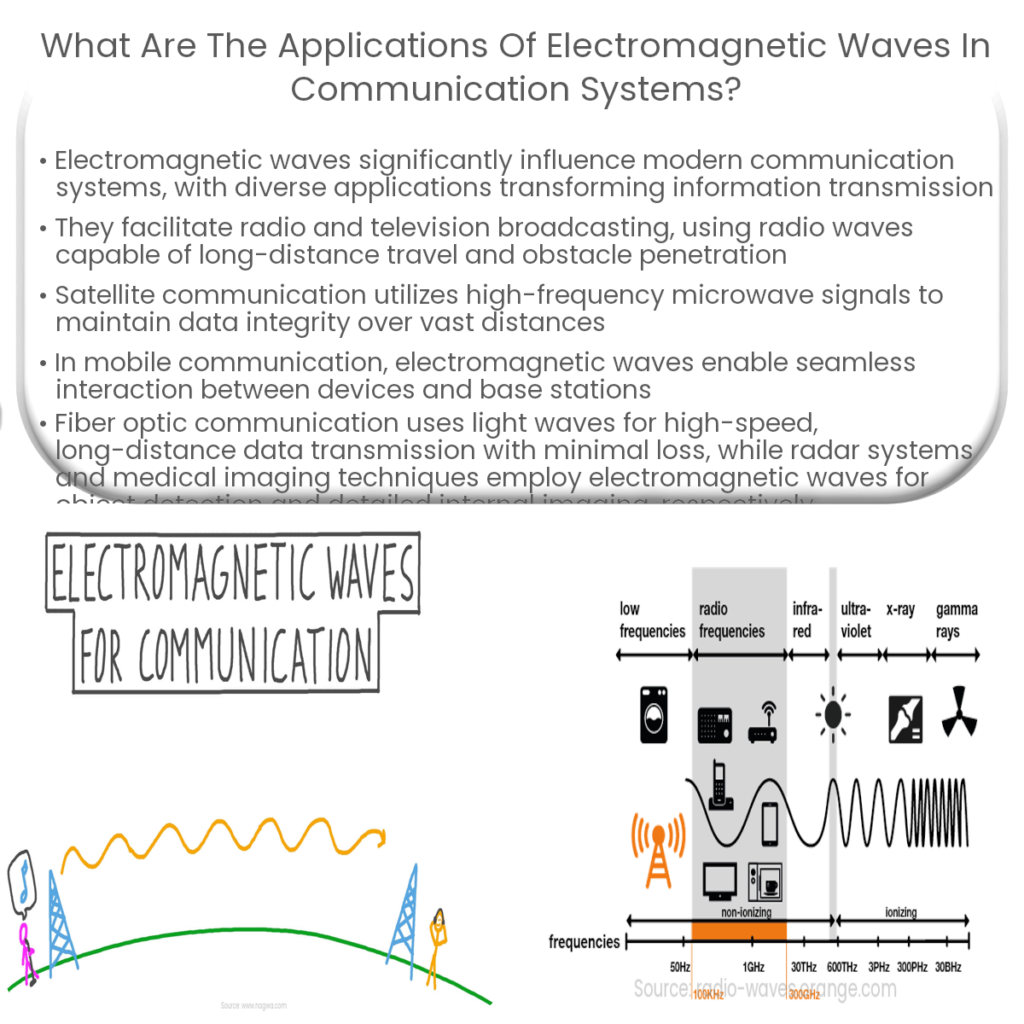
Electromagnetic waves are used in radio, TV broadcasting, satellite communication, mobile networks, fiber optics, radar systems, and medical imaging.
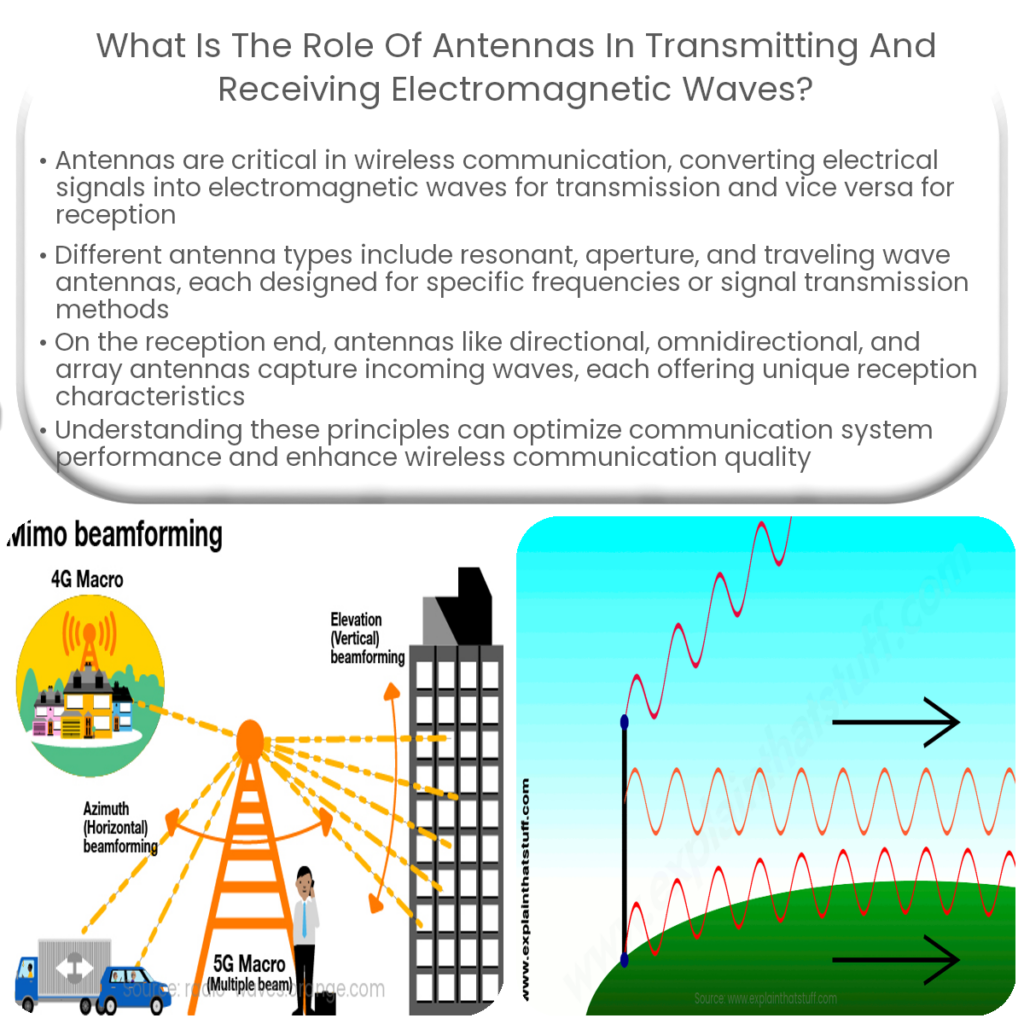
Antennas transmit and receive electromagnetic waves by converting electrical signals into waves and vice versa, enabling wireless communication.
Diffraction is a fundamental phenomenon in the world of physics, playing a vital role in our understanding of electromagnetic waves. This article will explain the concept of diffraction and how it occurs in electromagnetic waves.
Interference occurs when two or more electromagnetic waves combine, resulting in a new wave with varying amplitude.
Reflection occurs when electromagnetic waves encounter a boundary, causing part of the wave’s energy to redirect back into the original medium.
Refraction occurs when electromagnetic waves change speed and direction as they pass through different media, influenced by factors like index of refraction and wavelength.
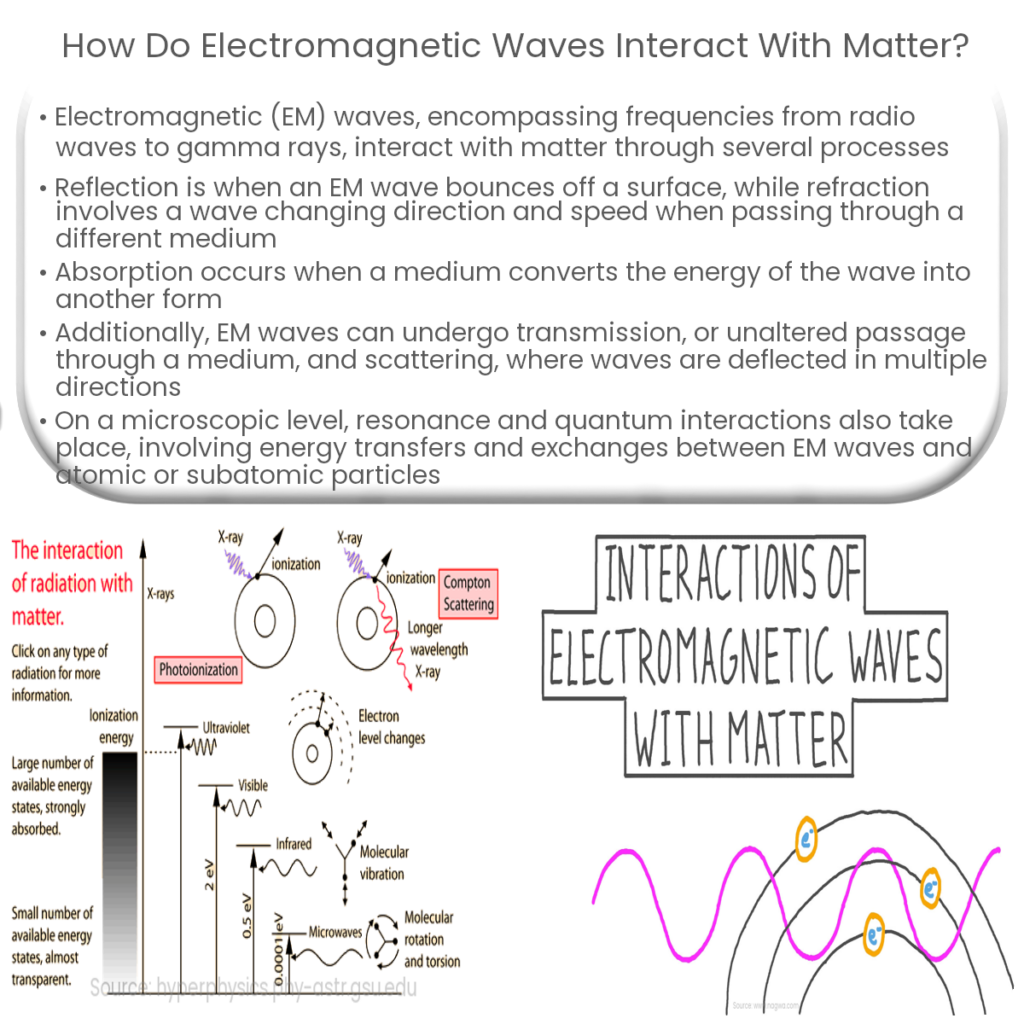
Electromagnetic waves interact with matter through reflection, refraction, absorption, transmission, scattering, resonance, and quantum interactions.

The primary purpose of this project is to help the public to learn some exciting and important information about electricity and magnetism.
Our Website follows all legal requirements to protect your privacy. Visit our Privacy Policy page.
The Cookies Statement is part of our Privacy Policy.
The information contained on this website is for general information purposes only. This website does not use any proprietary data. Visit our Editorial note.
It’s simple:
1) You may use almost everything for non-commercial and educational use.
2) You may not distribute or commercially exploit the content, especially on another website.
