
What is electrical conductivity?

Electrical conductivity is a material’s ability to allow electric current flow, and it’s crucial for applications in electronics, energy transmission, and sensors.
Electrical conductivity is a material’s ability to allow electric current flow, and it’s crucial for applications in electronics, energy transmission, and sensors.
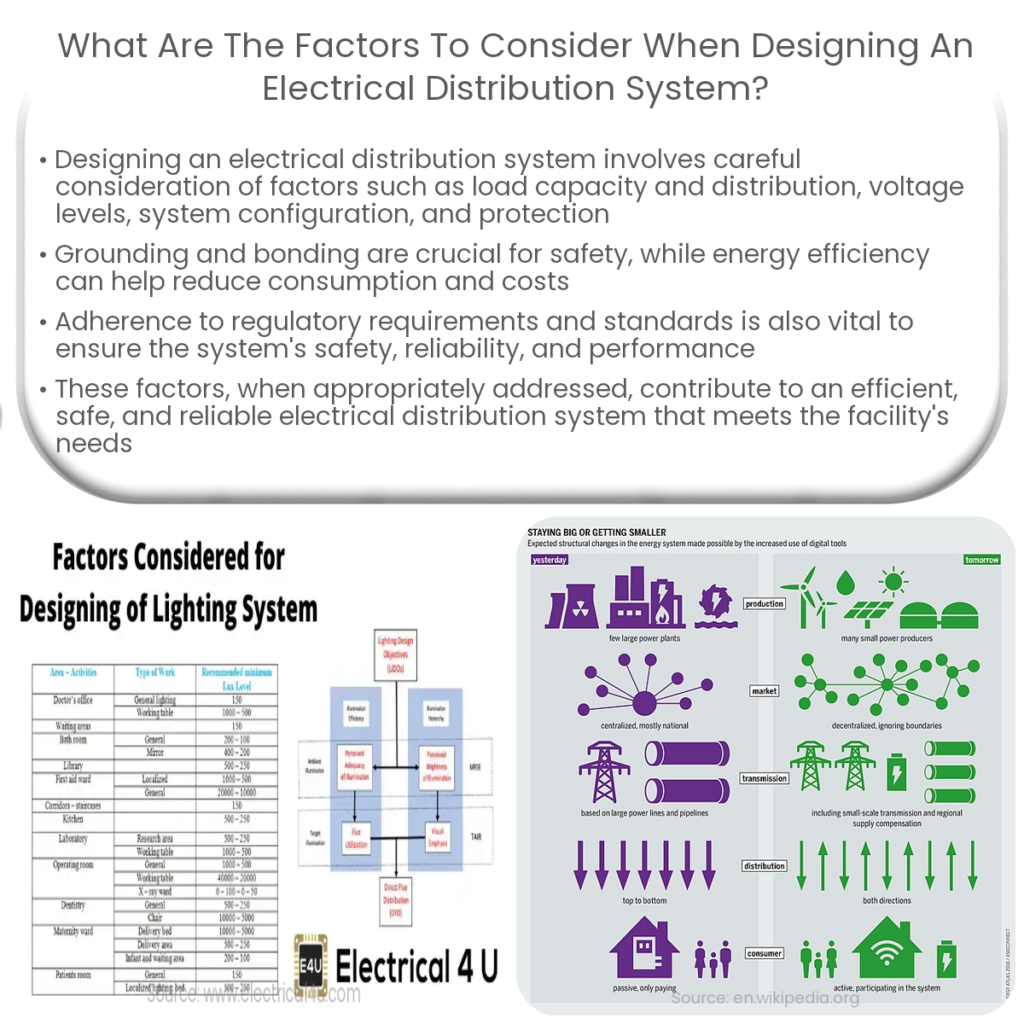
Key factors in designing electrical distribution systems include load capacity, voltage levels, configuration, protection, grounding, energy efficiency, and regulatory compliance.
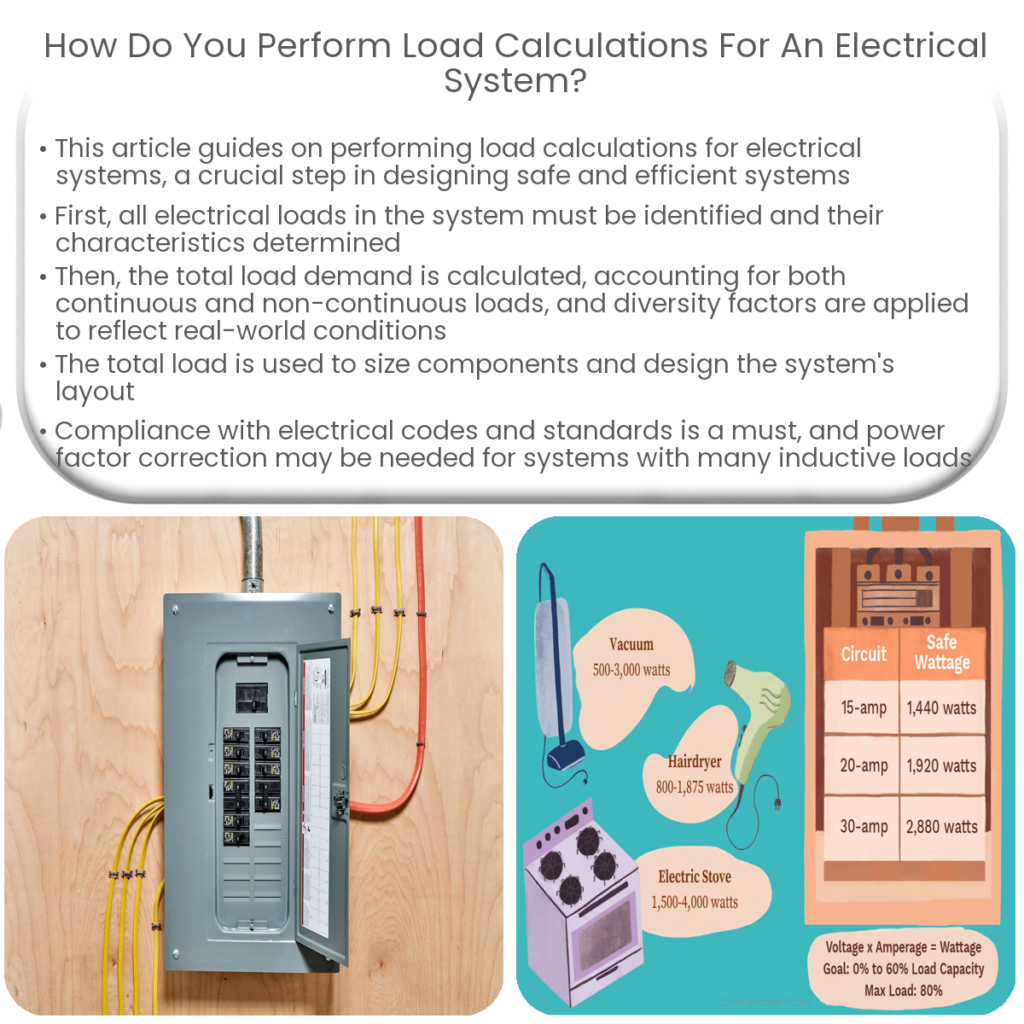
To perform load calculations, identify loads, determine characteristics, calculate demand, apply diversity factors, and consider power factor correction.
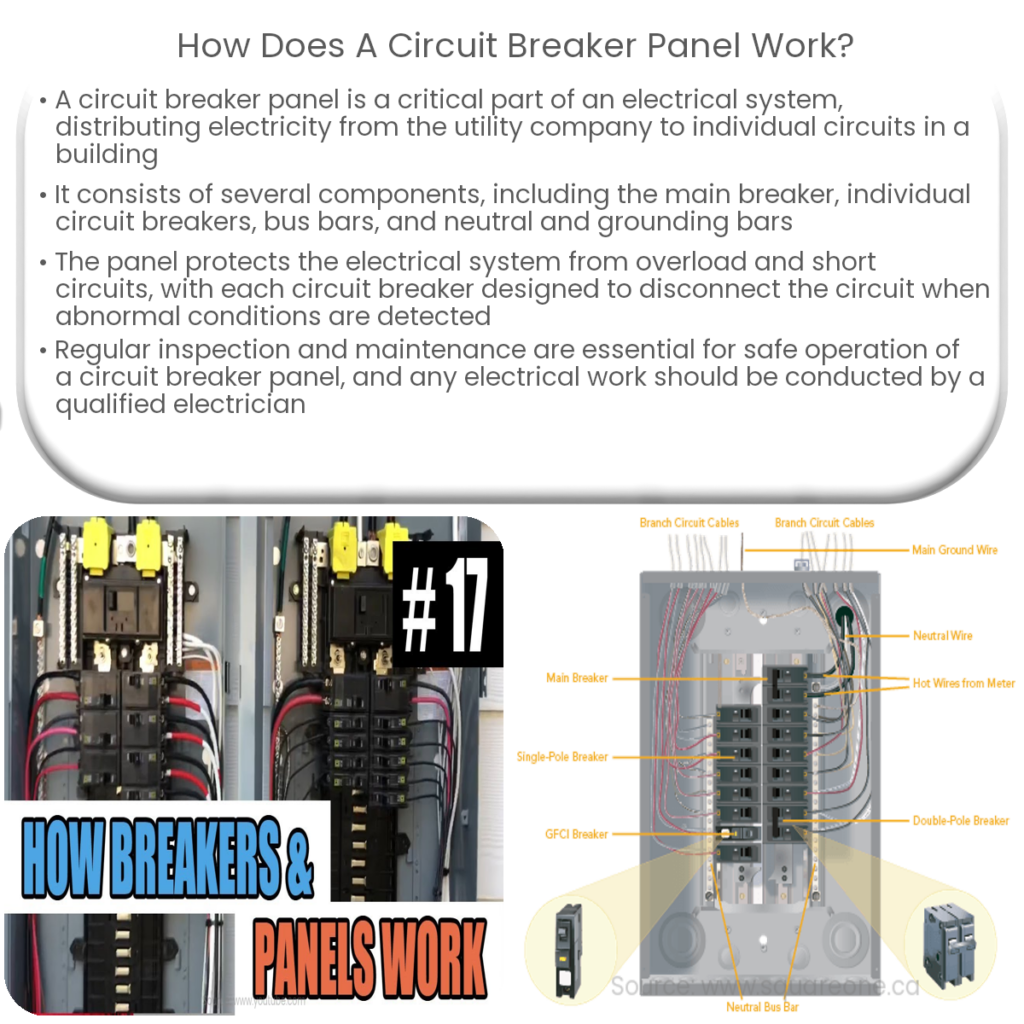
A circuit breaker panel distributes electricity from the main breaker to individual breakers, protecting circuits from overload and short circuits.

Transformers transfer electrical energy between circuits, adjusting voltage levels for efficient power transmission and safe use in distribution systems.

UPS systems include Standby, Line-Interactive, and Double-Conversion, catering to home, office, data centers, medical facilities, and industrial settings.
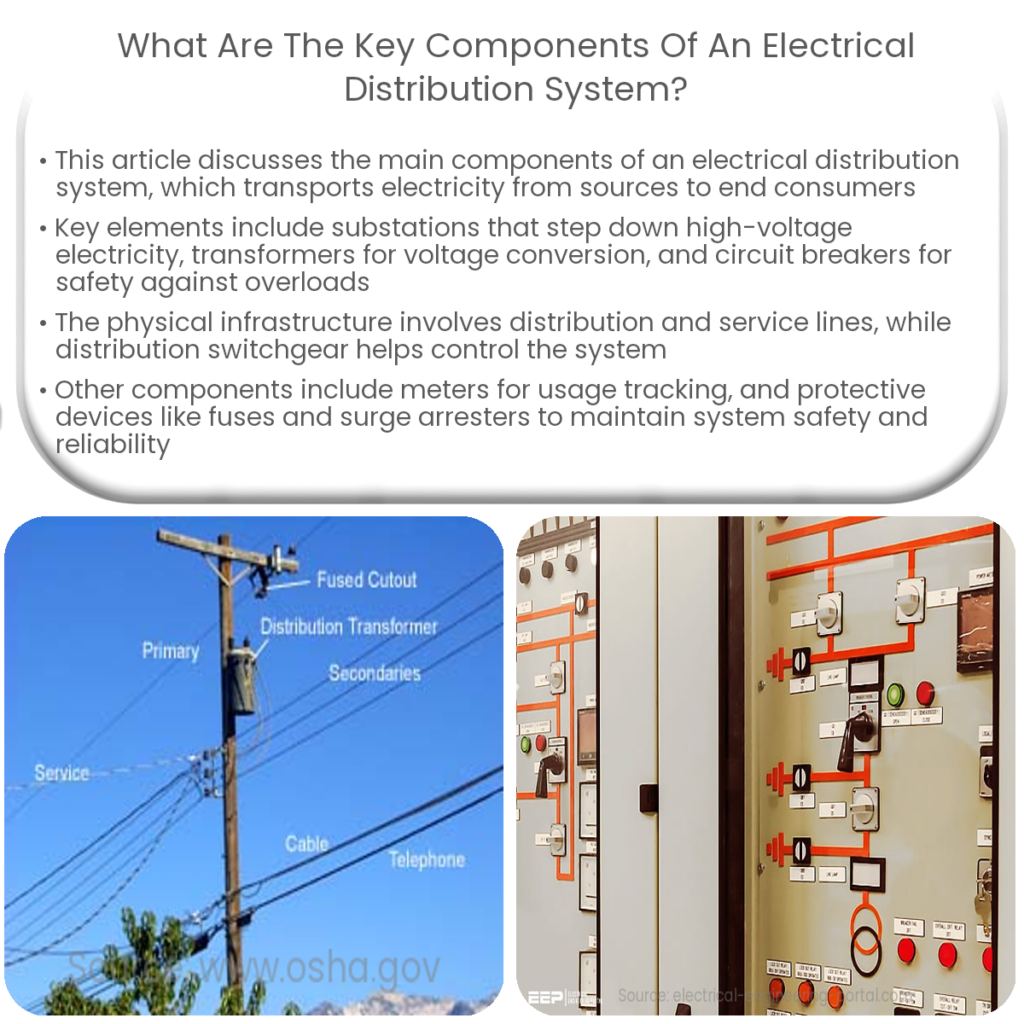
Key components include substations, transformers, circuit breakers, distribution lines, service lines, switchgear, meters, and protective devices.
A UPS is an electrical device providing continuous power to critical equipment during power outages, voltage fluctuations, and other disturbances.
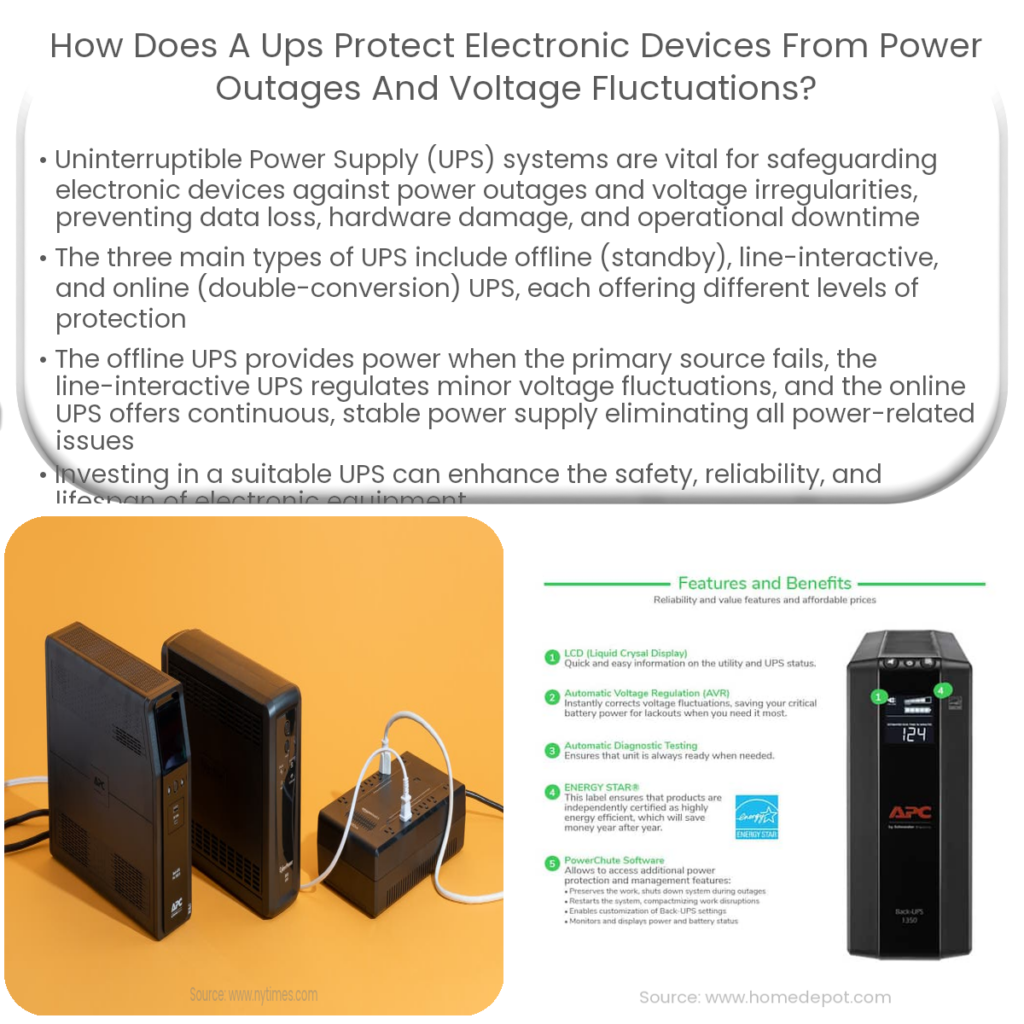
A UPS protects devices from power outages and voltage fluctuations by providing backup power and regulating voltage, preventing data loss and hardware damage.
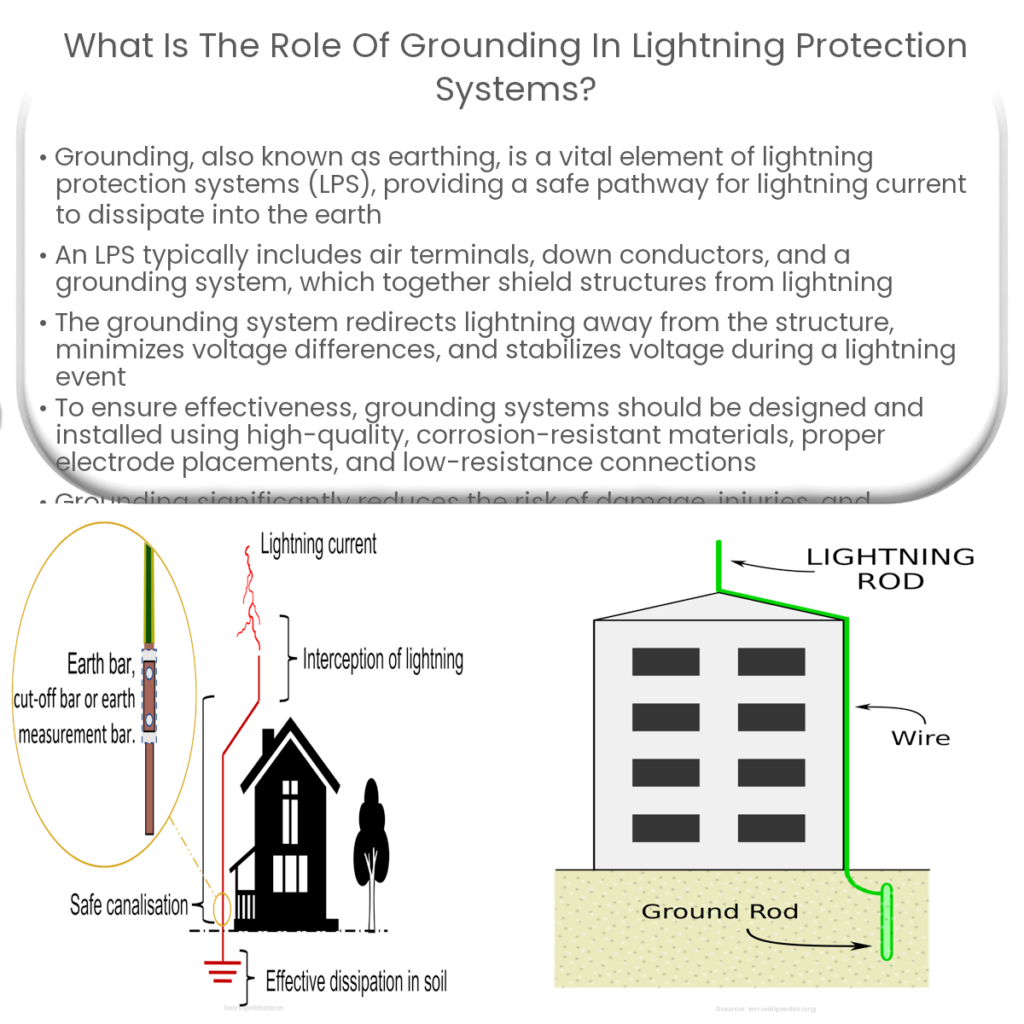
Grounding in lightning protection systems provides a safe path for lightning current to dissipate, reducing damage, fires, and injuries.

The primary purpose of this project is to help the public to learn some exciting and important information about electricity and magnetism.
Our Website follows all legal requirements to protect your privacy. Visit our Privacy Policy page.
The Cookies Statement is part of our Privacy Policy.
The information contained on this website is for general information purposes only. This website does not use any proprietary data. Visit our Editorial note.
It’s simple:
1) You may use almost everything for non-commercial and educational use.
2) You may not distribute or commercially exploit the content, especially on another website.
