
What is the difference between metallic and electrolytic conductivity?
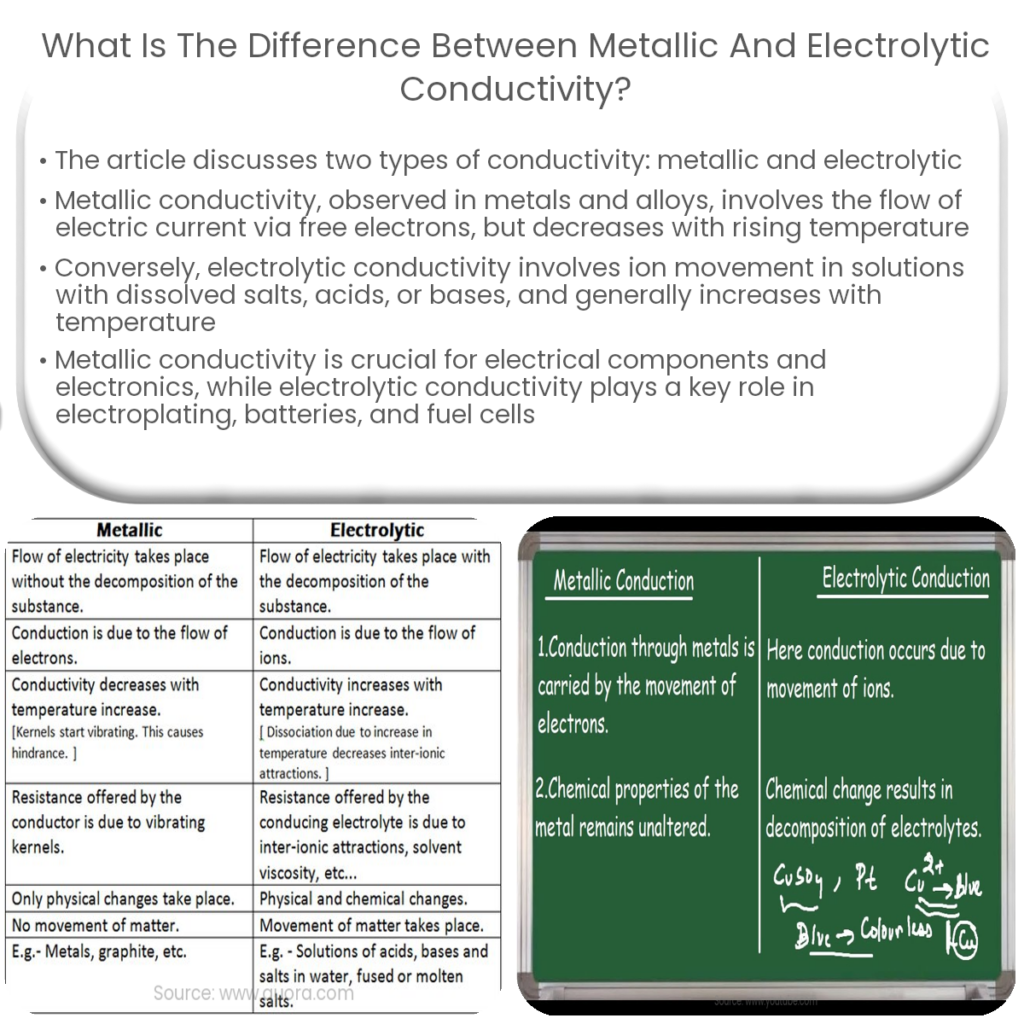
Metallic conductivity involves free electrons in metals, while electrolytic conductivity relies on ion movement in solutions containing dissolved ions.
Metallic conductivity involves free electrons in metals, while electrolytic conductivity relies on ion movement in solutions containing dissolved ions.
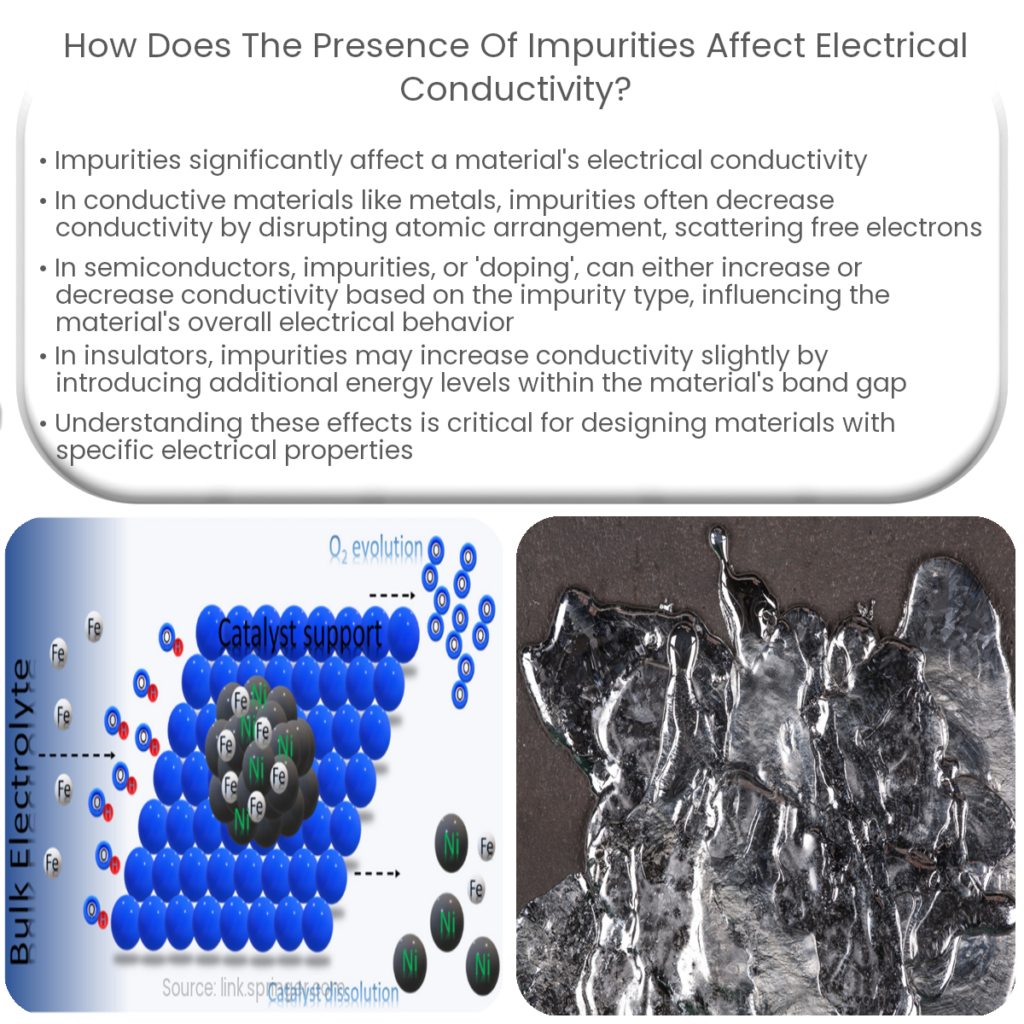
Impurities can increase or decrease electrical conductivity in materials, depending on their nature and the material type – conductors, semiconductors, or insulators.
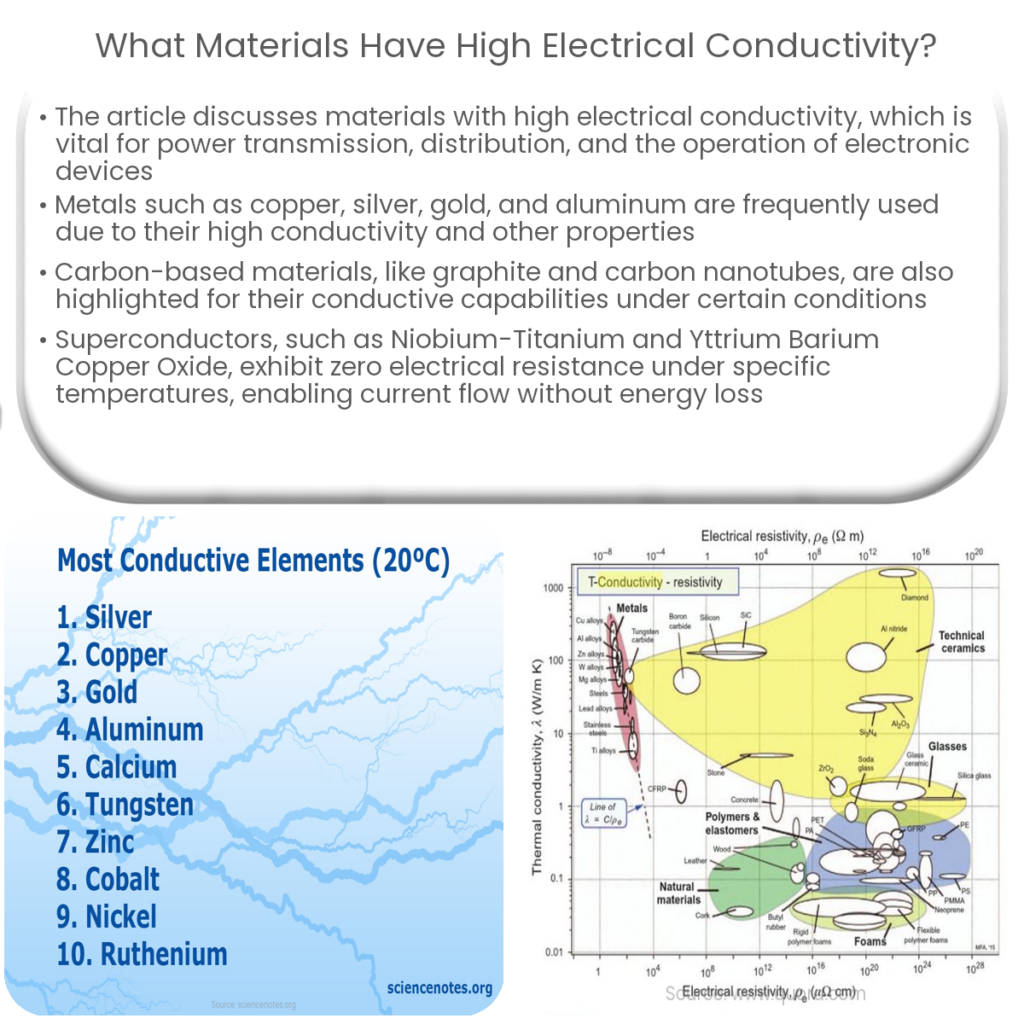
Highly conductive materials include metals like copper, silver, gold, and aluminum, carbon-based materials like graphite, and superconductors.
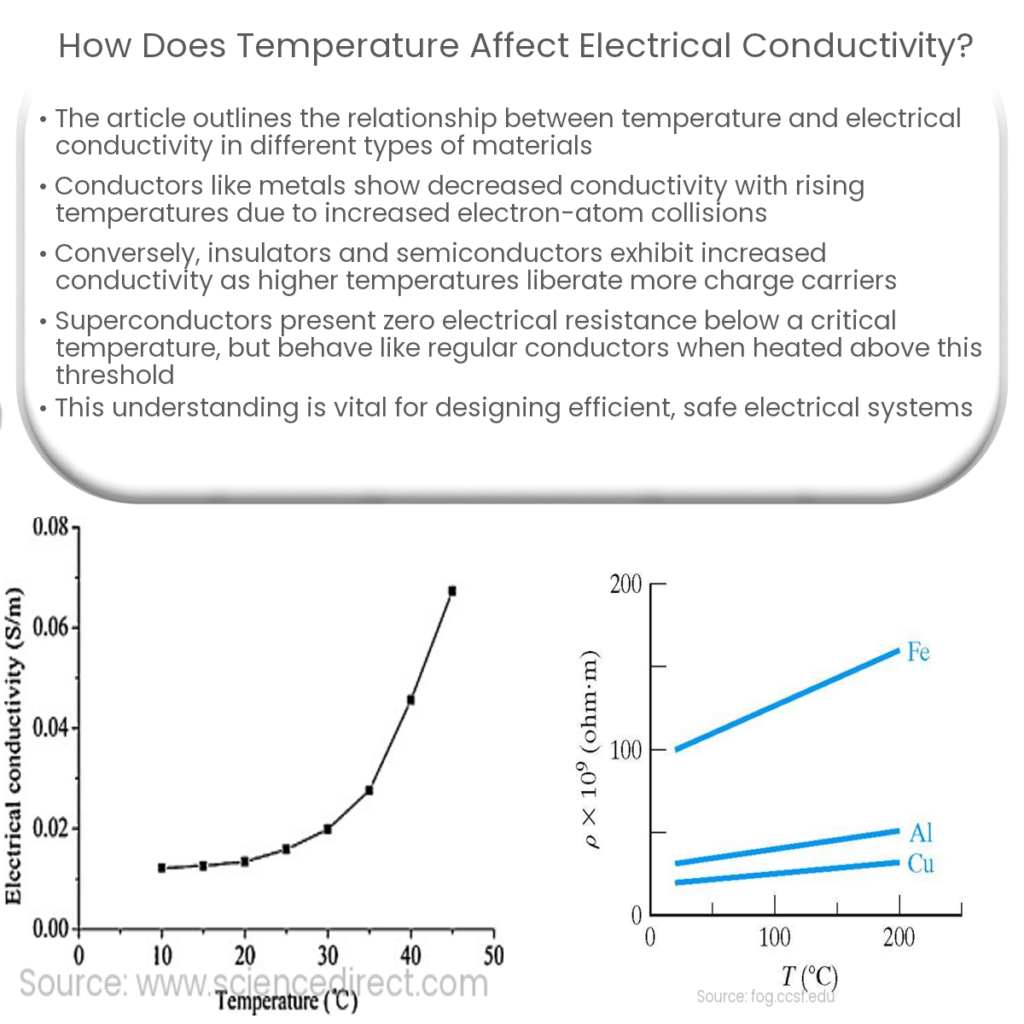
Temperature affects conductivity differently: conductors’ conductivity decreases, insulators and semiconductors’ conductivity increases, and superconductors vary.
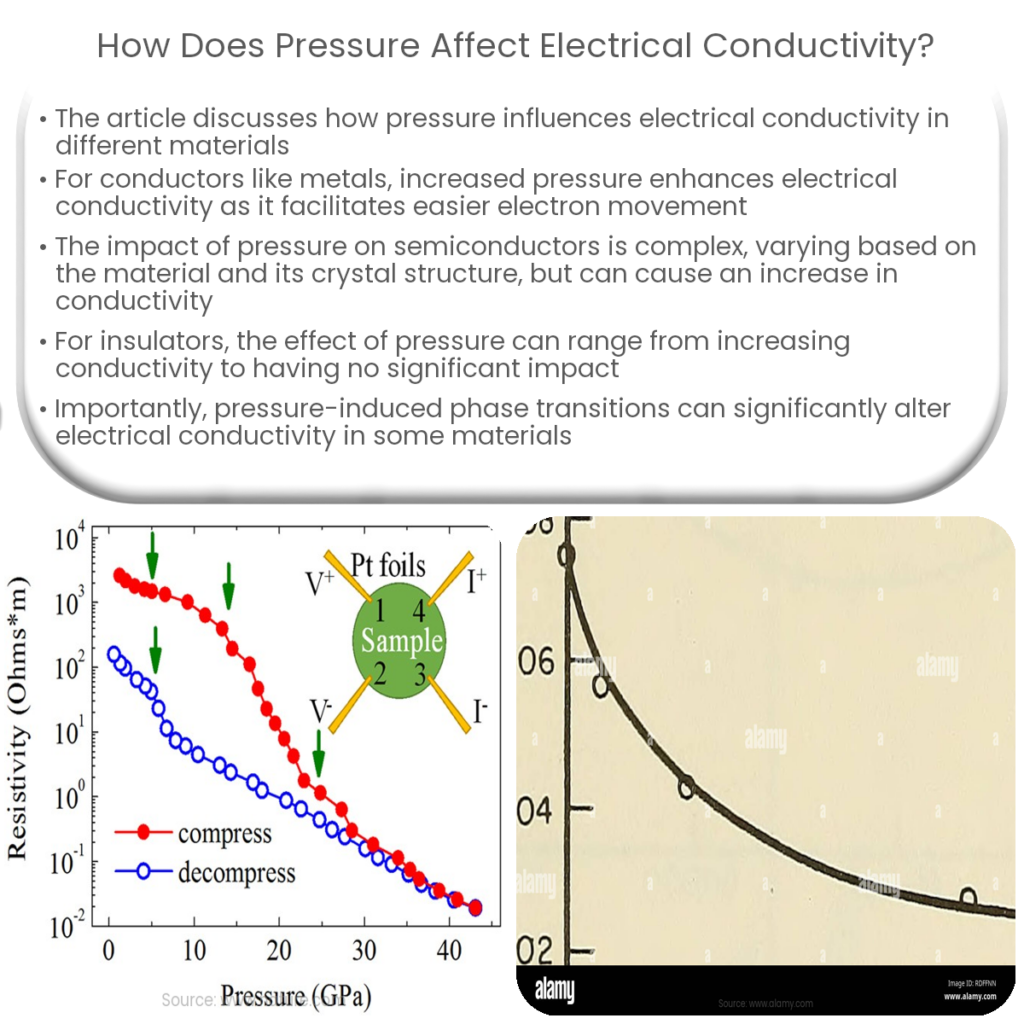
Pressure affects conductivity differently in conductors, semiconductors, and insulators, altering atomic distances, band structures, and energy gaps.
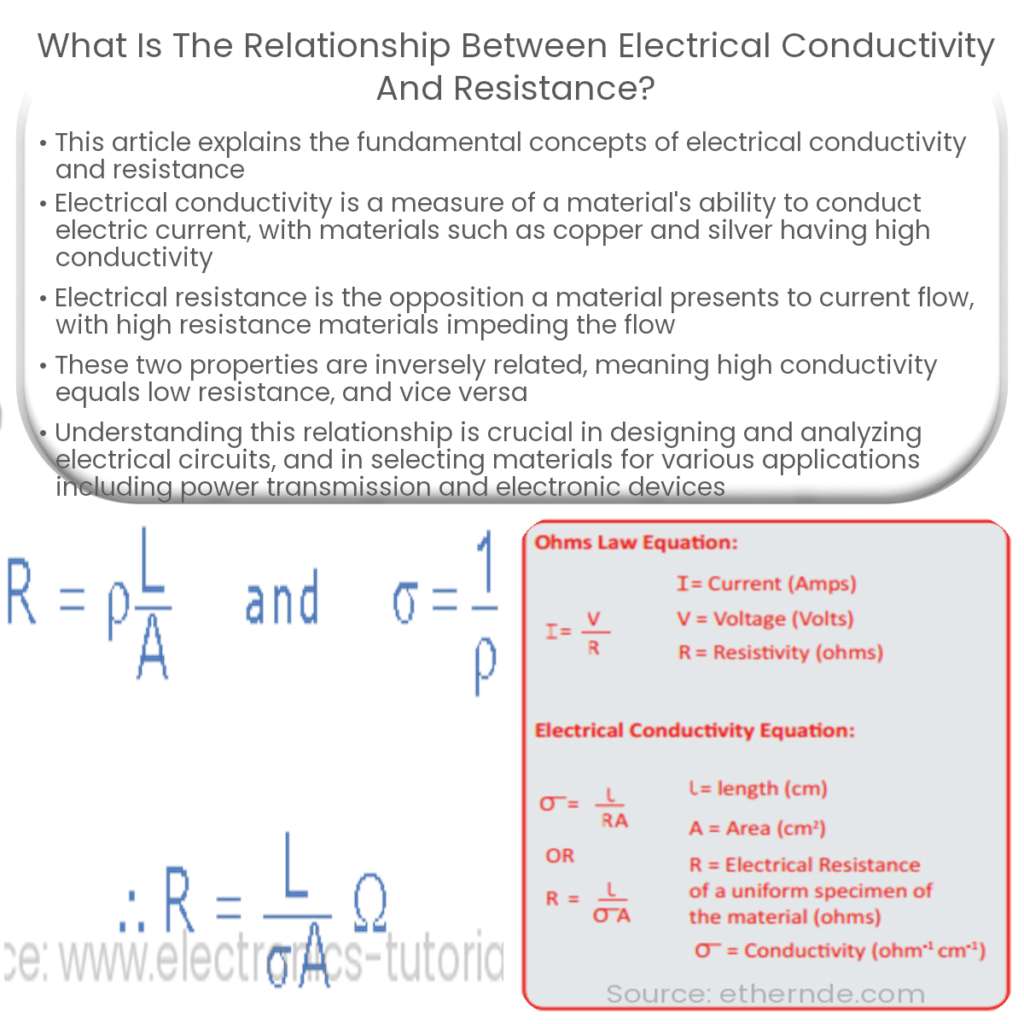
Electrical conductivity and resistance are inversely related: high conductivity means low resistance and vice versa. They help in material selection for circuits.
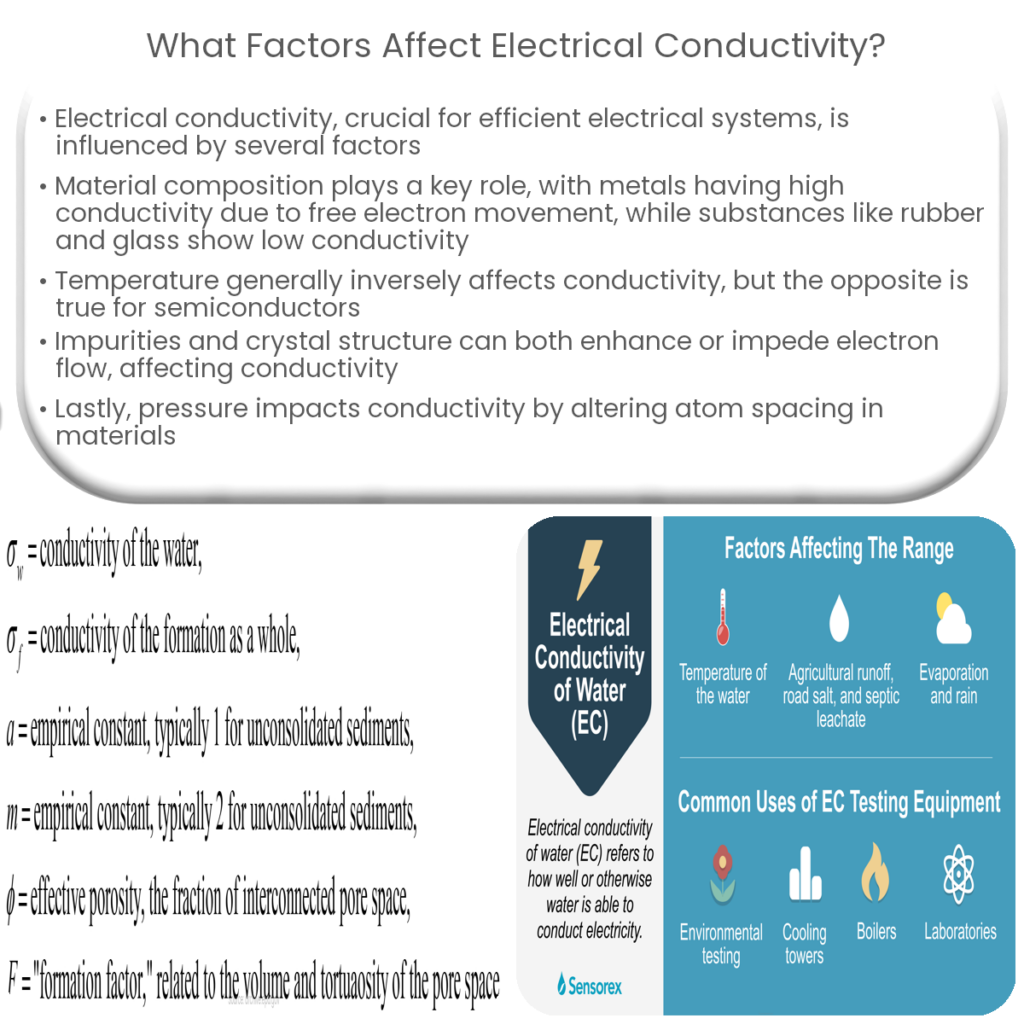
Factors affecting electrical conductivity include material composition, temperature, impurities, crystal structure, and pressure.

Electrical conductivity is measured using methods like the four-point probe method, conductivity meters, and resistivity measurements.
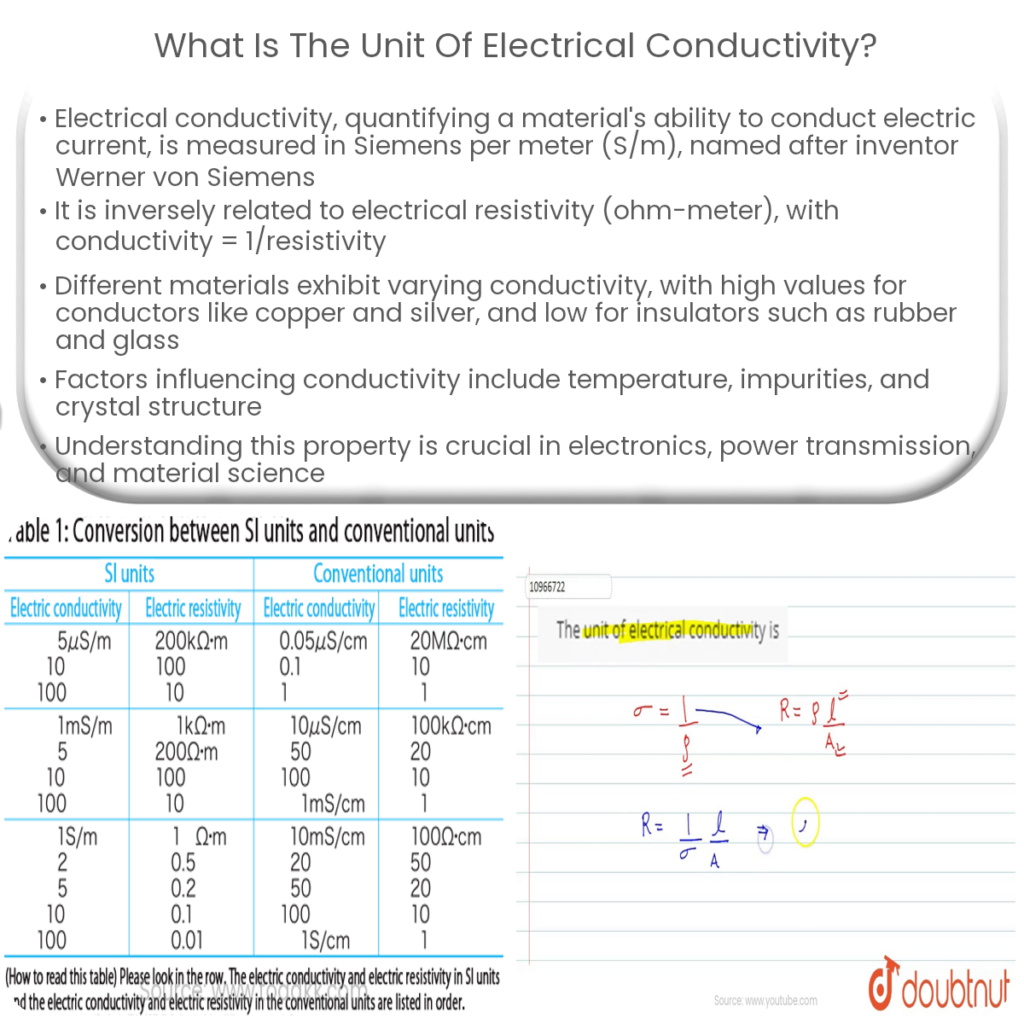
The unit of electrical conductivity is Siemens per meter (S/m), which is the reciprocal of the unit of electrical resistivity, ohm-meter (Ω•m).
The NEC sets safety standards, promotes consistency, addresses emerging technologies, and serves as an educational resource for electrical professionals.

The primary purpose of this project is to help the public to learn some exciting and important information about electricity and magnetism.
Our Website follows all legal requirements to protect your privacy. Visit our Privacy Policy page.
The Cookies Statement is part of our Privacy Policy.
The information contained on this website is for general information purposes only. This website does not use any proprietary data. Visit our Editorial note.
It’s simple:
1) You may use almost everything for non-commercial and educational use.
2) You may not distribute or commercially exploit the content, especially on another website.
