
How do AC and DC generators use magnetic induction to generate electricity?

AC and DC generators use magnetic induction by rotating a coil within a magnetic field, inducing an electromotive force, and generating electricity.
AC and DC generators use magnetic induction by rotating a coil within a magnetic field, inducing an electromotive force, and generating electricity.
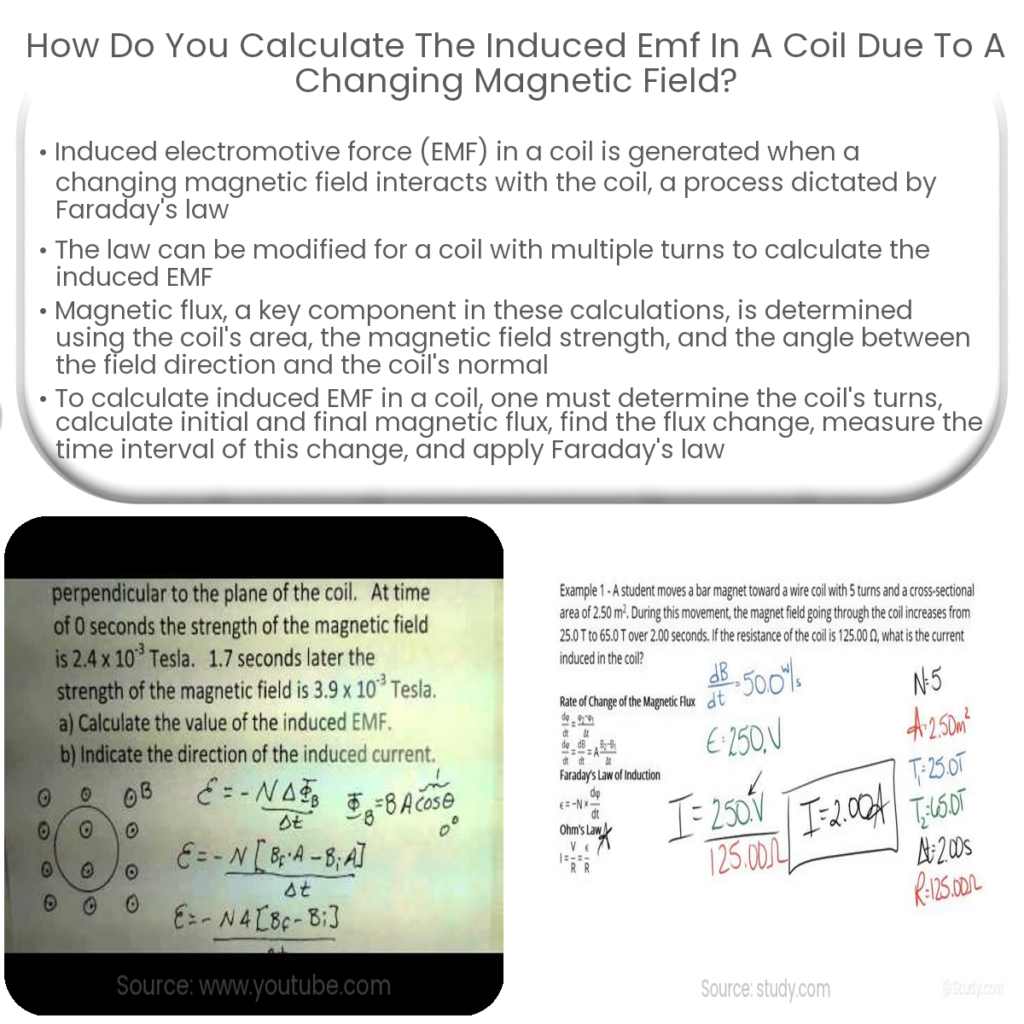
To calculate induced EMF in a coil, use Faraday’s law: EMF = -N*(ΔΦB/Δt), where N is the coil turns, and ΔΦB and Δt are changes in magnetic flux and time.
Lenz’s law determines the direction of induced EMF and current, stating they oppose the change in magnetic flux, while magnetic induction induces EMF.
Faraday’s law relates the rate of change in magnetic flux to the induced electromotive force, forming the basis for generators, transformers, and more.
Induced EMF depends on magnetic field strength, conductor loop area, loop orientation, rate of change of magnetic flux, and coil turns.
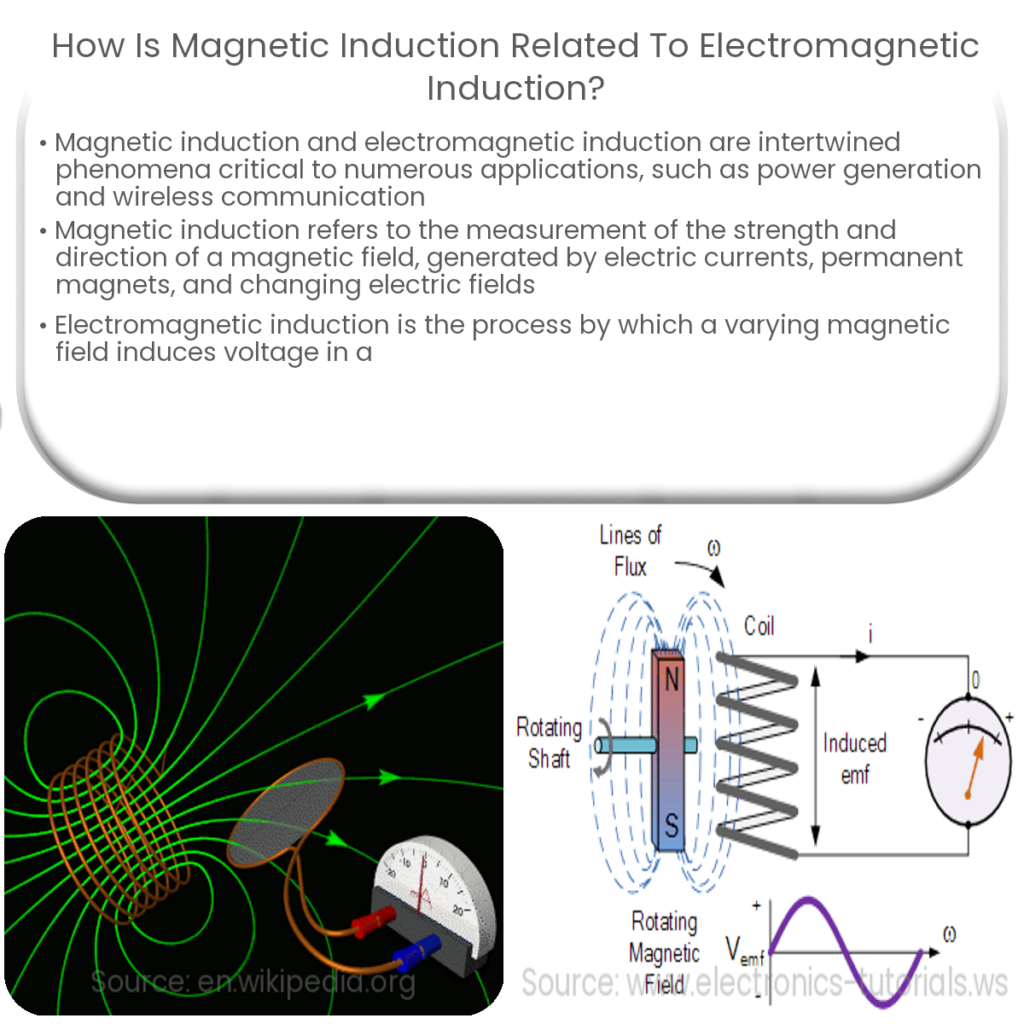
Magnetic induction creates magnetic fields, while electromagnetic induction occurs when a changing magnetic field induces a voltage in a conductor.

Magnetic induction is used in electricity generation by inducing a voltage in conductors when the magnetic field around them changes, as in generators.
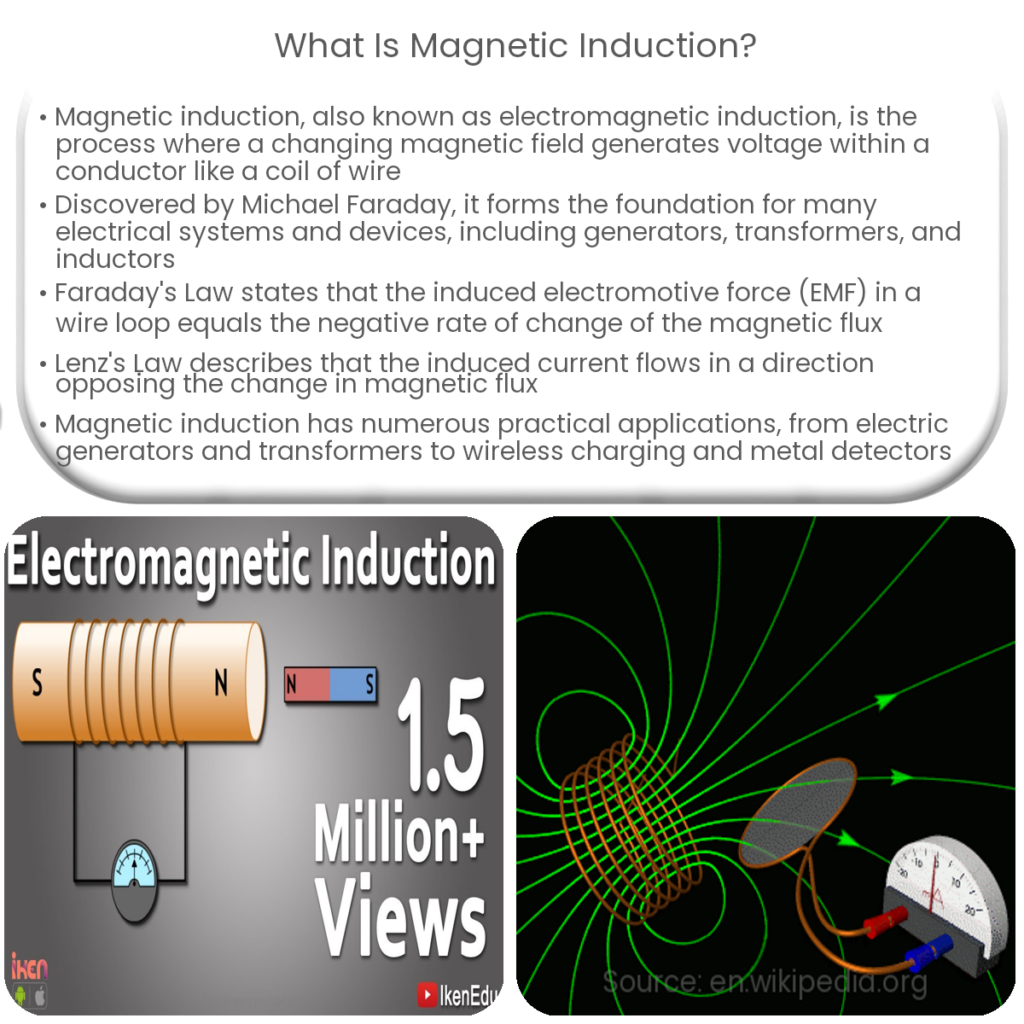
Magnetic induction is a phenomenon where a changing magnetic field generates an electromotive force (EMF) within a conductor, such as a coil of wire.

Electromagnetic induction is the process where a changing magnetic field generates an electromotive force in a conductor, enabling power generation.
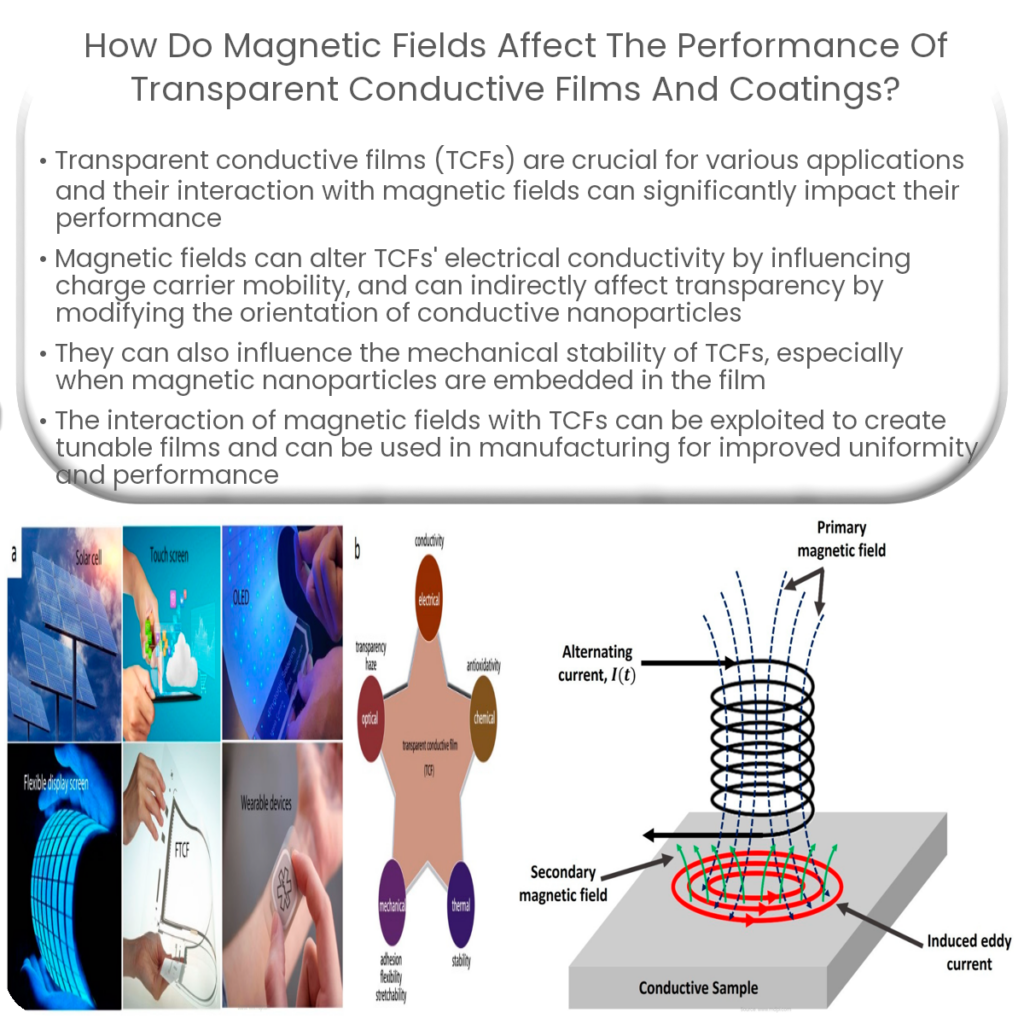
Magnetic fields can affect TCFs’ electrical conductivity, transparency, and mechanical stability, impacting their performance in various applications.

The primary purpose of this project is to help the public to learn some exciting and important information about electricity and magnetism.
Our Website follows all legal requirements to protect your privacy. Visit our Privacy Policy page.
The Cookies Statement is part of our Privacy Policy.
The information contained on this website is for general information purposes only. This website does not use any proprietary data. Visit our Editorial note.
It’s simple:
1) You may use almost everything for non-commercial and educational use.
2) You may not distribute or commercially exploit the content, especially on another website.
