
Germanium diode

Germanium diodes are semiconductors with low forward voltage drop, ideal for low-power electronics, RF detection, and audio signal processing.
Germanium diodes are semiconductors with low forward voltage drop, ideal for low-power electronics, RF detection, and audio signal processing.

Silicon diodes are essential two-terminal semiconductor devices that allow current flow in one direction, used in power supplies, signal processing, and protection circuits.

Explore the science and applications of Radioisotope Thermoelectric Generators (RTGs), their role in space missions, and future potential.
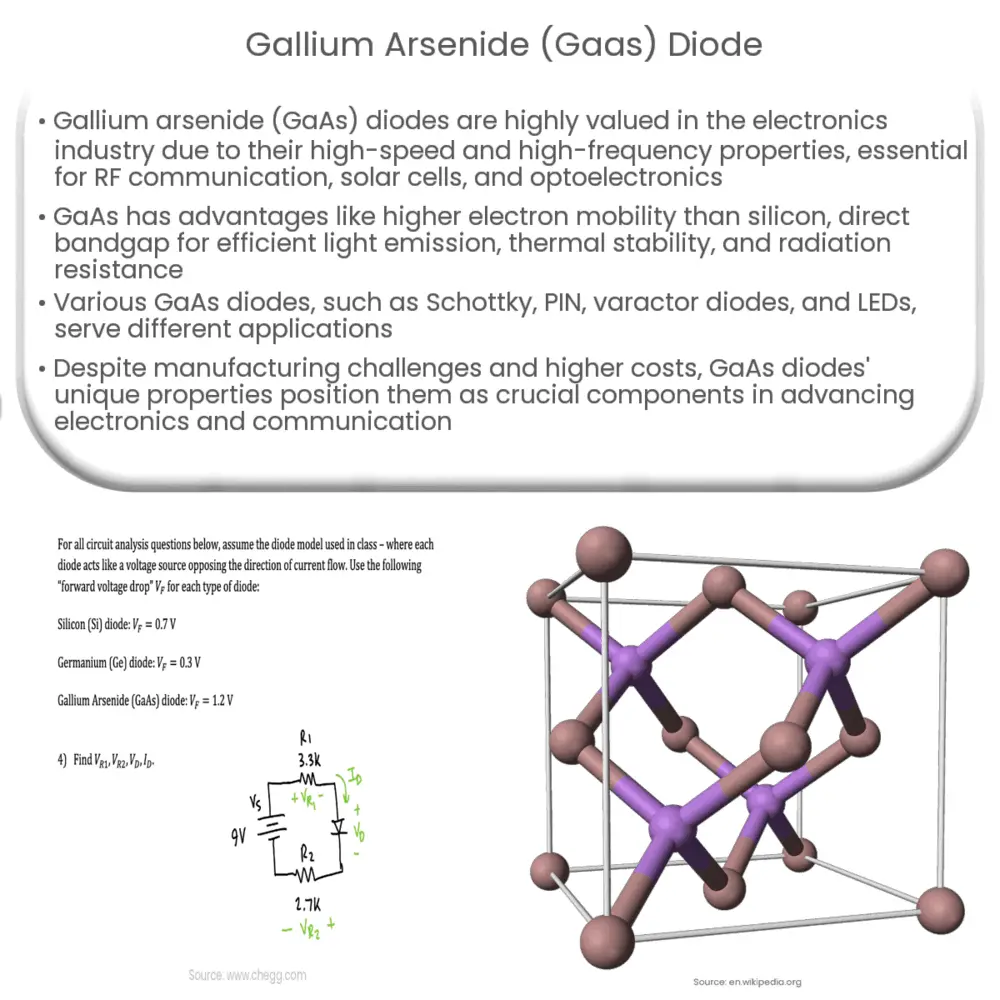
Gallium arsenide (GaAs) diodes are high-speed, high-frequency semiconductors used in communication systems, solar cells, and optoelectronics.

A vacuum diode is a two-terminal electronic device allowing unidirectional current flow, historically significant in early electronics.
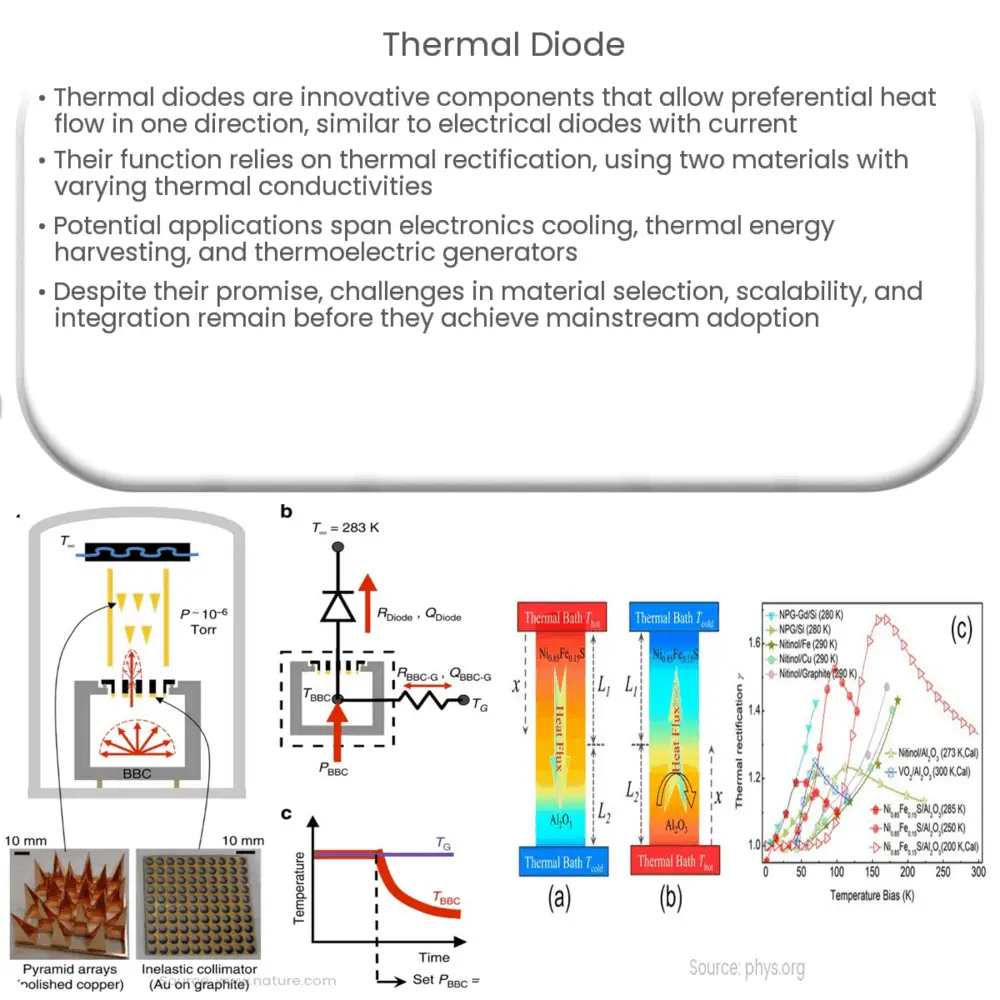
A thermal diode is a device that directs heat flow in one direction, improving heat management in electronics, energy harvesting, and thermoelectric applications.

A snap diode is a fast-switching semiconductor device used in high-speed applications such as microwave frequency generation and pulse shaping.

The mercury-arc diode is a historic gas discharge tube that converted AC to DC, widely used in high-power applications before being replaced by semiconductors.

A selenium diode is a semiconductor rectifier composed of a selenium layer between two metal electrodes, used historically in electronics.
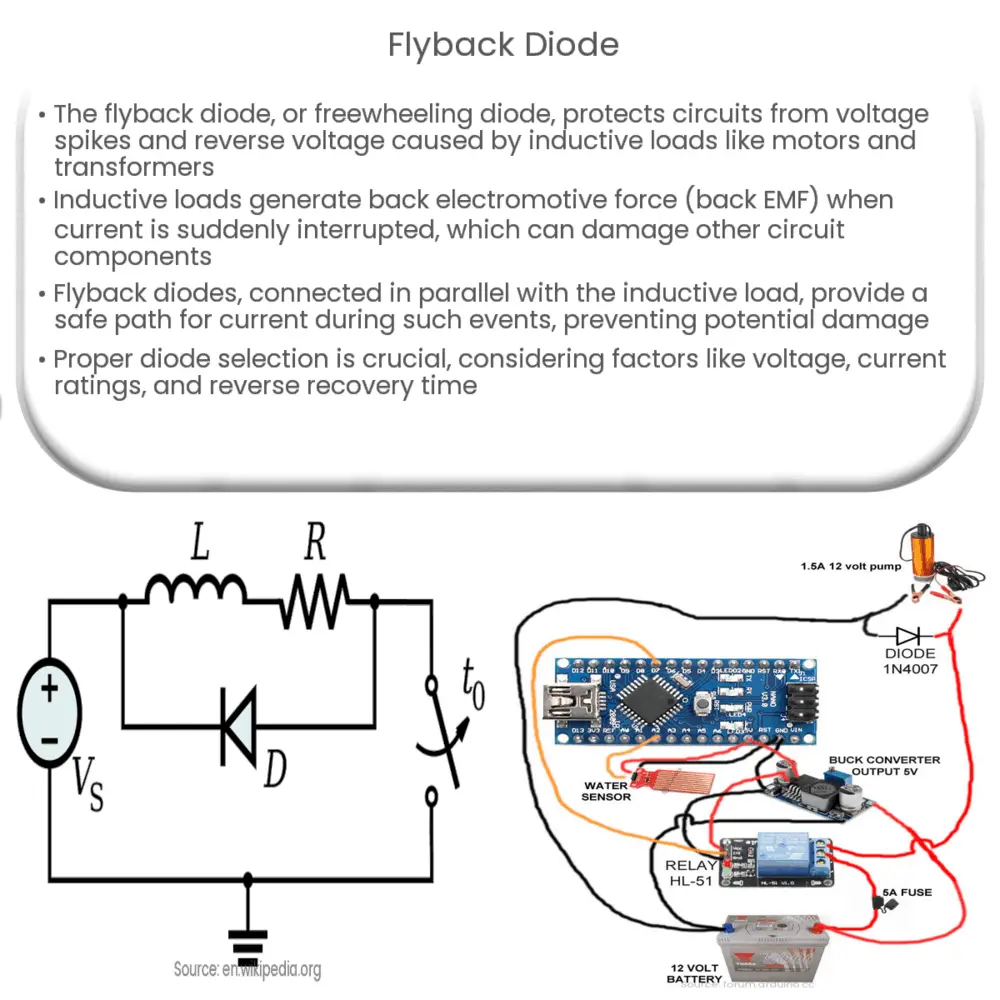
A flyback diode protects electrical circuits from voltage spikes and reverse voltage caused by inductive loads like motors and transformers.

The primary purpose of this project is to help the public to learn some exciting and important information about electricity and magnetism.
Our Website follows all legal requirements to protect your privacy. Visit our Privacy Policy page.
The Cookies Statement is part of our Privacy Policy.
The information contained on this website is for general information purposes only. This website does not use any proprietary data. Visit our Editorial note.
It’s simple:
1) You may use almost everything for non-commercial and educational use.
2) You may not distribute or commercially exploit the content, especially on another website.
