
Synchronous magnetic gears enable efficient, low-maintenance power transmission, with applications in EVs, renewables, and industrial automation.
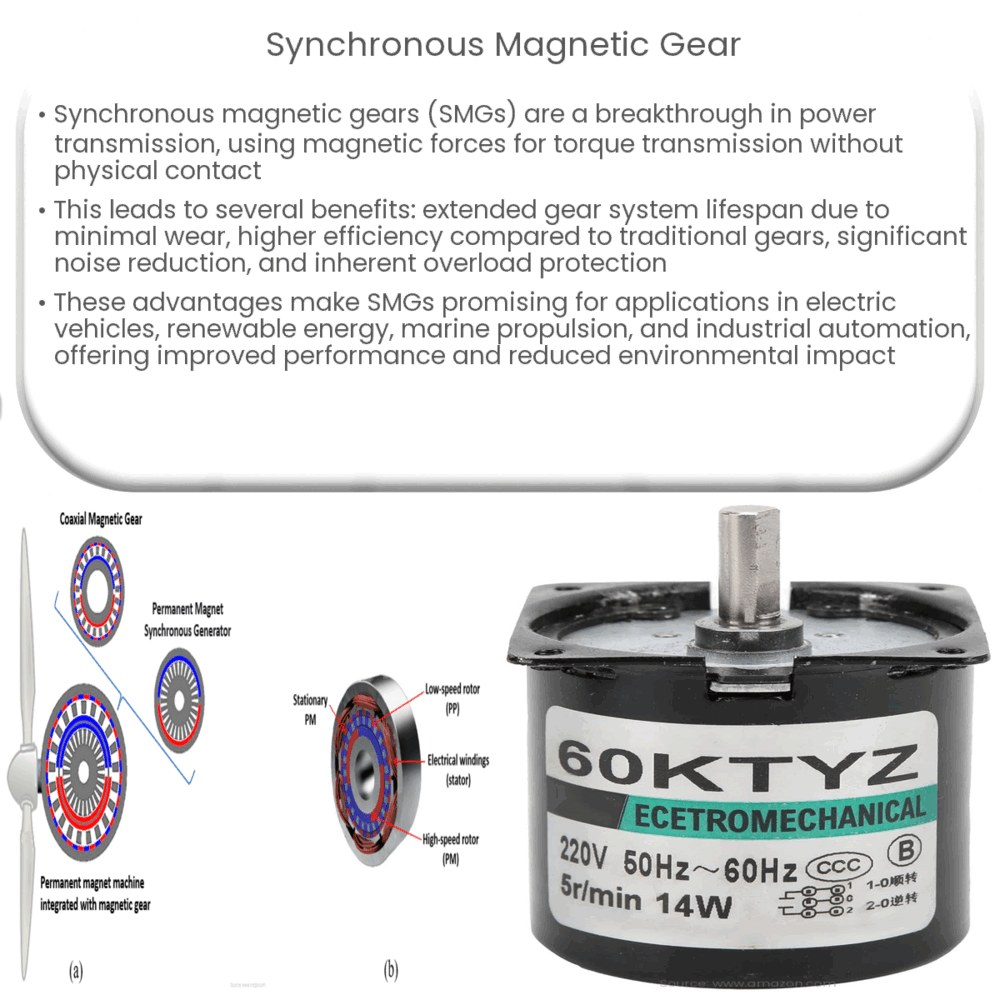
Synchronous Magnetic Gears: A Revolution in Power Transmission
Introduction
Magnetic gears have been a topic of interest in recent years as industries seek to improve energy efficiency, reduce maintenance costs, and increase the durability of their equipment. Among these, the synchronous magnetic gear (SMG) has emerged as a promising technology with a broad range of applications, from electric vehicles to renewable energy systems. In this article, we explore the basics of synchronous magnetic gears, their advantages over conventional mechanical gears, and the potential impact on various industries.
What are Synchronous Magnetic Gears?
Synchronous magnetic gears are a type of non-contact power transmission device that uses magnetic forces to transmit torque between input and output shafts. Unlike traditional mechanical gears that rely on physical contact between teeth, SMGs consist of two or more sets of permanent magnets that interact with each other through magnetic fields. The input and output shafts are mounted with the rotor and stator, respectively, with an air gap separating them. The torque transmission occurs as the magnetic fields from the input and output magnet arrays align, causing the output shaft to rotate in synchronization with the input shaft.
Advantages of Synchronous Magnetic Gears
There are several key advantages that make synchronous magnetic gears an attractive alternative to traditional mechanical gears. Some of these benefits include:
1. No Physical Contact
One of the most significant advantages of SMGs is the absence of physical contact between the input and output shafts. This not only eliminates the need for lubrication but also results in minimal wear and tear, extending the lifespan of the gear system and reducing maintenance costs.
2. High Efficiency
Since there is no friction between gear teeth, synchronous magnetic gears can achieve higher efficiency levels than their mechanical counterparts. This can lead to significant energy savings in high-torque applications, making SMGs an eco-friendly choice for power transmission.
3. Noise Reduction
As there is no mechanical contact in SMGs, they generate significantly less noise compared to traditional gears. This can be especially beneficial in applications where noise reduction is essential, such as in residential areas or within sensitive equipment.
4. Overload Protection
In the event of a sudden increase in torque, the magnetic fields within an SMG can slip, allowing the output shaft to decouple from the input shaft momentarily. This inherent overload protection feature helps prevent damage to the gear system and the connected equipment.
Applications and Impact on Industries
Synchronous magnetic gears hold great potential for numerous industries due to their unique features and advantages. In the following section, we will explore some of the most prominent applications and the impact they could have on various sectors.
Electric Vehicles
With the growing demand for electric vehicles (EVs), the need for efficient and reliable power transmission systems is more critical than ever. Synchronous magnetic gears can offer several advantages in this domain, such as increased efficiency, reduced noise, and compact size. By integrating SMGs into electric vehicle drivetrains, manufacturers can potentially enhance performance, extend vehicle range, and improve the overall user experience.
Wind Turbines
Renewable energy systems, such as wind turbines, can benefit significantly from the integration of synchronous magnetic gears. The high efficiency and low maintenance requirements of SMGs make them an ideal choice for wind turbine gearboxes, where they can help minimize energy losses and reduce the overall cost of energy production. Additionally, the inherent overload protection feature of SMGs can safeguard the turbines from sudden gusts of wind, prolonging the life of the system and minimizing downtime.
Marine Propulsion
The marine industry is another sector where SMGs can make a substantial impact. Replacing conventional mechanical gearboxes with SMGs in marine propulsion systems can lead to increased efficiency, reduced noise and vibrations, and enhanced reliability. This can result in improved fuel economy, extended maintenance intervals, and a more comfortable experience for passengers and crew members.
Industrial Automation
Industrial automation relies heavily on precision and reliability, and synchronous magnetic gears can deliver these attributes in spades. Their high efficiency, low maintenance requirements, and overload protection capabilities make them well-suited for various automated machinery and robotic applications. By adopting SMGs in these systems, industries can potentially reduce energy consumption, minimize downtime, and increase overall productivity.
Conclusion
Synchronous magnetic gears represent a significant leap forward in power transmission technology. With their numerous advantages over traditional mechanical gears, including higher efficiency, reduced maintenance requirements, and noise reduction, SMGs hold great potential to transform various industries. As the technology matures and becomes more widely adopted, we can expect to see increased integration of SMGs in electric vehicles, renewable energy systems, marine propulsion, and industrial automation, leading to improved performance, reduced environmental impact, and enhanced reliability in these sectors.