
A synchronous DC-DC converter is an efficient power management component that offers stable voltage conversion, reduced ripple, and better transient response.
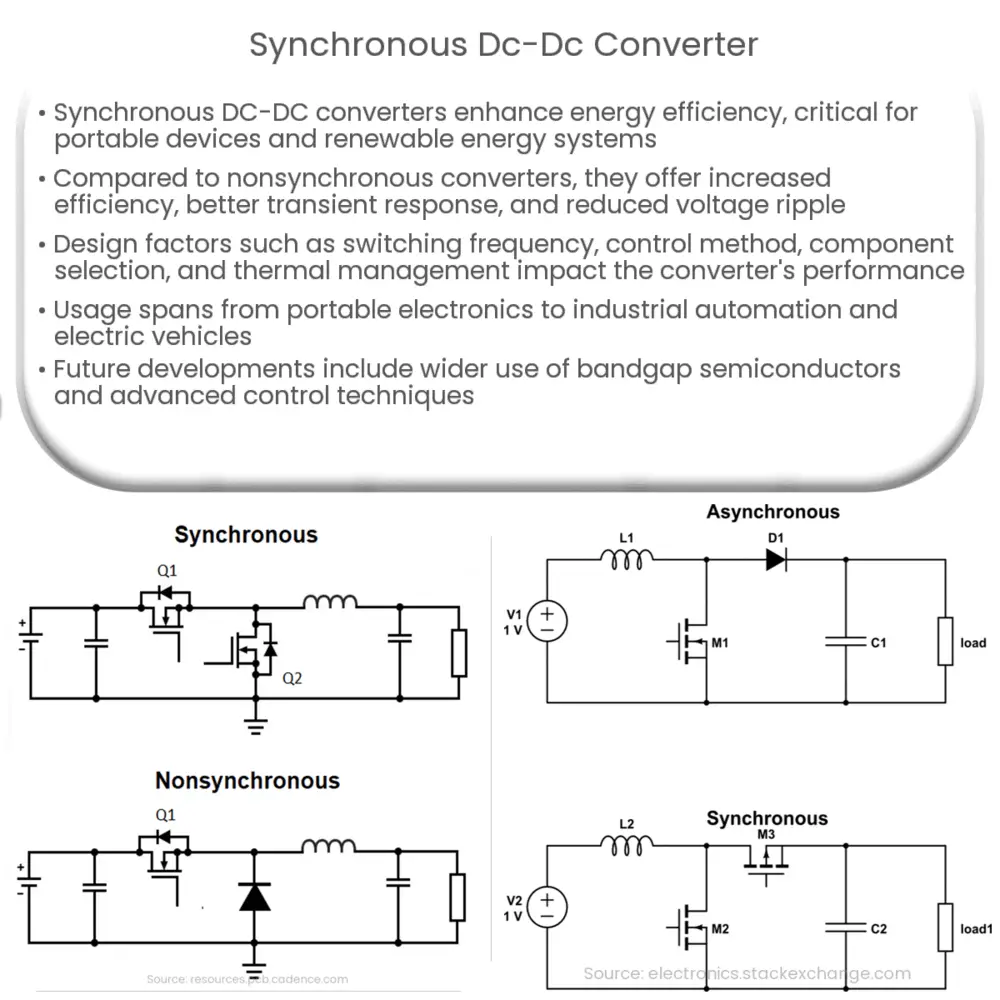
Synchronous DC-DC Converter: Enhancing Power Efficiency in Electronic Systems
Introduction
A synchronous DC-DC converter is an essential component in modern electronic systems, playing a crucial role in energy efficiency and power management. With the ever-increasing demand for portable devices, energy storage systems, and renewable energy applications, it has become essential to develop more efficient and reliable DC-DC converters. In this article, we will explore the advantages and key features of synchronous DC-DC converters, their applications, and the latest trends in this technology.
Understanding DC-DC Converters
DC-DC converters are electronic devices that convert a source of direct current (DC) from one voltage level to another. They are widely used in power supplies, battery chargers, and voltage regulators for a variety of electronic systems. There are two main types of DC-DC converters: linear regulators and switching regulators. Linear regulators provide a simple and cost-effective solution but are less efficient, while switching regulators offer higher efficiency but require more complex circuitry.
Synchronous vs. Nonsynchronous DC-DC Converters
Switching regulators can be further classified into synchronous and nonsynchronous converters. The key difference between them lies in the type of rectification used for the output stage.
Nonsynchronous Converters: In a nonsynchronous converter, the rectification is achieved through a diode. This results in a voltage drop across the diode, which can lead to energy loss and reduced efficiency. The efficiency is typically between 75% and 90%, depending on the input and output voltage levels and the load current.
Synchronous Converters: In a synchronous converter, the diode is replaced by a controlled switch, such as a MOSFET (Metal-Oxide-Semiconductor Field-Effect Transistor), which eliminates the voltage drop across the diode. This significantly increases the efficiency, which can reach up to 95% or higher. Synchronous converters also provide better transient response and reduced output voltage ripple, which is particularly important in applications with sensitive loads.
Advantages of Synchronous DC-DC Converters
There are several benefits to using synchronous DC-DC converters, such as:
- Higher efficiency: Synchronous converters offer higher efficiency compared to nonsynchronous converters, which translates to lower power losses and less heat generation. This can be particularly beneficial in applications where energy efficiency is critical, such as battery-powered devices, solar power systems, and electric vehicles.
- Better transient response: Synchronous converters can respond more quickly to sudden changes in load or input voltage, resulting in a more stable output voltage and improved performance for sensitive electronic systems.
- Reduced output voltage ripple: The output voltage of a synchronous converter is typically smoother, with reduced voltage ripple. This can be essential in applications where low noise and minimal voltage fluctuations are required, such as in audio, video, and communication systems.
Key Design Considerations for Synchronous DC-DC Converters
When designing a synchronous DC-DC converter, there are several factors to consider:
- Switching Frequency: The choice of switching frequency impacts the converter’s efficiency, transient response, and output voltage ripple. Higher switching frequencies can reduce the size of passive components, such as inductors and capacitors, but may also increase switching losses and electromagnetic interference (EMI).
- Control Method: Synchronous DC-DC converters can be designed using various control methods, such as voltage mode control, current mode control, or digital control. The choice of control method affects the converter’s performance, stability, and complexity.
- Component Selection: The choice of components, including MOSFETs, inductors, and capacitors, significantly impacts the performance, efficiency, and reliability of the converter. Factors such as parasitic resistances, capacitance, and inductance need to be considered when selecting these components.
- Thermal Management: Proper thermal management is crucial for maintaining the efficiency and reliability of synchronous DC-DC converters. Designers must consider heat dissipation, component temperature ratings, and thermal stress to ensure optimal performance and long-term reliability.
Applications of Synchronous DC-DC Converters
Synchronous DC-DC converters are used in a wide range of applications, including:
- Portable Electronics: Smartphones, tablets, and other battery-powered devices benefit from the high efficiency and compact size of synchronous converters, which help extend battery life and reduce device size.
- Industrial Automation: Synchronous converters provide stable, low-noise power for sensitive control systems, sensors, and communication equipment in industrial applications.
- Automotive: Electric vehicles, advanced driver assistance systems (ADAS), and infotainment systems utilize synchronous converters for efficient power management and reduced energy consumption.
- Renewable Energy: Solar power systems and energy storage solutions employ synchronous converters to maximize energy efficiency and ensure stable, reliable power conversion.
Future Trends and Developments
As the demand for energy-efficient and compact power solutions continues to grow, research and development in synchronous DC-DC converter technology are expected to further advance. Key trends and developments in this field include:
- Wide Bandgap Semiconductors: The adoption of wide bandgap materials, such as silicon carbide (SiC) and gallium nitride (GaN), in synchronous converters can result in higher efficiency, faster switching speeds, and improved thermal performance.
- Advanced Control Techniques: The use of advanced control algorithms and digital control methods can further enhance the performance, stability, and adaptability of synchronous converters in various applications.
- System Integration: The integration of synchronous DC-DC converters with other power management components and functions, such as battery management systems, energy harvesting, and wireless power transfer, is expected to drive innovations in system-level power solutions.
In conclusion, synchronous DC-DC converters play a vital role in modern electronic systems by providing efficient and reliable power conversion. As technology continues to evolve, we can expect even more advanced and integrated solutions to emerge, further enhancing the performance and energy efficiency of our devices and systems.



