
Alkaline Battery
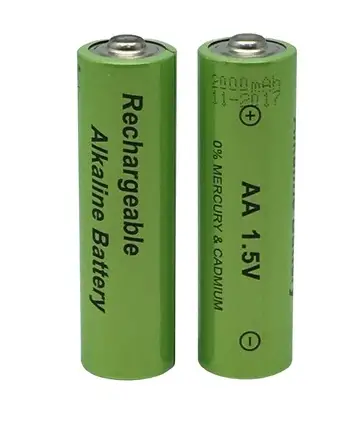
An alkaline battery (IEC code: L) is a type of primary battery that provides direct electric current from the electrochemical reaction between zinc and manganese dioxide (MnO2) in the presence of an alkaline electrolyte.
The alkaline battery gets its name because it has an alkaline electrolyte of potassium hydroxide (KOH) instead of the acidic ammonium chloride (NH4Cl) or zinc chloride (ZnCl2) electrolyte of the zinc–carbon batteries. Other battery systems also use alkaline electrolytes, but they use different active materials for the electrodes.
The primary alkaline battery is a widely used product, which is essential for powering many portable devices, such as power tools, radios, toys, and remote controls. The most common size of alkaline battery is the well-known AA battery. Alkaline batteries are most commonly used in portable devices that have low current drains, are used only intermittently, or are used well away from an alternative power source, such as in alarm and communication circuits where other electric power is only intermittently available.
Rechargeable Alkaline Battery
A rechargeable alkaline battery, also known as alkaline rechargeable or rechargeable alkaline manganese (RAM), is a type of alkaline battery that is capable of recharging for repeated use. Their capacity is about 2/3 that of primary cells. They are of dry-cell construction, completely sealed, and not requiring maintenance. Cells have a limited cycle life, which is affected by deep discharge; the first cycle gives the greatest capacity, and if deeply discharged a cell may provide only 20 cycles. The available energy on each cycle decreases. Like primary alkaline cells, they have a relatively high internal resistance, making them unsuitable for high discharge current (for example, discharging their full capacity in one hour).