
A PIN diode is a semiconductor device with unique characteristics, widely used in RF and microwave applications for switches, attenuators, and more.
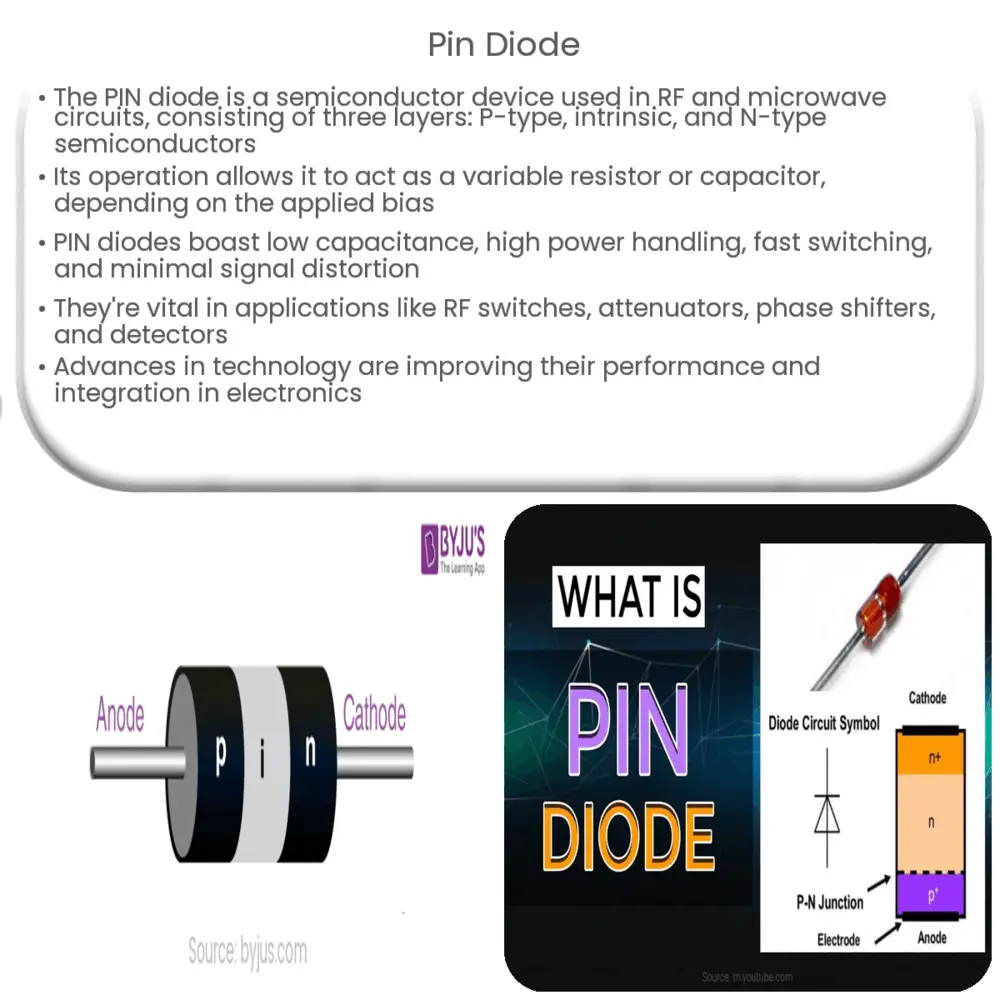
PIN Diode: An Overview and Applications
A PIN diode is a unique type of semiconductor device that is widely used in various applications, such as radio frequency (RF) and microwave circuits. The acronym PIN represents the three layers of the diode: a heavily doped P-type semiconductor (P), a lightly doped or intrinsic semiconductor (I), and a heavily doped N-type semiconductor (N). In this article, we will explore the working principles, characteristics, and applications of the PIN diode.
Working Principle of PIN Diode
The operation of the PIN diode is similar to that of a regular PN junction diode. When a forward bias is applied, the P and N regions are connected through the intrinsic layer, allowing current to flow. On the other hand, when a reverse bias is applied, the intrinsic layer acts as an insulator, blocking the flow of current. The intrinsic region’s thickness and resistivity determine the diode’s performance characteristics, enabling it to act as a variable resistor or capacitor in RF and microwave applications.
Characteristics of PIN Diode
PIN diodes exhibit several unique characteristics that make them suitable for various applications:
- Low Capacitance: The intrinsic layer in the PIN diode helps minimize the capacitance, allowing the device to perform well at high frequencies. This characteristic makes PIN diodes suitable for applications like RF switches and attenuators.
- High Power Handling: Due to the wide intrinsic layer, PIN diodes can handle high levels of power and voltage, making them ideal for high-power applications.
- Fast Switching: The intrinsic layer also allows for fast switching between ON and OFF states. This fast switching capability makes PIN diodes suitable for high-speed applications such as pulse modulators.
- Low Distortion: PIN diodes introduce minimal distortion to the signals passing through them, making them ideal for use in low-noise RF and microwave circuits.
Applications of PIN Diode
The unique properties of PIN diodes make them well-suited for various applications, particularly in the RF and microwave domains. Some common applications include:
- RF Switches: PIN diodes are widely used to construct RF switches, which are essential components in communication systems, radar systems, and test equipment. They can handle high power levels and provide fast switching times with low signal distortion.
- Attenuators: The variable resistance property of the PIN diode allows it to be used in creating adjustable attenuators for controlling signal levels in RF circuits.
- Phase Shifters: PIN diodes can also be employed in the design of phase shifters, which are vital components in phased array antennas and other applications requiring precise control of phase relationships between signals.
- Limiters and Detectors: Due to their high power handling capabilities and fast response times, PIN diodes are used in limiters and detectors for protecting sensitive components from high power signals and for signal detection, respectively.
In conclusion, PIN diodes are versatile and valuable components in the field of electronics, particularly for RF and microwave applications. Their unique characteristics, such as low capacitance, high power handling, fast switching, and low distortion, make them indispensable in numerous real-world applications.
Design Considerations for PIN Diodes
When designing circuits that incorporate PIN diodes, several factors must be taken into account to ensure optimal performance:
- Operating Frequency: The choice of PIN diode is heavily influenced by the operating frequency of the circuit. It is crucial to select a diode with suitable characteristics for the desired frequency range to minimize losses and distortion.
- Power Handling: The power handling capacity of the PIN diode should be carefully considered, especially in high-power applications. Overloading the diode can cause performance degradation or even failure.
- Switching Speed: The switching speed of the PIN diode should meet the requirements of the specific application. High-speed applications demand diodes with fast switching times to ensure proper signal processing.
- Thermal Management: PIN diodes can generate heat when operating at high power levels. Adequate thermal management, such as proper heat sinking and temperature monitoring, is crucial to maintain performance and prevent premature failure.
Advancements in PIN Diode Technology
As the demand for high-performance RF and microwave components continues to grow, researchers and engineers are working on improving PIN diode technology. Some recent advancements include:
- Materials: New semiconductor materials, such as gallium nitride (GaN) and silicon carbide (SiC), are being explored to enhance the performance of PIN diodes. These materials offer better thermal conductivity and higher breakdown voltages, enabling improved power handling and higher operating frequencies.
- Integration: The development of integrated PIN diode solutions, such as monolithic microwave integrated circuits (MMICs), has allowed for miniaturization and reduced system complexity. This has led to smaller, more efficient, and cost-effective devices for various applications.
- Manufacturing Processes: Improvements in manufacturing processes have enabled the production of PIN diodes with tighter tolerances and better performance. This has resulted in higher quality devices with lower insertion loss, higher isolation, and better linearity.
Conclusion
PIN diodes play a crucial role in the world of electronics, particularly in RF and microwave applications. Their unique characteristics, such as low capacitance, high power handling, fast switching, and low distortion, make them highly desirable components in numerous real-world applications. By understanding the working principles, characteristics, and applications of PIN diodes, engineers and designers can better leverage these versatile devices to create innovative and efficient solutions for various challenges in the field of electronics.



