
Explore the crucial role of Noise Figure Analyzers in RF and microwave systems, their working principles, types, features, and future trends.
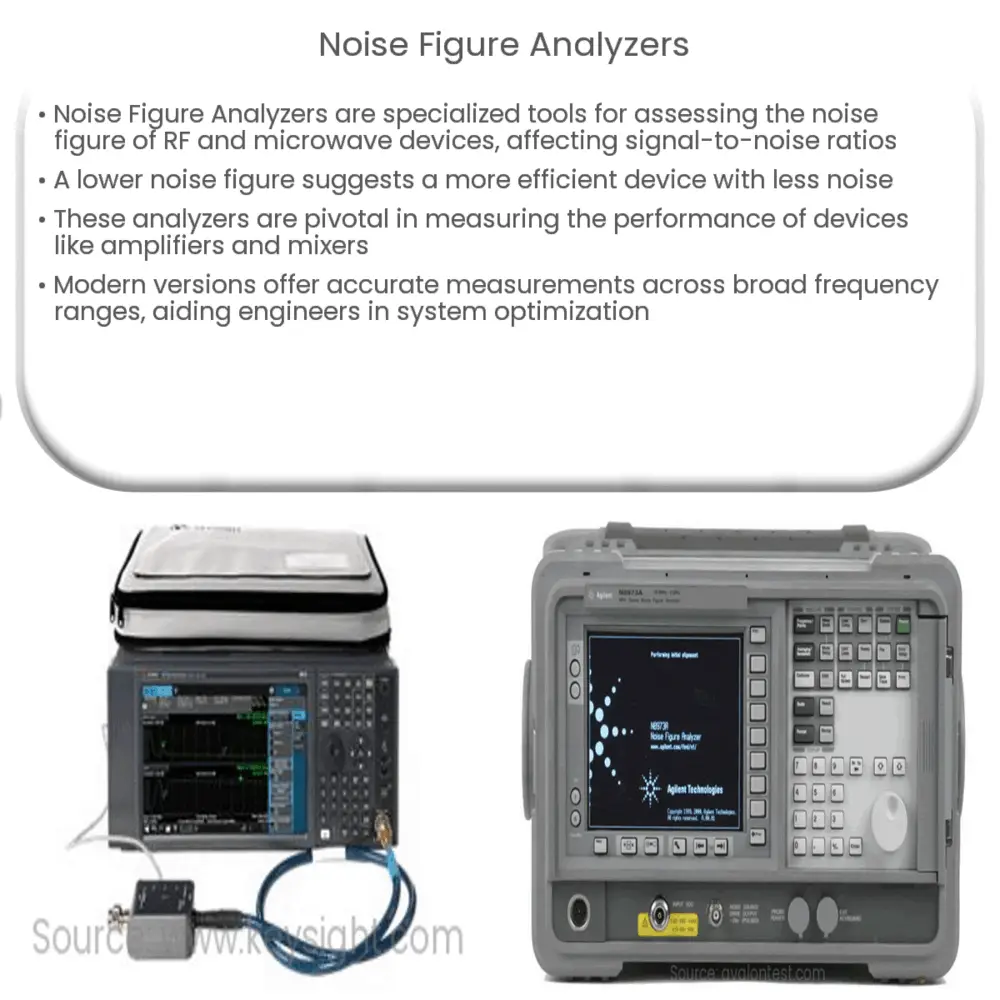
Introduction to Noise Figure Analyzers
Noise Figure Analyzers are highly specialized electronic test instruments designed to measure and analyze the noise figure of radio frequency (RF) and microwave devices. The noise figure, in the simplest terms, is a measure of how much a device degrades the signal-to-noise ratio (SNR) of a system. It is a critical parameter in many RF and microwave systems, as it directly impacts the performance and effectiveness of communication systems.
Understanding Noise Figure
The noise figure of a device is typically expressed in decibels (dB) and signifies the difference in signal-to-noise ratio before and after the signal passes through the device. A lower noise figure indicates a more efficient device that introduces less unwanted noise.
When designing and testing RF and microwave systems, one of the primary goals is to minimize the noise figure to ensure high-quality signal transmission and reception. This is where Noise Figure Analyzers come into play.
The Role of Noise Figure Analyzers
Noise Figure Analyzers are instrumental in measuring the noise figure of various devices such as amplifiers, mixers, and frequency converters. These measurements are fundamental for determining the performance and reliability of RF and microwave systems.
Modern Noise Figure Analyzers are capable of making highly accurate measurements across a wide range of frequencies. They can handle complex signal analysis tasks, including gain and noise parameter measurements, providing engineers with the data they need to optimize the performance of their systems.
Working Principle of Noise Figure Analyzers
Noise Figure Analyzers operate by generating a known source of noise, often referred to as a noise source. This noise source is then passed through the device under test (DUT). The analyzer measures the input and output noise power of the DUT to calculate the noise figure.
Most analyzers employ a technique known as Y-Factor method, which involves taking measurements with the noise source both on and off. The difference in these measurements is used to calculate the noise figure of the DUT.
Though this method may seem straightforward, it requires precise calibration of the analyzer and the noise source to ensure accurate results. This highlights the critical role of Noise Figure Analyzers in maintaining the highest possible standards of RF and microwave systems performance.
Types of Noise Figure Analyzers
There are two primary types of Noise Figure Analyzers: benchtop and portable. Benchtop models are highly accurate and offer a wide range of features, making them suitable for laboratory settings. Portable models, on the other hand, are designed for field use. While they may not offer the same level of precision as their benchtop counterparts, they are more convenient for on-site measurements and testing.
Key Features of Modern Noise Figure Analyzers
Modern Noise Figure Analyzers offer a range of features that enhance their functionality and usability. These include a wide frequency range, graphical display, multiple measurement modes, and built-in calibration routines. Some advanced models also feature an integrated vector network analyzer, enabling comprehensive device characterization in a single instrument.
Applications of Noise Figure Analyzers
Noise Figure Analyzers find applications in various industries, including wireless communication, satellite communication, radar systems, and electronic warfare. They are used in the design, testing, and maintenance of RF and microwave systems to ensure optimal performance and reliability.
The Future of Noise Figure Analyzers
The future of Noise Figure Analyzers lies in the development of even more precise, faster, and user-friendly devices. With the increasing complexity of RF and microwave systems, the demand for highly accurate and reliable Noise Figure Analyzers is expected to grow.
Conclusion
In conclusion, Noise Figure Analyzers play a crucial role in the field of RF and microwave systems. By accurately measuring the noise figure of various devices, they allow engineers to optimize system performance and ensure reliable communication. With ongoing advancements in technology, these instruments are expected to become even more essential in maintaining and improving the quality of wireless communications in the future.



