
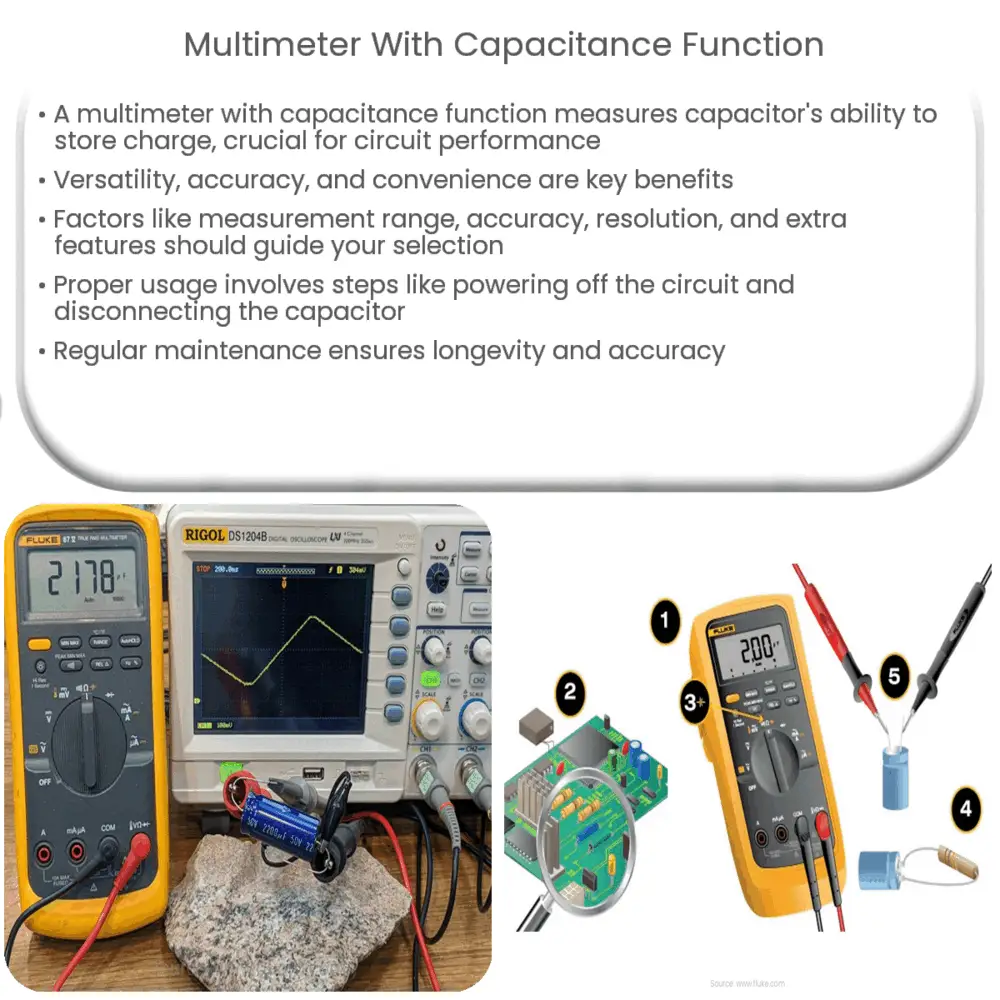
A multimeter with capacitance function measures voltage, current, resistance, and capacitance, providing versatility for electronics troubleshooting.
Multimeters with Capacitance Function: A Comprehensive Guide
Introduction
A multimeter is a versatile and essential tool for anyone working with electronics, whether a hobbyist or a professional technician. With various functions and capabilities, a multimeter can be used to measure voltage, current, resistance, and many other parameters. One of the advanced features that some multimeters offer is the capacitance function, which allows users to measure the capacitance of capacitors in their circuits. In this article, we will delve into the importance of the capacitance function and provide guidance on selecting and using a multimeter with this capability.
Understanding Capacitance
Capacitance is a measure of a capacitor’s ability to store an electrical charge. It is expressed in farads (F), with common values in the microfarad (μF), nanofarad (nF), and picofarad (pF) ranges. Capacitors play a critical role in various electronic circuits, including filtering, energy storage, and timing applications. Accurate measurement of capacitance is essential for troubleshooting and verifying the performance of circuits, which is where a multimeter with a capacitance function comes into play.
Why Use a Multimeter with Capacitance Function?
While dedicated capacitance meters are available, a multimeter with a capacitance function offers several benefits:
- Versatility: A multimeter with capacitance measurement capability allows you to perform multiple measurements with a single instrument, reducing the need for additional tools.
- Accuracy: Modern multimeters with capacitance functions are designed to provide accurate and reliable measurements, ensuring correct readings in various situations.
- Convenience: Many multimeters with capacitance functions have auto-ranging capabilities, simplifying the measurement process and making it more user-friendly.
Selecting a Multimeter with Capacitance Function
When choosing a multimeter with a capacitance function, consider the following factors:
- Measurement Range: Ensure the multimeter can measure the capacitance values you typically encounter in your projects or work. Most multimeters with capacitance functions cover a wide range, from picofarads to millifarads.
- Accuracy: Check the specifications for the capacitance measurement accuracy. While some variation is normal, a more accurate multimeter will provide more reliable readings.
- Resolution: The resolution of a multimeter refers to the smallest change in the input signal that can be detected. Higher resolution allows for more precise capacitance measurements, especially when dealing with small values.
- Additional Features: Consider other functions and features that may be useful for your needs, such as auto-ranging, true RMS measurement, and data logging capabilities.
Using a Multimeter with Capacitance Function
Once you have selected a multimeter with a capacitance function, it is essential to understand how to use it correctly. Here are some steps to guide you through the process:
- Power off the circuit: Before measuring capacitance, ensure that the circuit is turned off and disconnected from any power source. This will prevent damage to both the multimeter and the components.
- Disconnect the capacitor: To obtain an accurate capacitance measurement, remove the capacitor from the circuit. This will prevent interference from other components in the circuit.
- Select the capacitance function: Turn the multimeter’s rotary dial to the capacitance function, usually indicated by a “C” or “F” symbol.
- Connect the leads: Connect the red lead to the capacitor’s positive terminal and the black lead to the negative terminal. Ensure a good connection to obtain accurate readings.
- Read the measurement: The multimeter will display the capacitance value on its screen. Note the reading and compare it to the capacitor’s specified value to determine if it is within the acceptable range.
- Reassemble the circuit: After completing the capacitance measurement, reconnect the capacitor to the circuit and power it back on.
Maintaining Your Multimeter
To ensure the longevity and accuracy of your multimeter, follow these maintenance tips:
- Keep it clean: Wipe your multimeter with a soft, dry cloth to remove dust and dirt. Avoid using solvents or abrasive cleaners that could damage the device.
- Store it properly: Store your multimeter in a protective case when not in use to prevent damage from dust, moisture, and impact.
- Inspect leads and connections: Regularly check the multimeter leads for damage or wear. Replace them if necessary to ensure accurate measurements and prevent accidents.
- Calibrate regularly: Over time, the accuracy of a multimeter may drift. Regular calibration ensures that your measurements remain accurate and reliable.
- Follow the user manual: Always consult the user manual for specific maintenance procedures and safety guidelines for your multimeter model.
Conclusion
A multimeter with a capacitance function is an invaluable tool for anyone working with electronic circuits. By understanding the importance of capacitance measurements, selecting the right multimeter, and using it correctly, you can ensure the proper functioning of your circuits and improve your troubleshooting skills. Remember to maintain your multimeter to ensure accurate measurements and a long service life.