
Explore the essentials of motor power supplies, including AC and DC types, their roles in driving electric motors, and tips for optimal selection.
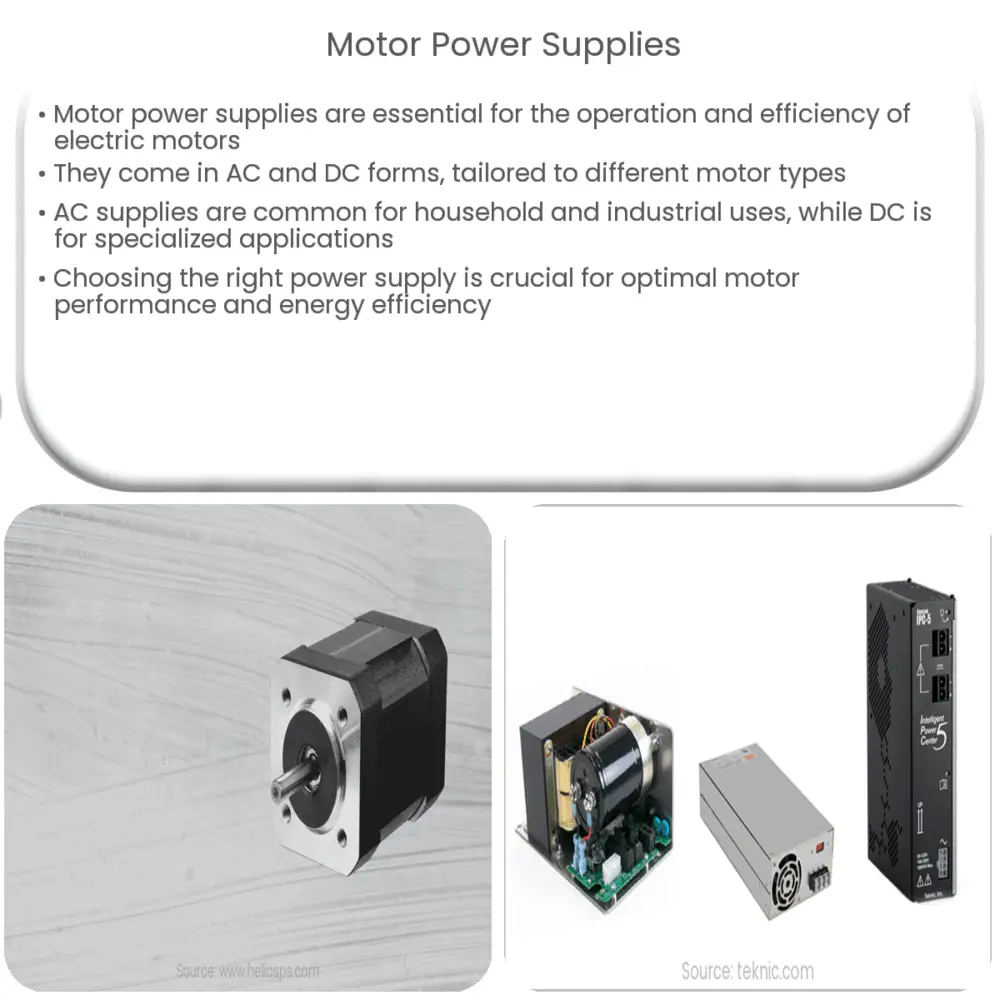
Understanding Motor Power Supplies
The power supply for a motor is a fundamental aspect of any electrical or mechanical system. The motor’s power supply determines its operation, efficiency, and overall performance. Power supplies can come in different types and configurations, suitable for different kinds of motors.
The Basics of Motor Power Supplies
Motor power supplies are units that provide electrical power to an electric motor. They come in various forms, such as AC (alternating current) or DC (direct current) power supplies, and are tailored to match the type of motor they’ll be operating. These units convert input electrical power into a form suitable for the motor’s operation, thereby enabling it to perform its intended function.
AC Power Supplies
AC power supplies are common in industrial and domestic applications. They provide power to AC motors, typically found in appliances, HVAC systems, and industrial machinery. An AC power supply unit utilizes the common household power outlet and converts it into a form suitable for the motor’s consumption.
- Single Phase AC Supply: This supply is typically found in residential areas and is used to power smaller AC motors.
- Three Phase AC Supply: This is used primarily in industrial and commercial settings, powering larger and more powerful motors.
DC Power Supplies
DC power supplies, on the other hand, are usually employed in specialized applications, such as battery-powered devices, automotive applications, and in certain industrial machinery. There are primarily two types of DC power supplies:
- Battery Operated DC Supply: These are used in mobile and portable devices that require DC motors for operation. The battery provides direct current, which is used to drive the motor.
- Converter Based DC Supply: Here, an AC supply is converted into a DC supply using a rectifier or a converter. This is common in electric vehicles and other applications that require high power and efficiency.
Power supplies also play a role in regulating the speed and torque of a motor. Variable speed drives (VSDs), or motor drives, are used in conjunction with power supplies to provide this control. This aspect is especially significant in industries where precise motor control is required.
Motor Drives and Power Supplies
Motor drives or Variable Speed Drives (VSDs) are an essential part of motor power supplies in situations where the speed and torque of the motor need to be controlled. VSDs are used with power supplies to adjust the motor’s speed and torque. This functionality becomes particularly significant in industries where precise control of the motor is necessary, such as in manufacturing or robotics.
- AC Drives: AC drives are used with AC motors, managing the frequency and voltage supplied to the motor to regulate its speed and torque.
- DC Drives: DC drives work with DC motors, controlling the voltage and current supplied to the motor to vary its speed and torque.
Choosing the Right Power Supply
Choosing the right power supply is crucial in achieving optimal motor performance and energy efficiency. Several factors need to be considered during this process:
- Motor Type: Different motors require different types of power supplies. AC motors need AC power supplies, while DC motors require DC power supplies.
- Power Ratings: The power supply must have a suitable power rating to safely and efficiently operate the motor. Overloading the power supply can lead to failures and can compromise safety.
- Application Requirements: The specific requirements of the application or system in which the motor is being used should also guide the choice of power supply.
Conclusion
In conclusion, the motor power supply is a vital component in any system involving electric motors. Whether it’s an AC or DC power supply, its role in driving the motor and influencing its performance can’t be understated. With the appropriate power supply, not only can the system’s efficiency be improved, but also its longevity and reliability. Therefore, understanding the different types of power supplies, their functionality, and how they interact with the motor and drive systems is essential for anyone dealing with electric motors. This knowledge will guide the right choices, leading to optimal motor performance and improved system efficiency.



