
Infrared glass surface thermometers offer non-contact, accurate temperature measurements for various industries, ensuring safety and efficiency.
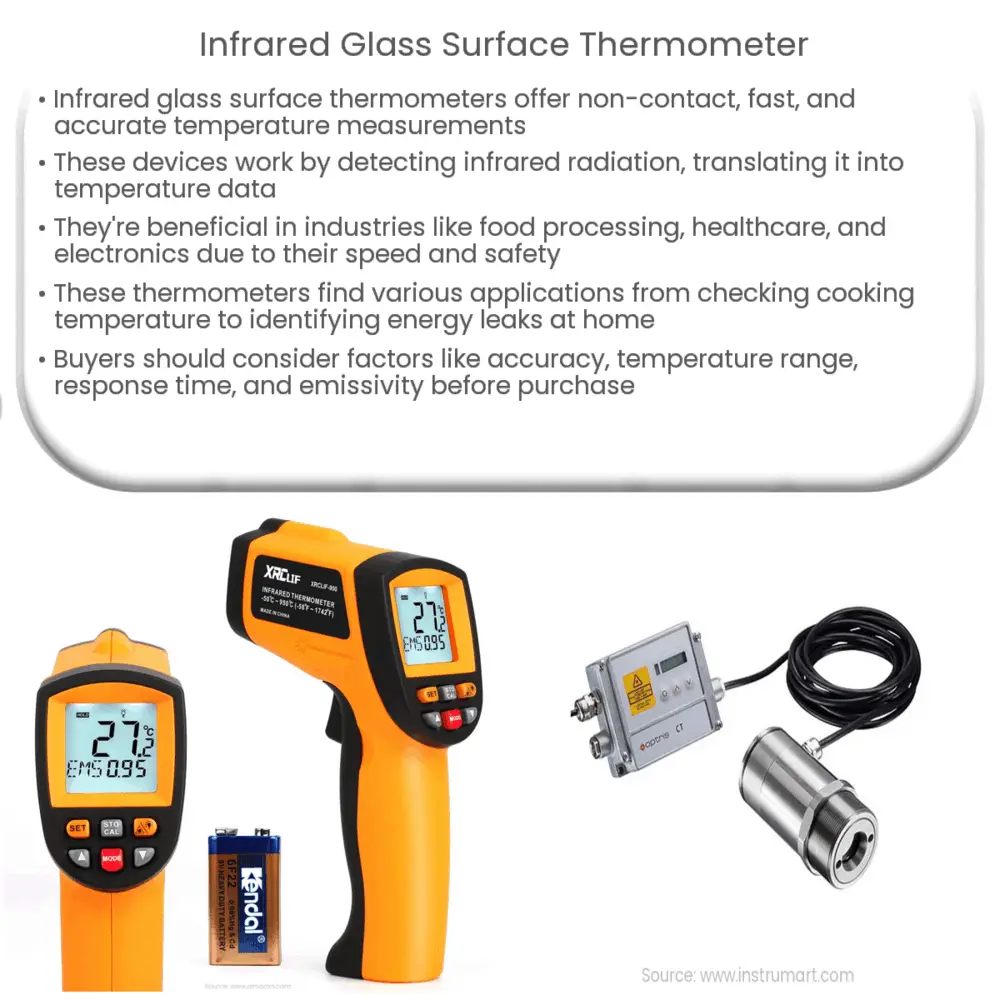
Infrared Glass Surface Thermometer: A Comprehensive Guide
Introduction
In recent years, there has been a growing demand for accurate, non-contact temperature measurement devices. Among the various options available, infrared glass surface thermometers have emerged as a popular choice for a wide range of applications. This article aims to provide an in-depth understanding of infrared glass surface thermometers, their working principle, advantages, and common use cases.
What is an Infrared Glass Surface Thermometer?
An infrared glass surface thermometer, also known as an IR thermometer, is a non-contact device used to measure the temperature of a surface without physically touching it. It works by detecting the infrared radiation emitted by an object and converting this information into a temperature reading. This technology allows for quick and accurate temperature measurements, making it ideal for various industrial, commercial, and personal applications.
How Does an Infrared Glass Surface Thermometer Work?
The working principle of an infrared glass surface thermometer is based on the fact that all objects emit infrared radiation, which is directly proportional to their temperature. This radiation is invisible to the naked eye but can be detected by specialized sensors, such as those found in IR thermometers. The device consists of an infrared detector, a lens to focus the infrared radiation, and a microprocessor that calculates the temperature based on the detected radiation.
When pointed at a surface, the thermometer measures the amount of infrared radiation being emitted and converts it into a temperature reading using a pre-calibrated algorithm. This process typically takes just a few seconds, allowing for near-instantaneous temperature measurements.
Advantages of Infrared Glass Surface Thermometers
There are several benefits to using an infrared glass surface thermometer, including:
- Non-contact measurement: Since the device does not require physical contact with the surface being measured, it eliminates the risk of contamination and damage to delicate surfaces. This feature is particularly useful in food processing, healthcare, and electronic manufacturing industries.
- Speed: Infrared thermometers provide temperature readings almost instantly, allowing for quick assessments and adjustments when needed.
- Accuracy: Modern infrared thermometers offer high levels of accuracy, with some devices boasting a margin of error as low as ±1°C. This makes them suitable for a variety of temperature-sensitive applications.
- Safety: Infrared thermometers can measure the temperature of hot, hazardous, or hard-to-reach surfaces without the risk of injury, making them ideal for use in industrial and commercial settings.
Common Applications of Infrared Glass Surface Thermometers
Infrared glass surface thermometers have a wide range of applications across various industries and settings, some of which include:
- Food industry: Ensuring proper cooking, storage, and transportation temperatures is critical in maintaining food safety and quality. IR thermometers allow for quick and sanitary temperature checks of raw materials, cooked dishes, and refrigeration equipment.
- Healthcare: Infrared thermometers have been widely used for fever screening during disease outbreaks and routine temperature checks in healthcare settings. The non-contact feature prevents the spread of infection, making it a hygienic option for monitoring patient temperatures.
- Automotive: Mechanics use infrared thermometers to diagnose issues related to engine overheating, brake systems, and air conditioning performance. By detecting temperature anomalies, they can identify and address potential problems more efficiently.
- Electronics manufacturing: Monitoring temperature during the production of electronic components is crucial to ensure proper performance and prevent overheating. Infrared thermometers enable non-contact temperature measurements of circuit boards and other heat-sensitive components.
- Home use: Homeowners can use infrared thermometers to identify energy leaks, such as poorly insulated windows or doors, leading to improved energy efficiency and cost savings.
How to Choose the Right Infrared Glass Surface Thermometer
With various infrared thermometers available in the market, it is essential to consider specific factors before making a purchase:
- Accuracy: Ensure the device provides the required level of accuracy for your intended application. Higher accuracy often comes at a higher price, so balance your needs with your budget.
- Temperature range: Select a thermometer with a temperature range that covers the temperatures you expect to encounter in your specific use case.
- Response time: Consider the device’s response time, especially if you need to take multiple readings in a short period.
- Emissivity: Some infrared thermometers allow users to adjust emissivity settings to accommodate different surface materials, leading to more accurate readings. This feature may be essential for certain applications.
- Additional features: Look for additional features such as data logging, alarms, and connectivity options if needed for your specific application.
Conclusion
Infrared glass surface thermometers provide a non-contact, accurate, and efficient method for temperature measurement across various industries and applications. By understanding the working principles, advantages, and use cases of these devices, you can make an informed decision when choosing the right thermometer for your needs. Consider factors such as accuracy, temperature range, response time, emissivity, and additional features when selecting the ideal infrared thermometer for your specific requirements.



