
Explore the workings, advantages, specifications, and challenges of Inductive Capacitance Meters in the electronics field.
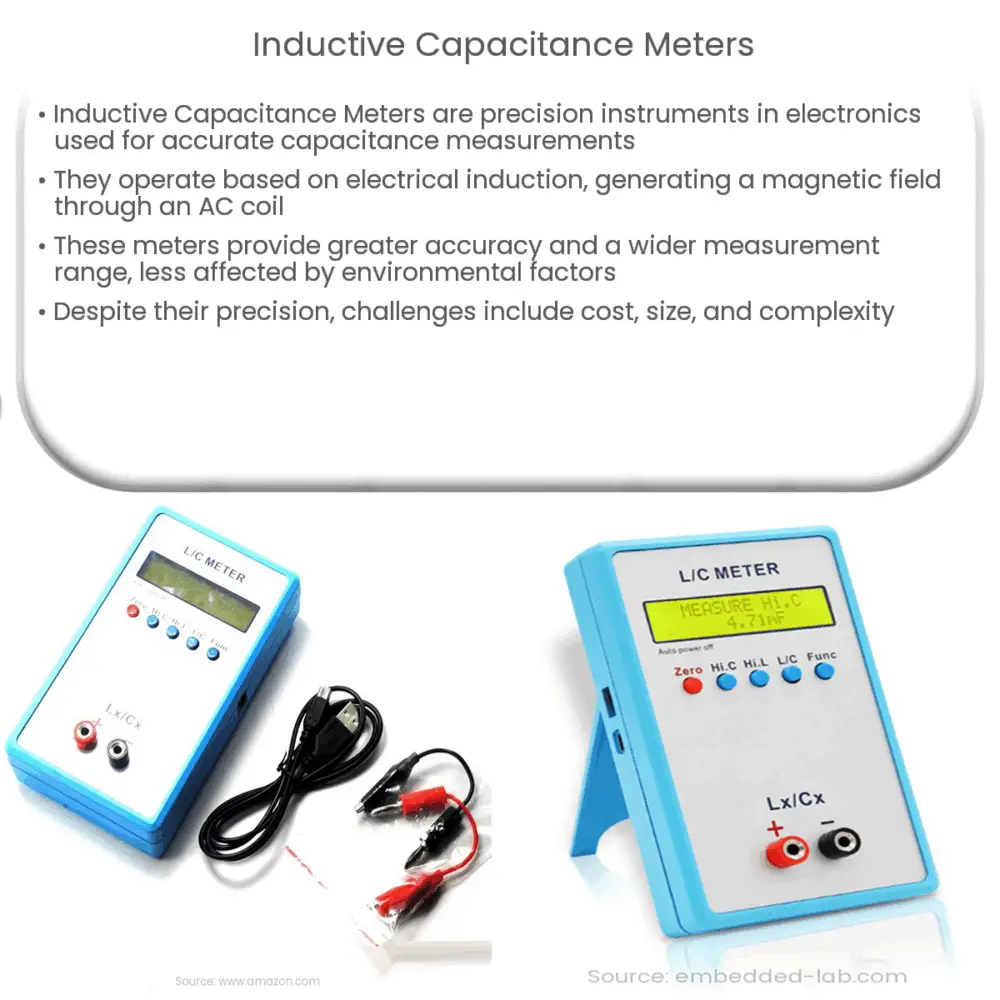
Understanding Inductive Capacitance Meters
An Inductive Capacitance Meter is a precision instrument utilized in the field of electronics to accurately measure the capacitance of capacitors. This type of meter uses an inductive method to measure capacitance, offering both higher precision and a wider range of measurement compared to other types of capacitance meters.
The Principle of Induction
The operation of inductive capacitance meters relies on the principle of electrical induction. When an alternating current (AC) flows through a coil, it generates a magnetic field around the coil. If a capacitor is placed within this magnetic field, it will be charged and discharged repeatedly due to the alternating magnetic field.
Measurement Process
The measurement process of an inductive capacitance meter involves multiple steps:
- Firstly, an AC voltage is applied to an inductive coil, creating a magnetic field around the coil.
- The capacitor to be measured is then placed within this magnetic field. This leads to charging and discharging of the capacitor.
- The changes in the magnetic field caused by the charging and discharging process are detected by the meter.
- These changes are then translated into a readable capacitance value.
Advantages of Inductive Capacitance Meters
Inductive Capacitance Meters offer several advantages over other types of capacitance meters. These advantages include:
- Greater Accuracy: Inductive capacitance meters can measure the capacitance of capacitors with a high degree of accuracy, as they are less affected by external environmental factors, such as temperature or humidity.
- Wider Range: These meters can measure a wider range of capacitance values compared to other types of capacitance meters.
Due to their superior accuracy and range, inductive capacitance meters are extensively used in research and development, quality control, and production environments where precise measurement of capacitance is critical.
The Intricacies of Inductive Capacitance Meters
Understanding the complexities of inductive capacitance meters requires a solid grasp of both electronics and electromagnetism. Let’s delve into the specifications, common use cases, and challenges associated with these instruments in the next part of this article.
Specifications of Inductive Capacitance Meters
Inductive capacitance meters come with a variety of specifications to suit different applications:
- Capacitance Range: These meters are designed to measure a wide range of capacitance values, from picofarads (pF) to microfarads (µF).
- Accuracy: Most inductive capacitance meters offer a high level of accuracy, often within ±1% of the reading.
- Frequency Range: The frequency of the alternating current used by the meter can often be adjusted, allowing for better measurements under different conditions.
Common Use Cases
Inductive capacitance meters have several practical applications:
- Quality Control: In manufacturing industries, these meters are used for quality control purposes, to ensure that capacitors meet their specified values.
- Research and Development: Scientists and engineers use these meters in R&D projects, where accurate measurements of capacitance are essential.
- Component Testing: These devices are commonly used in electronic component testing, ensuring components perform as expected before they are incorporated into larger systems.
Challenges Associated with Inductive Capacitance Meters
Despite their advantages, inductive capacitance meters come with their share of challenges:
- Price: Due to their high precision and range, these meters can be more expensive compared to other types of capacitance meters.
- Size and Weight: Inductive capacitance meters tend to be bulkier and heavier, which can make them less convenient for field use.
- Complexity: These meters are often complex to use, requiring a solid understanding of electronics and electromagnetism.
Conclusion
In summary, inductive capacitance meters are invaluable tools in the field of electronics, providing highly accurate and versatile measurements of capacitance. Their inductive method of measurement sets them apart from other types of capacitance meters, making them a preferred choice for applications where precision is paramount. Although they come with challenges such as higher cost, larger size, and complexity of use, the benefits they offer in terms of accuracy and range often outweigh these drawbacks.