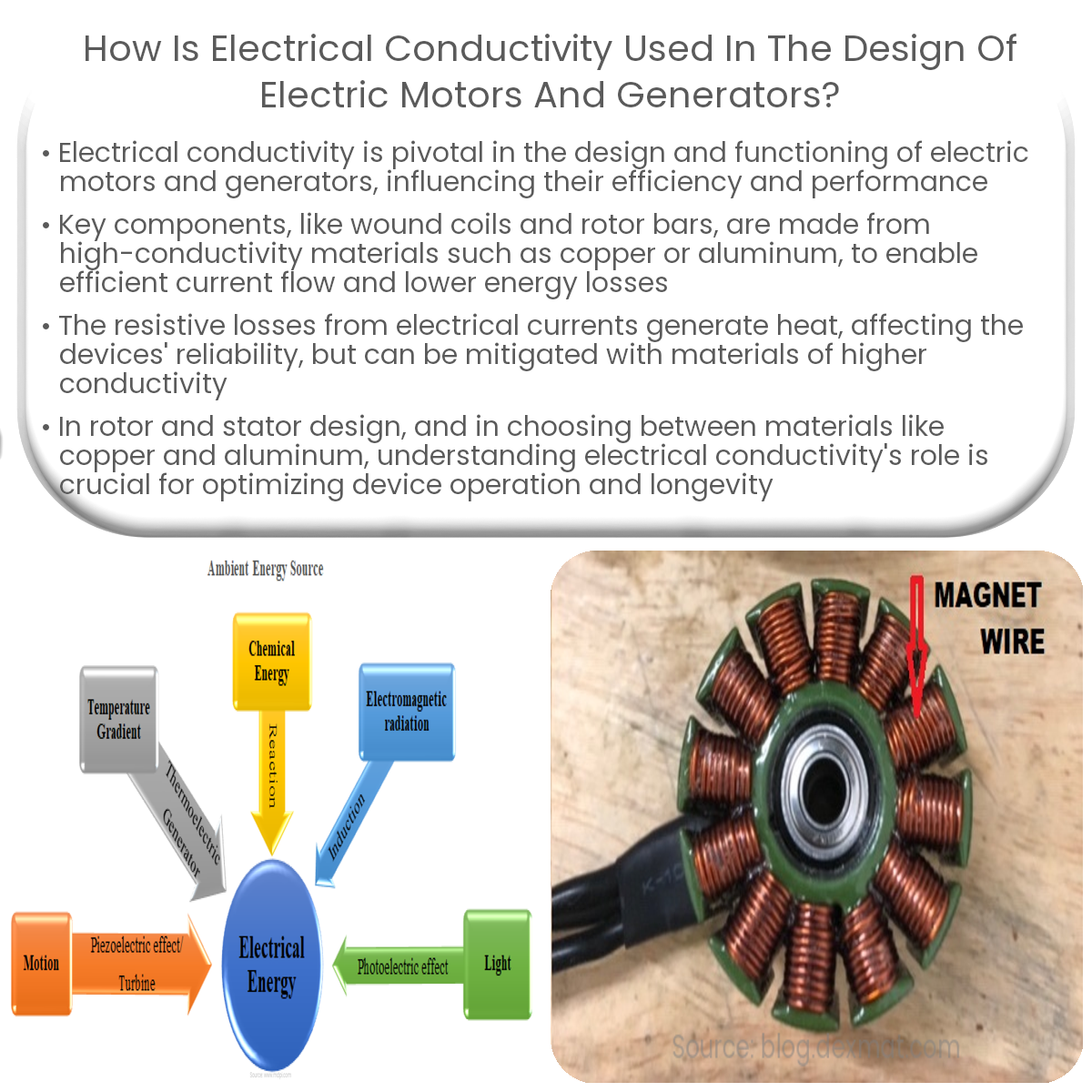
Electrical conductivity is crucial in designing motors and generators, affecting efficiency, performance, heat dissipation, and the choice of materials.
Electrical Conductivity in Electric Motors and Generators
Electrical conductivity plays a vital role in the design and performance of electric motors and generators. These devices rely on the flow of electric currents to convert electrical energy into mechanical energy (motors) or vice versa (generators). In this article, we discuss the importance of electrical conductivity in the design of electric motors and generators.
Conductivity and Coil Winding Materials
Both motors and generators contain wound coils of conductive materials, typically copper or aluminum. These materials are chosen based on their high electrical conductivity, which allows for efficient current flow. The higher the electrical conductivity, the lower the energy losses due to resistance, resulting in improved efficiency.
Efficiency and Heat Dissipation
As electric currents flow through the conductive materials in motors and generators, resistive losses generate heat. This heat can impact the overall efficiency and reliability of the devices. A material with higher electrical conductivity will experience lower resistive losses, reducing the amount of heat generated and enhancing the performance and lifespan of the device.
Electrical Conductivity and Rotor Design
In the design of rotors, particularly for induction motors, electrical conductivity is an essential factor. The rotor bars are made from conductive materials such as aluminum, copper, or brass. The conductivity of the material affects the starting torque, efficiency, and slip of the motor. Materials with higher conductivity allow for more efficient motor operation and better overall performance.
Generator Windings and Conductivity
In generators, the stator windings are made from high-conductivity materials like copper or aluminum. The choice of material and its conductivity impact the efficiency and power output of the generator. Copper has a higher conductivity than aluminum and is often preferred due to its lower resistive losses. However, aluminum is lighter and more cost-effective, making it a popular choice in certain applications.
Conclusion
Electrical conductivity is a critical factor in the design of electric motors and generators. It affects the efficiency, performance, and reliability of these devices, making it essential to select materials with appropriate conductivity for each application. From coil winding materials to rotor and stator design, understanding the role of electrical conductivity in electric motors and generators is crucial for optimizing their operation and ensuring a long, reliable service life.