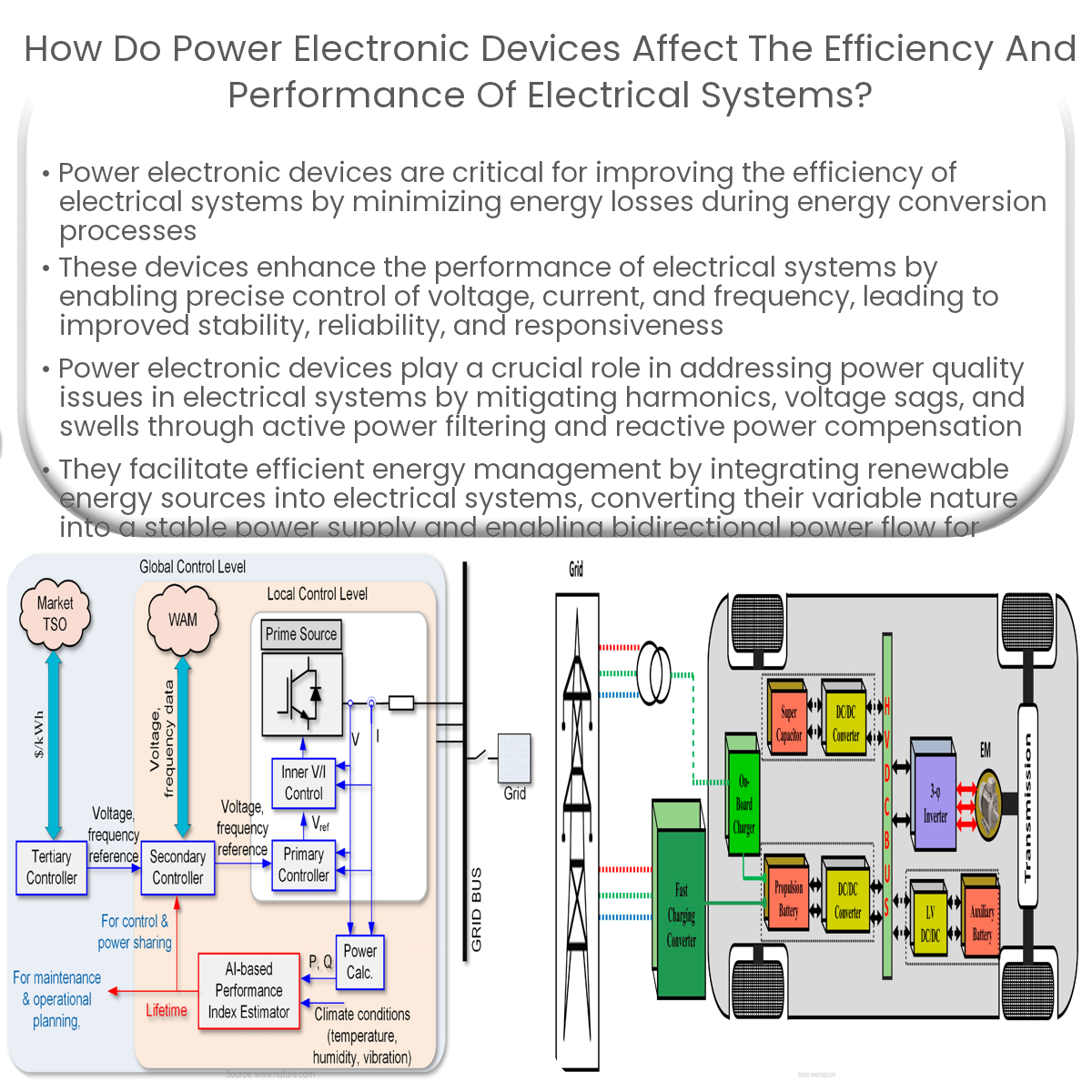
Power electronic devices improve efficiency, enhance performance, address power quality issues, and facilitate renewable energy integration in electrical systems.
Power Electronic Devices and Electrical Systems
Power electronic devices play a critical role in the efficiency and performance of electrical systems. These devices are responsible for controlling, converting, and managing electrical energy in various applications, ranging from renewable energy systems to motor drives.
Efficiency Improvement
One of the primary ways power electronic devices affect electrical systems is by improving efficiency. They achieve this by minimizing energy losses during energy conversion processes, such as converting AC to DC or vice versa. Modern power electronic devices, such as IGBTs and MOSFETs, have lower switching losses and improved thermal performance, which ultimately leads to more efficient electrical systems.
Performance Enhancement
Power electronic devices also contribute to the enhanced performance of electrical systems. They enable precise control of voltage, current, and frequency, allowing electrical systems to adapt to various operating conditions and load requirements. This adaptability improves the system’s overall stability, reliability, and responsiveness.
Power Quality Improvement
Power electronic devices are crucial for addressing power quality issues in electrical systems. They can mitigate harmonics, voltage sags, and swells by providing active power filtering and reactive power compensation. These devices ensure that electrical systems operate within their desired parameters, minimizing the impact of power quality issues on system components and extending their lifespan.
Energy Management and Integration of Renewables
Power electronic devices facilitate efficient energy management in electrical systems by integrating renewable energy sources, such as solar panels and wind turbines. They convert the variable and intermittent nature of renewable energy into a stable and continuous power supply, which can be seamlessly integrated into the electrical grid. Furthermore, power electronic devices enable bidirectional power flow, supporting energy storage systems and electric vehicle charging infrastructure.
Conclusion
In summary, power electronic devices have a significant impact on the efficiency and performance of electrical systems. They improve energy conversion processes, enhance system control and stability, address power quality issues, and enable the integration of renewable energy sources and energy storage solutions. As a result, power electronic devices are essential for the development of modern, efficient, and sustainable electrical systems.