
High-speed solenoids are fast-acting electromagnetic devices, used in industries where precision and speed are paramount.
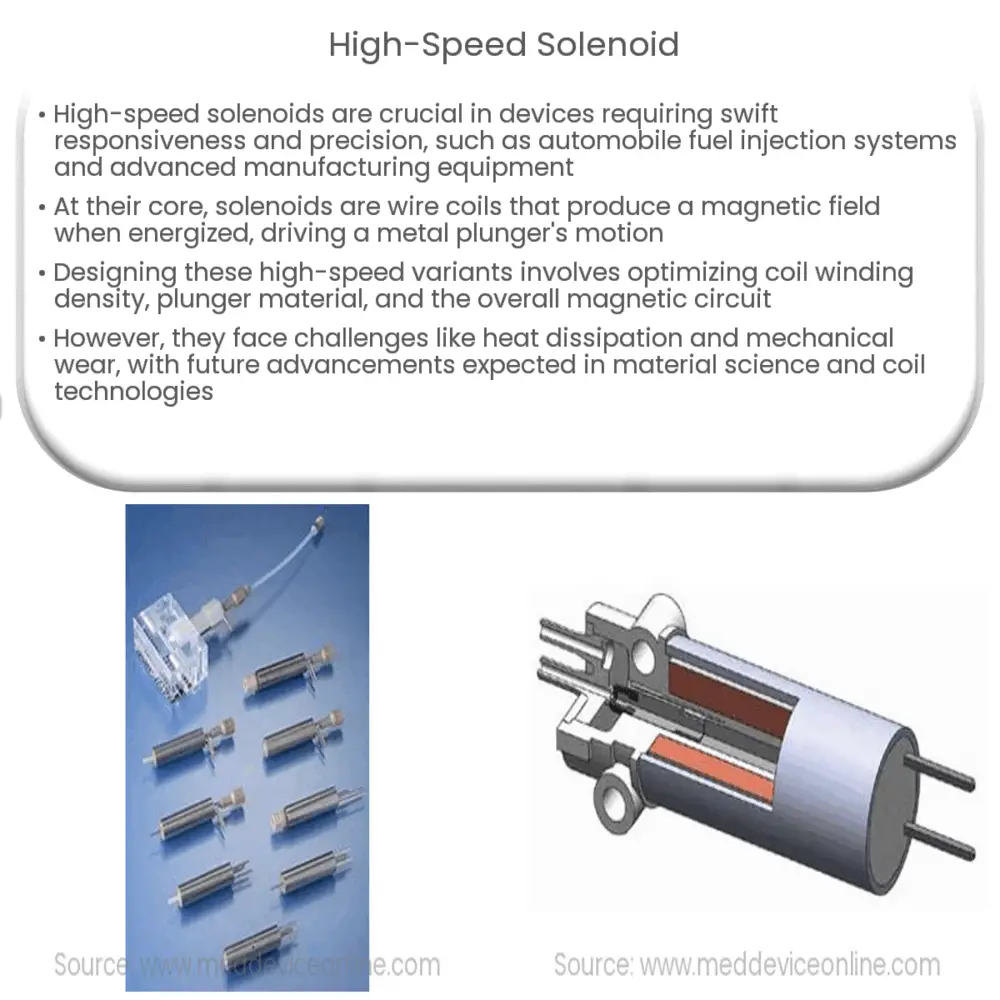
Introduction to High-Speed Solenoids
Solenoids are fundamental components in a myriad of devices, from simple doorbells to intricate electromagnetic valves in high-performance engines. Yet, a particular class, the high-speed solenoids, has become especially critical in many advanced applications, such as fuel injection systems in automobiles and precision manufacturing equipment. These solenoids operate at incredible speeds, offering superior responsiveness and accuracy, which are vital for the efficient functioning of many modern systems.
Understanding the Working Principle of Solenoids
Solenoids, at their most basic level, are coils of wire that generate a magnetic field when an electric current passes through them. This magnetic field can then be used to create linear motion with the help of a metal plunger within the coil. The beauty of solenoids lies in their simplicity and versatility; by controlling the current supplied, one can accurately manage the solenoid’s action.
The working principle of a high-speed solenoid is no different; however, they are designed and built to operate at much higher frequencies than regular solenoids. The swift action of these solenoids is achieved by reducing the inertia of the moving parts and optimizing the magnetic circuit for rapid energizing and de-energizing.
A high-speed solenoid typically comprises a coil (windings of insulated wire), a movable plunger (usually made of ferromagnetic material), and a housing that contains these components. When the coil is energized, it creates a magnetic field that draws the plunger towards the center of the coil. The moment the coil is de-energized, the magnetic field collapses, and the plunger is returned to its original position by a return spring or the natural magnetic repulsion of the system.
Applications of High-Speed Solenoids
High-speed solenoids find applications in various fields where speed and precision are paramount. In automotive applications, they are extensively used in fuel injection systems, where they control the amount of fuel delivered to the engine. This precise control of fuel injection allows for better engine performance and improved fuel efficiency.
In the manufacturing sector, high-speed solenoids are used in automation equipment for rapid and accurate movements. They are integral to robotics, sorting machines, and assembly line equipment. Furthermore, these solenoids are also utilized in the medical industry, particularly in drug delivery systems and automated laboratory equipment.
These diverse applications underscore the importance of high-speed solenoids and highlight their role in driving technological advancements across multiple industries. As our reliance on automation and precision-controlled systems increases, the demand for high-speed solenoids is likely to grow correspondingly.
Design Considerations for High-Speed Solenoids
Designing high-speed solenoids requires careful consideration of various factors to ensure their performance meets the requisite high-speed operations. The coil winding density, the material and design of the plunger, and the overall magnetic circuit design are all critical aspects that influence the solenoid’s speed.
The coil winding density directly affects the solenoid’s magnetic field strength and hence, its speed. A denser winding can generate a stronger magnetic field, which translates into faster plunger movements. Similarly, the material of the plunger plays a significant role in how quickly it responds to the magnetic field. Materials with high magnetic permeability are preferred as they can be easily magnetized and demagnetized, enabling faster operation.
Moreover, the overall design of the magnetic circuit, which includes the coil, plunger, and the housing, needs to be optimized to reduce magnetic losses and improve the speed of operation. Factors such as air gaps in the magnetic circuit and the magnetic saturation of the materials used can significantly affect the solenoid’s performance.
Challenges and Future Directions
Despite their many advantages, high-speed solenoids also face several challenges. Heat dissipation is a significant issue as high-speed operations can lead to considerable heat generation. This heat can degrade the solenoid’s performance over time and reduce its lifespan. Therefore, effective thermal management strategies are crucial for the reliable operation of high-speed solenoids.
Moreover, the mechanical wear of components due to rapid and repetitive movements can also impact the solenoid’s long-term performance. Advances in material science, particularly the development of wear-resistant materials, can play a vital role in addressing this challenge.
Looking ahead, the continued evolution of high-speed solenoids will likely be driven by advancements in materials science, coil winding technologies, and magnetic circuit designs. High-speed solenoids with even faster response times and longer operational lifetimes are on the horizon, promising to further enhance the performance of a broad range of systems and devices. As our understanding of electromagnetism and materials improves, so too will our ability to harness the potential of high-speed solenoids.
In conclusion, high-speed solenoids are indispensable components in many of today’s high-speed, precision-oriented applications. Their continued development will undoubtedly contribute to significant advancements in various sectors, from automotive to manufacturing, and beyond.



