
Explore the composition, applications, advantages, and drawbacks of fusible alloy solders, along with their evolving role in various industries.
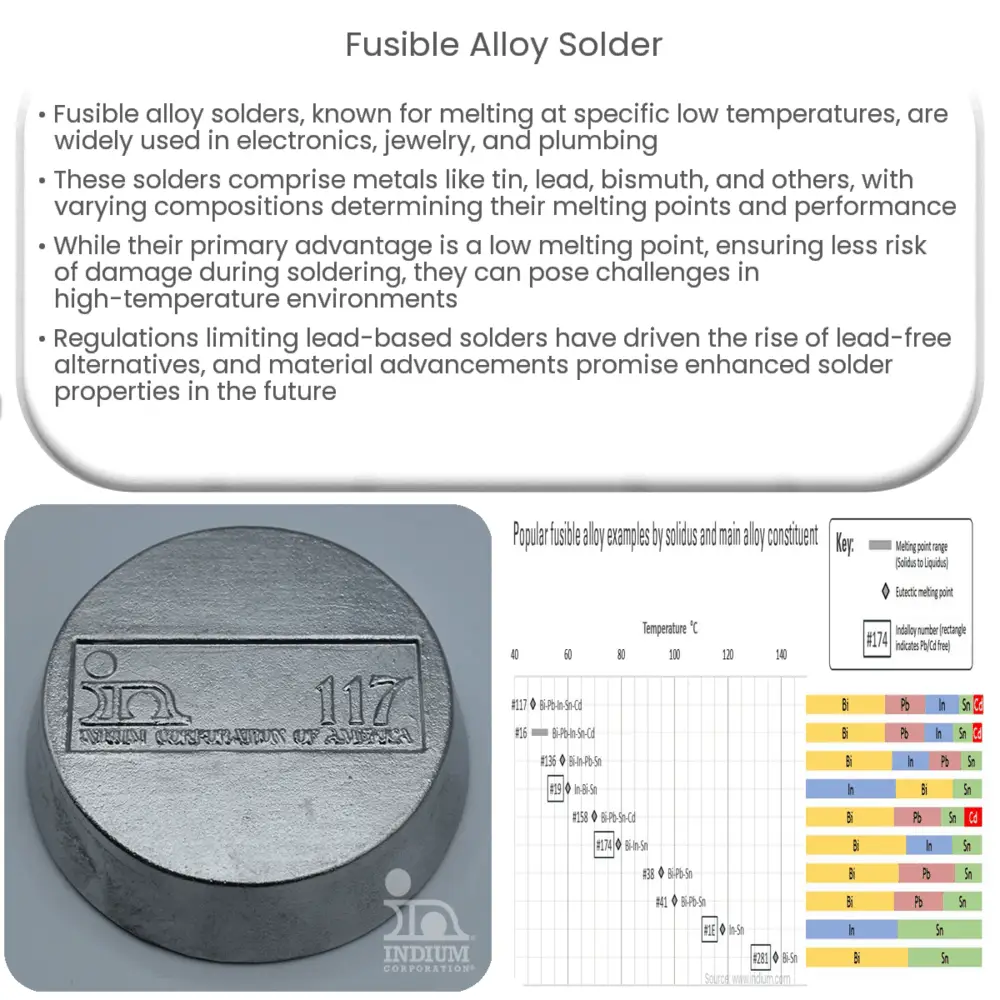
Fusible Alloy Solders: An Overview
When it comes to creating secure, reliable, and durable connections in electronics and other applications, fusible alloy solders often emerge as a favored choice. These specialized solders, which are formed from alloys designed to melt at specific, relatively low temperatures, have a wide array of applications and benefits that set them apart from more traditional forms of solder.
Composition of Fusible Alloy Solders
Fusible alloy solders are comprised of mixtures of metals that include tin, lead, bismuth, indium, cadmium, and sometimes even gallium or other metals. The precise composition of the alloy can be tuned according to the desired melting point and specific performance requirements.
- Tin-Lead Solder: Traditionally, the most common type of solder is a blend of tin and lead, which was prized for its low melting point and reliable performance.
- Lead-Free Solder: In response to health and environmental concerns about lead, lead-free solders have become increasingly common. These often incorporate metals like silver, copper, and bismuth.
- Bismuth-Based Solder: Bismuth-based solders have particularly low melting points, making them ideal for heat-sensitive applications.
Applications of Fusible Alloy Solders
Fusible alloy solders are used in a diverse range of industries and applications, thanks to their unique properties. Some of the key areas where these solders find application include:
- Electronics: Solder is used to create electrical connections in virtually every kind of electronic device, from computers and smartphones to televisions and industrial machinery.
- Jewelry: In the realm of jewelry making, fusible alloy solders are used to securely join pieces of metal together.
- Plumbing: Solder is used to create water-tight seals in plumbing systems, preventing leaks and ensuring a secure connection between pipes.
Fusible alloy solders are integral to these industries and many more. In the next section, we will delve deeper into the unique advantages and potential drawbacks of these materials, as well as the influence of evolving regulations and material advancements on the use and development of fusible alloy solders.
Advantages and Drawbacks of Fusible Alloy Solders
The primary advantage of fusible alloy solders is their low melting point, which allows for easier application and less risk of damage to the components being soldered. This is particularly important in electronics, where excessive heat can damage delicate circuits and components. Furthermore, the strong, reliable bonds formed by these solders can withstand significant stress and strain, making them ideal for a wide range of applications.
However, there are also some drawbacks associated with fusible alloy solders. For example, while the low melting point of these solders is generally an advantage, it can also lead to problems in high-temperature environments, where the solder may fail. Moreover, some types of fusible alloy solders, particularly those containing lead, pose environmental and health hazards.
Impact of Regulations and Material Advancements
In recent years, regulations have been enacted in many jurisdictions to limit the use of lead-based solders due to health and environmental concerns. This has prompted the development of new types of fusible alloy solders that are lead-free. These new solders often incorporate metals such as silver, copper, and bismuth, and they are designed to provide similar performance characteristics as traditional lead-based solders, but without the associated risks.
Advancements in material science have also led to the development of solders with improved properties, such as enhanced strength, better electrical conductivity, or lower melting points. These advancements are enabling new applications and improving the performance and reliability of products that rely on soldering.
Conclusion
Fusible alloy solders, with their unique combination of low melting points and strong, reliable bonds, have become an integral part of a diverse range of industries, from electronics and jewelry to plumbing. While the use of lead-based solders has decreased due to health and environmental concerns, new types of lead-free solders have emerged to fill the gap, demonstrating the adaptability and versatility of these crucial materials. As regulations continue to evolve and material science advances, the field of fusible alloy solders is sure to continue to change and adapt, offering exciting possibilities for the future.



