
Explore the vital role of ESD Ground Monitors in protecting electronic components, their working mechanism, types, and selection criteria.
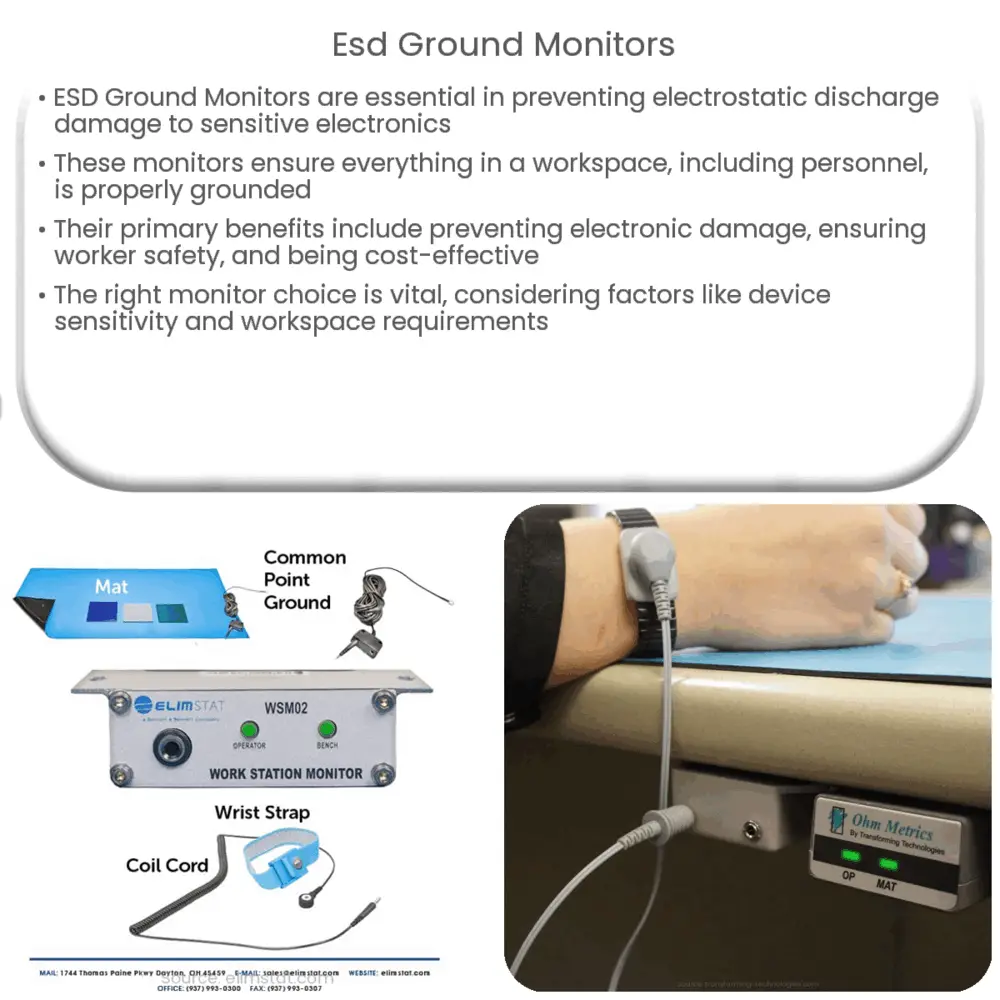
Introduction to ESD Ground Monitors
ESD, or Electrostatic Discharge, is a common phenomenon that can cause substantial damage to sensitive electronic equipment. It’s a sudden flow of electricity between two electrically charged objects, typically triggered by contact, electrical short, or dielectric breakdown. ESD Ground Monitors play a critical role in preventing and controlling this phenomenon, particularly in environments where electronic components and systems are being manufactured, assembled, or repaired.
Working Mechanism of ESD Ground Monitors
ESD Ground Monitors work by continually monitoring the integrity of the ground connections. They ensure that all components, tools, work surfaces, and personnel in a workspace are properly grounded. This is particularly crucial in settings that handle sensitive electronics, where even a small static discharge can damage components or lead to device malfunction.
These monitors are typically connected to ESD protective workstations and mats, as well as grounding points such as ESD wrist straps worn by personnel. When these monitors detect a break in the grounding path – for instance, if a worker inadvertently disconnects their wrist strap – an alarm is triggered. This alarm can be audible, visual, or both, alerting personnel to the issue so that it can be promptly addressed.
The Importance of ESD Ground Monitors
- Preventing Damage: The most direct benefit of ESD Ground Monitors is that they help prevent damage to sensitive electronic components. This ensures the longevity and reliability of electronic devices, preventing costly repairs and replacements.
- Ensuring Safety: Apart from safeguarding electronic components, these monitors play an important role in ensuring worker safety. Uncontrolled discharges can potentially lead to minor shocks, which can be prevented by using ESD Ground Monitors.
- Cost-Effective: By preventing ESD damage, these monitors can save businesses significant amounts in repair and replacement costs. They are, therefore, a cost-effective investment for companies that deal with electronic components.
Different Types of ESD Ground Monitors
ESD Ground Monitors come in a variety of forms to suit different needs and environments. The most common types include constant monitors, wave distortion technology monitors, and impedance monitors. Each type has its specific benefits and applications.
The selection of the right ESD Ground Monitor largely depends on the specific requirements of the workspace, including the level of ESD sensitivity of the devices being handled, the number of operators, and the available budget.
Constant Monitors
Constant monitors, as the name suggests, constantly monitor the resistance of the ground path. They are usually used with grounding mats and wrist straps. If the resistance goes above a certain level, the monitor will trigger an alarm. This ensures that any potential ESD risks are identified immediately, allowing for prompt action.
Wave Distortion Technology Monitors
Wave Distortion Technology monitors work by sending a continuous signal through the wrist strap and the person wearing it to the grounding point. Any variation in the waveform is detected as a change in impedance, triggering an alarm. This technology is especially useful for detecting intermittent failures and deterioration over time, providing a more detailed and accurate representation of the ESD protection status.
Impedance Monitors
Impedance monitors use a high frequency AC signal to check the impedance of the ground path. They offer a balance between cost and performance, and are suitable for many general ESD control applications.
Choosing the Right Monitor
Choosing the right ESD Ground Monitor is crucial for effective ESD control. Factors such as the nature of the work, the sensitivity of the devices being handled, the number of operators, and the budget should be considered. Consulting with an ESD control expert or supplier can help in making an informed decision.
Conclusion
In conclusion, ESD Ground Monitors play a pivotal role in preventing damage to sensitive electronic components and ensuring safety in workspaces dealing with electronics. By constantly monitoring the integrity of ground paths, they provide real-time protection against ESD risks. With several types of monitors available, it’s crucial to choose the one that best suits the specific needs of the workspace. Ultimately, the right ESD Ground Monitor can contribute to more reliable electronics, a safer workspace, and significant cost savings.