
The cross-belt electrostatic separator efficiently separates materials based on electrical conductivity, widely used in recycling, mineral, and food processing industries.
Cross-Belt Electrostatic Separator: An Overview
Introduction
The cross-belt electrostatic separator is an essential piece of equipment in the recycling and minerals processing industries. It plays a crucial role in the separation of different types of materials based on their electrical conductivity. The main advantage of using an electrostatic separator is its ability to efficiently separate materials with minimal loss of valuable components. In this article, we will explore the working principle, applications, and advantages of the cross-belt electrostatic separator.
Working Principle
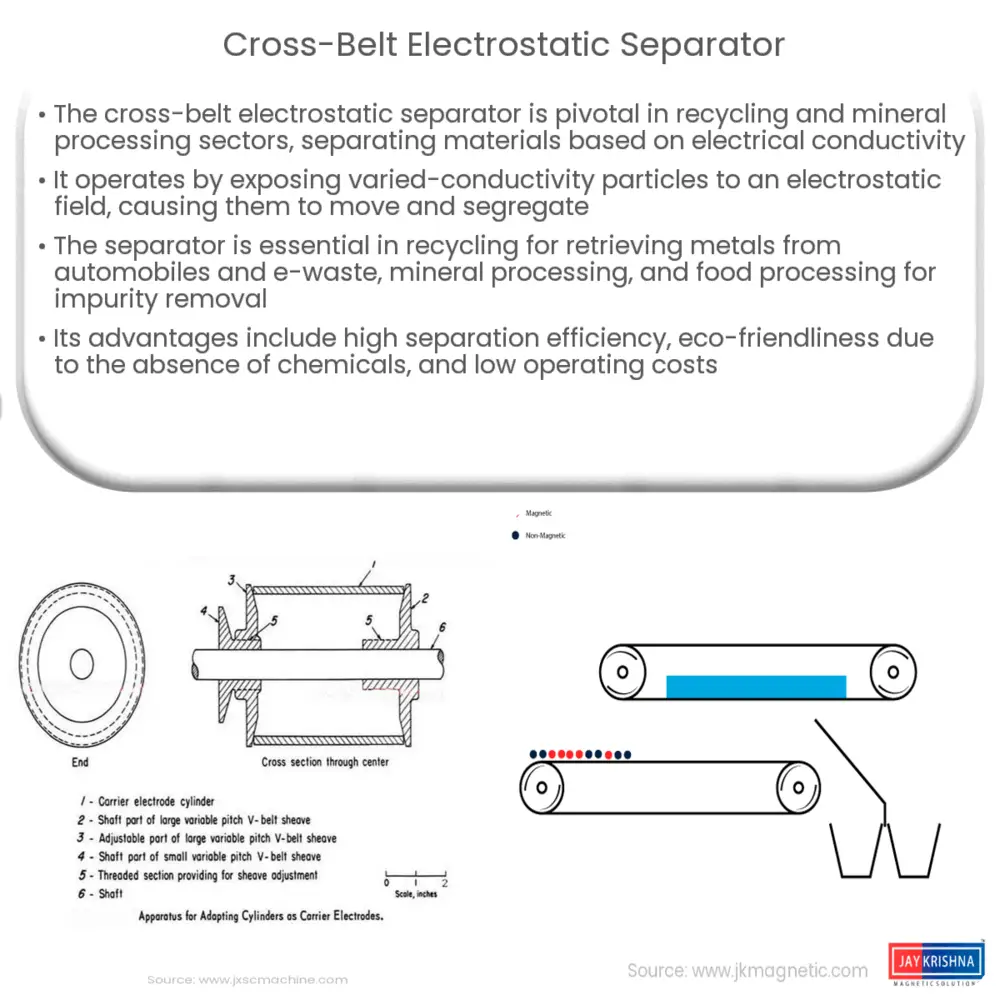
The cross-belt electrostatic separator operates on the principle of charged particles’ response to an electrostatic field. When a mixture of particles with varying electrical conductivities is exposed to an electric field, they experience different electrostatic forces. These forces cause the particles to move and separate based on their electrical properties. The separation process in a cross-belt electrostatic separator involves three main components: a high-voltage power supply, a conveyor belt, and a splitter.
The high-voltage power supply creates an electric field between a grounded electrode and a charged electrode. The conveyor belt transports the mixture of materials through the electric field, where the particles become charged by induction, conduction, or contact electrification. As the charged particles move through the field, they are subjected to electrostatic forces that cause them to be attracted to or repelled from the charged electrode. The splitter, which is positioned at the end of the conveyor belt, separates the particles based on their trajectories and collects them in separate bins or containers.
Applications
Cross-belt electrostatic separators have found widespread use in various industries due to their efficiency and effectiveness in separating materials with different electrical conductivities. Some of the key applications include:
- Recycling: In the recycling industry, electrostatic separators play a vital role in separating valuable materials from waste. They are commonly used to recover metals from shredded automobiles, electronic waste (e-waste), and other mixed-material scrap.
- Mineral Processing: The separators are extensively used in the minerals processing industry to separate valuable minerals from gangue materials. They are particularly effective in separating minerals such as rutile, zircon, ilmenite, and monazite, which have different electrical conductivities.
- Food Processing: Cross-belt electrostatic separators are used in the food processing industry to remove impurities such as metal, plastic, or glass particles from bulk food products like grains, nuts, and spices.
Advantages
There are several advantages to using a cross-belt electrostatic separator, which make it an attractive choice for material separation in various industries. Some of these advantages include:
- High separation efficiency: The electrostatic separation process offers high efficiency in separating materials with different electrical conductivities, ensuring minimal loss of valuable components.
- Environmentally friendly: As the separation process does not involve the use of chemicals, it is considered an environmentally friendly option compared to other separation methods such as froth flotation or heavy media separation.
- Low operating costs: Cross-belt electrostatic separators have relatively low operating costs due to their simple design and low energy consumption.
Maintenance and Safety
Proper maintenance and safety measures are essential for the smooth operation of a cross-belt electrostatic separator. Regular inspection and maintenance can help prevent equipment failure and extend the service life of the separator. Some key maintenance aspects include:
- Periodic cleaning: It is important to clean the electrodes, conveyor belt, and splitter to prevent the buildup of material, which can affect the separation efficiency.
- Inspection of components: Regular inspection of the high-voltage power supply, electrodes, and conveyor belt is crucial to identify any wear and tear or damage that may require repair or replacement.
- Lubrication: Proper lubrication of moving parts, such as the conveyor belt rollers, is necessary to minimize friction and prolong their lifespan.
In addition to maintenance, safety is a top priority when operating a cross-belt electrostatic separator. Operators must be trained to handle the equipment safely and should adhere to the following safety measures:
- High-voltage safety: Always turn off the high-voltage power supply and discharge the electrodes before performing maintenance or cleaning tasks.
- Personal protective equipment (PPE): Operators should wear appropriate PPE, including safety glasses, gloves, and hearing protection, to minimize the risk of injury.
- Proper grounding: Ensure that the separator and all related equipment are properly grounded to avoid electrical hazards.
Conclusion
The cross-belt electrostatic separator is a highly efficient and environmentally friendly technology used for separating materials based on their electrical conductivities. Its versatility and effectiveness make it an indispensable tool in industries such as recycling, mineral processing, and food processing. By following proper maintenance and safety procedures, operators can maximize the performance and lifespan of these separators, ensuring optimal separation results and minimal loss of valuable components.
References
- Burt, R. O. (1984). Gravity concentration technology. Elsevier.
- Das, S. K., Kumar, V., & Kumar, R. (2007). Electrostatic separation: a novel dry separation process for food ingredients. Journal of Food Engineering, 79(4), 1399-1406.
- Holman, J. L. (2002). Mineral Processing Technology: An Introduction to the Practical Aspects of Ore Treatment and Mineral Recovery. Elsevier Science.
- Mishra, B., & Tripathy, S. (1999). Applied mineralogy in the mining industry. Developments in Mineral Processing, 13, 1-20.



