
What is a capacitive voltage divider?
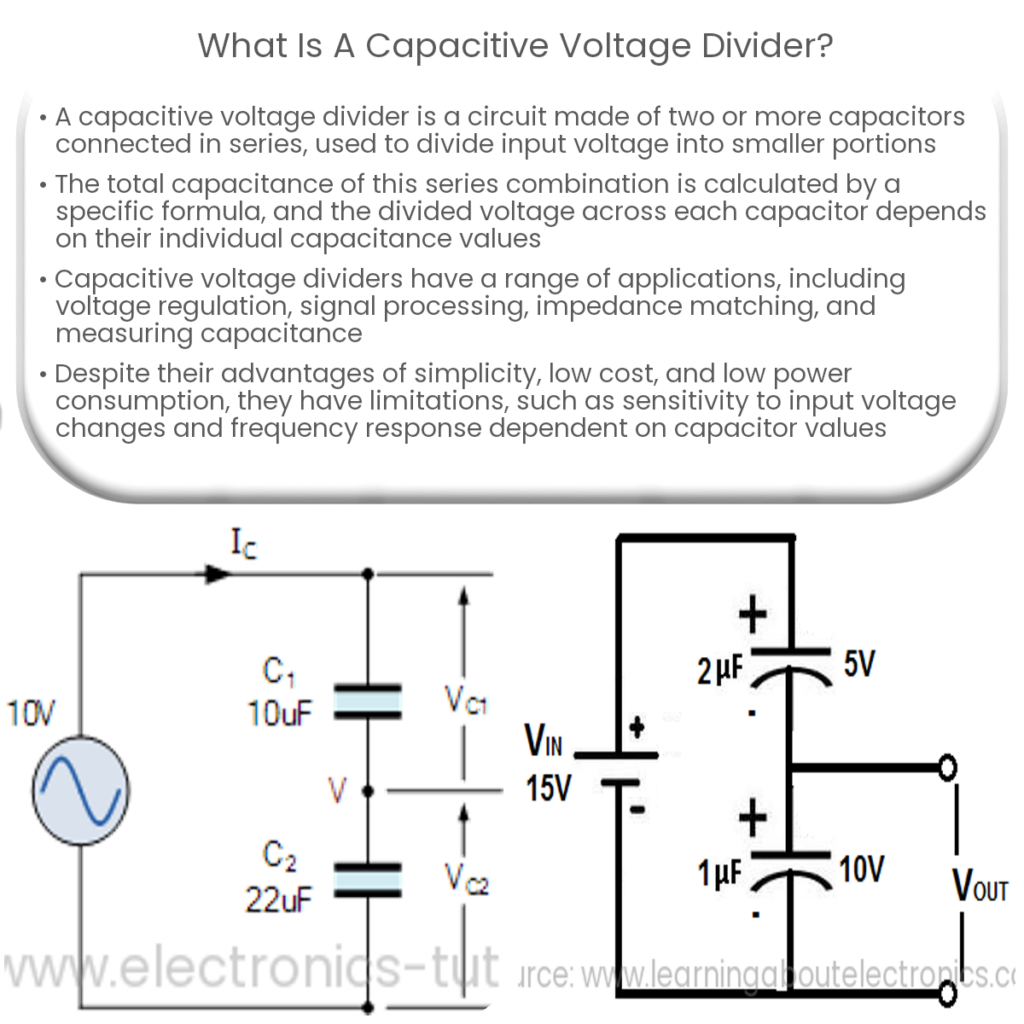
A capacitive voltage divider is a circuit with capacitors connected in series, dividing input voltage into smaller portions based on capacitance values.
A capacitive voltage divider is a circuit with capacitors connected in series, dividing input voltage into smaller portions based on capacitance values.
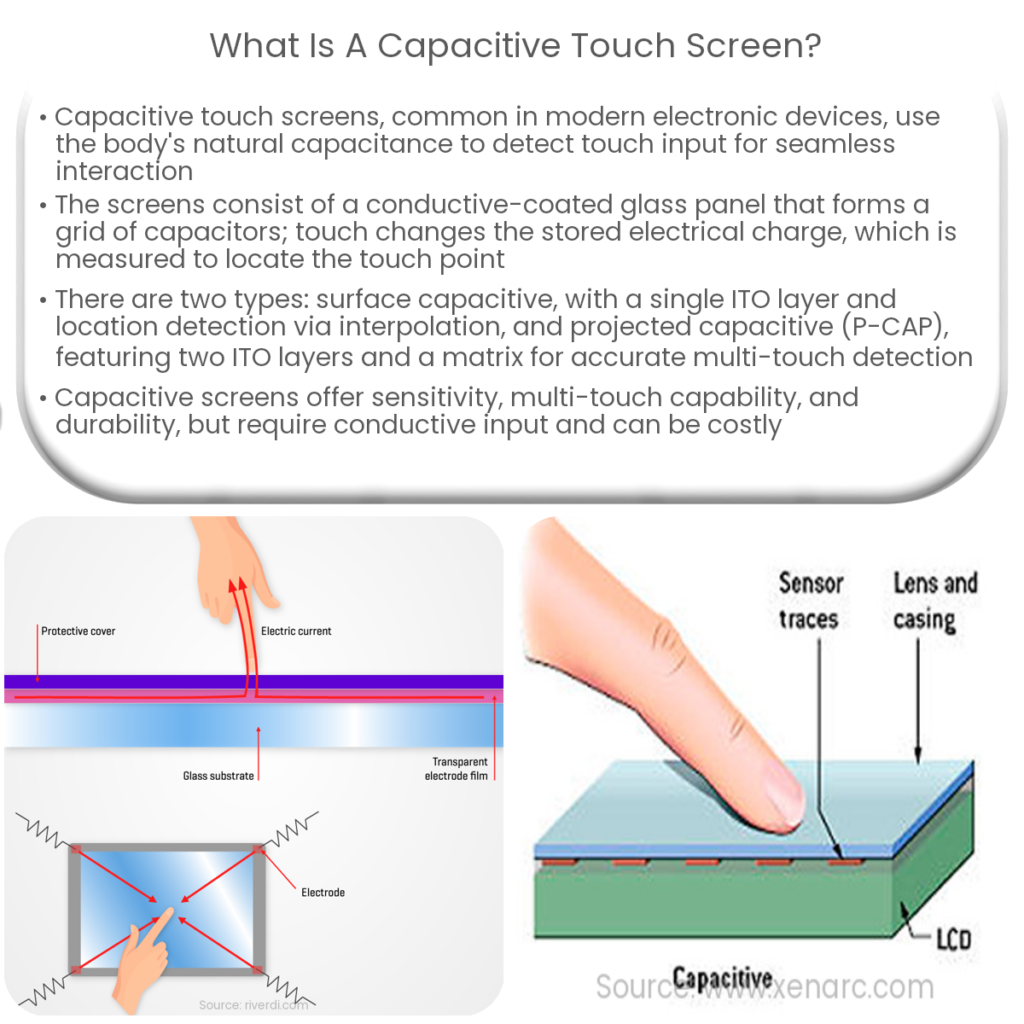
A capacitive touch screen is an input technology used in devices like smartphones and tablets, relying on the human body’s capacitance for touch detection.
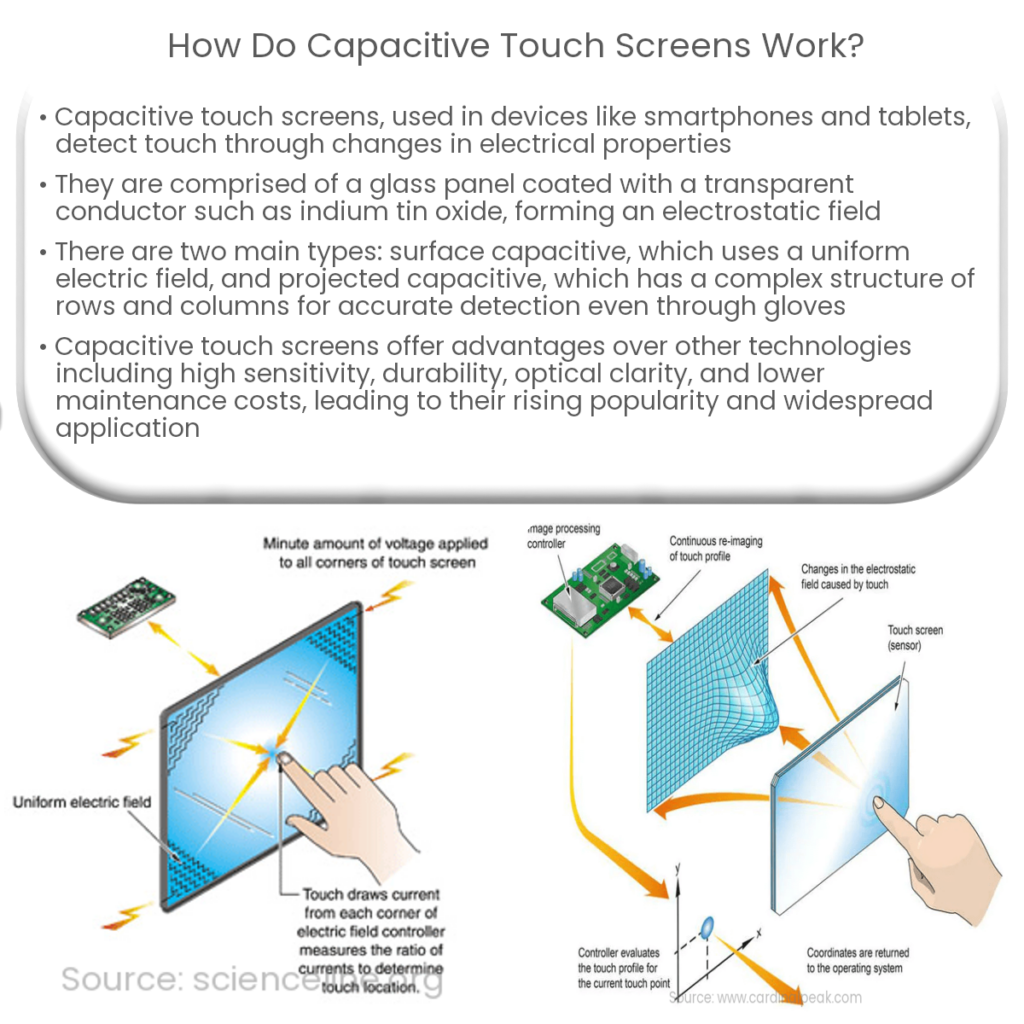
Capacitive touch screens work by detecting changes in electrostatic fields due to the natural capacitance of a finger or conductive stylus.
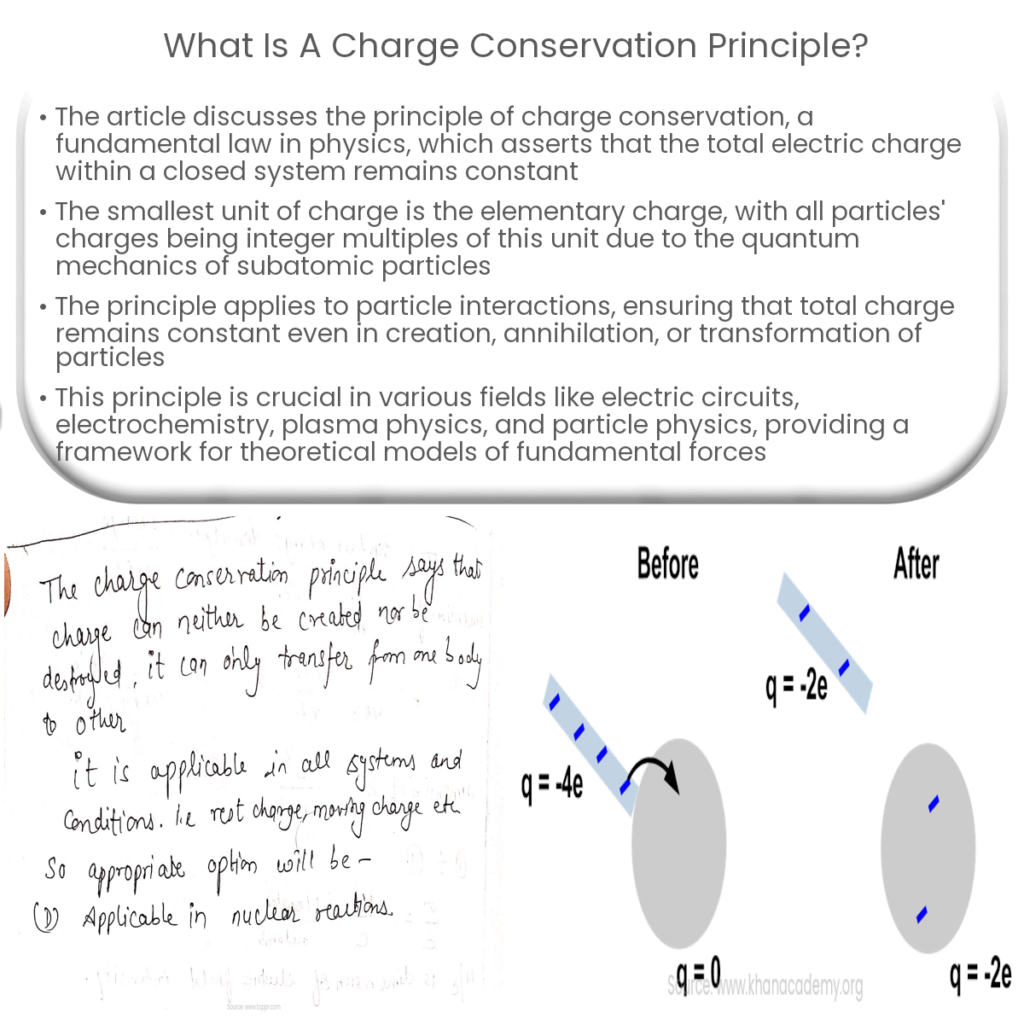
Charge conservation principle states that the total electric charge within a closed system remains constant over time, neither created nor destroyed.
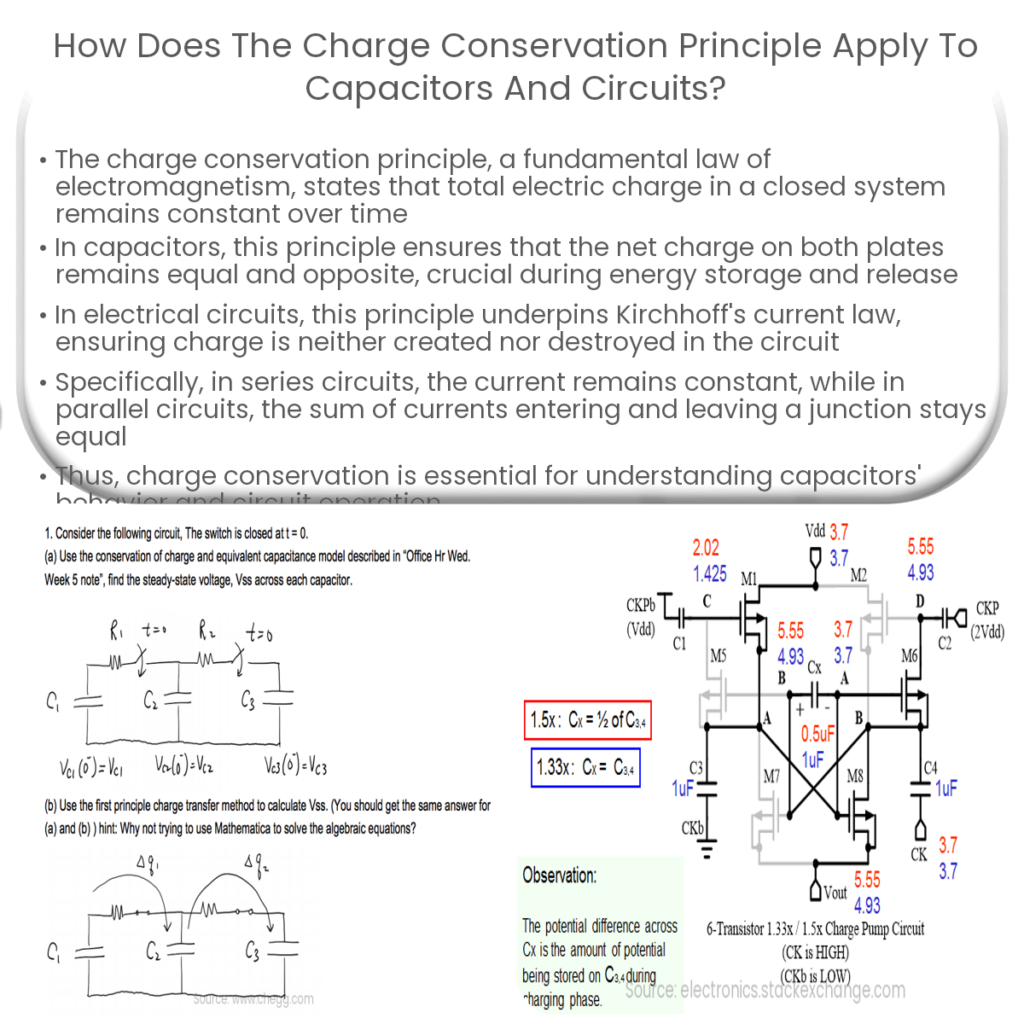
Charge conservation ensures the total electric charge in capacitors and circuits remains constant, governing energy storage, release, and charge flow.
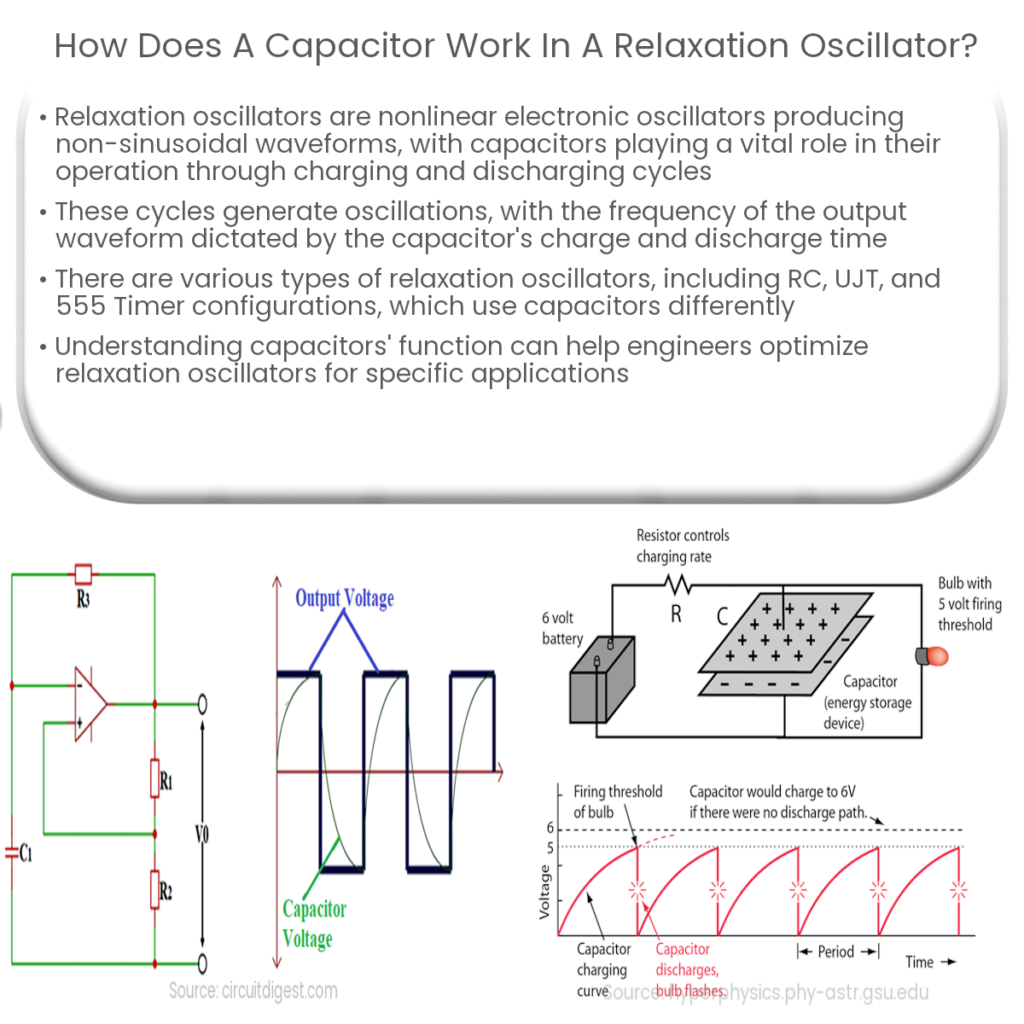
In a relaxation oscillator, capacitors charge and discharge, creating oscillations by regulating the output waveform’s frequency and shape.
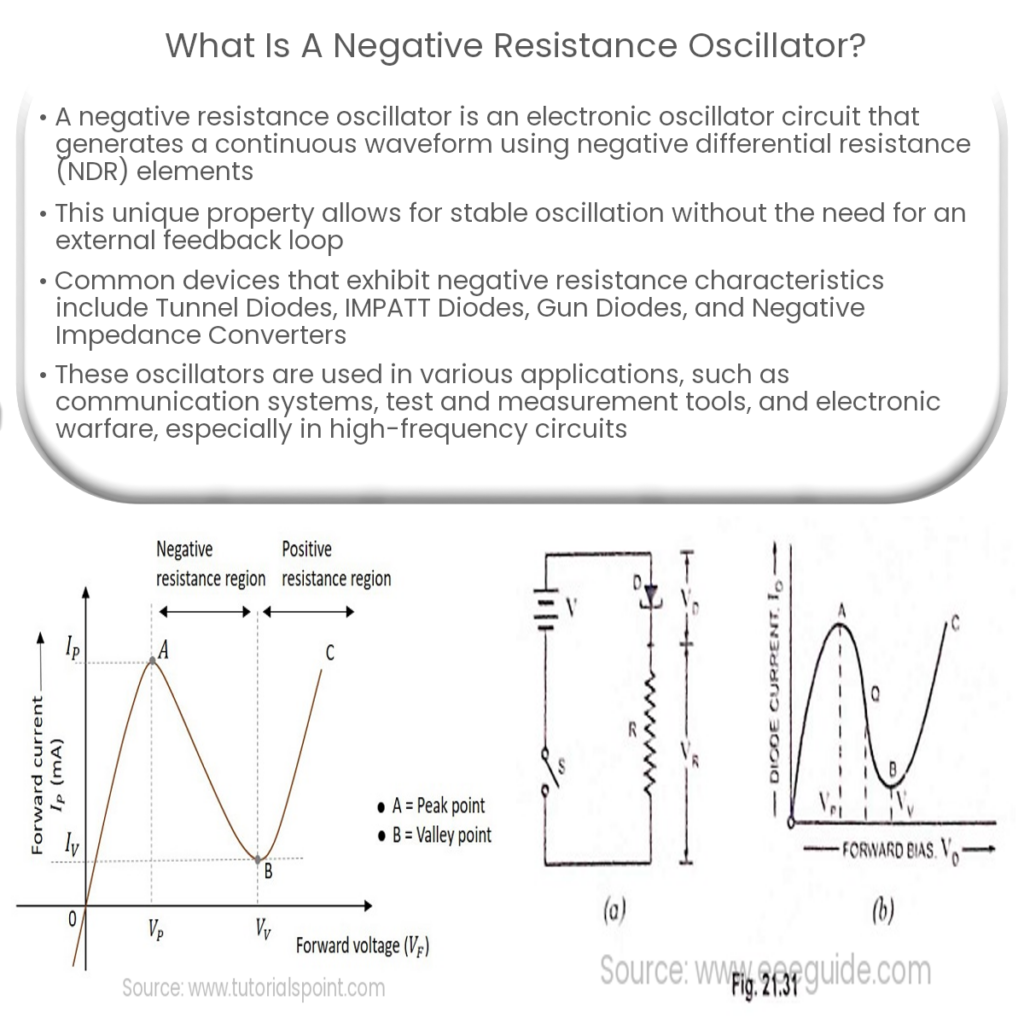
Negative resistance oscillators generate continuous waveforms using negative differential resistance elements, without needing a positive feedback loop.
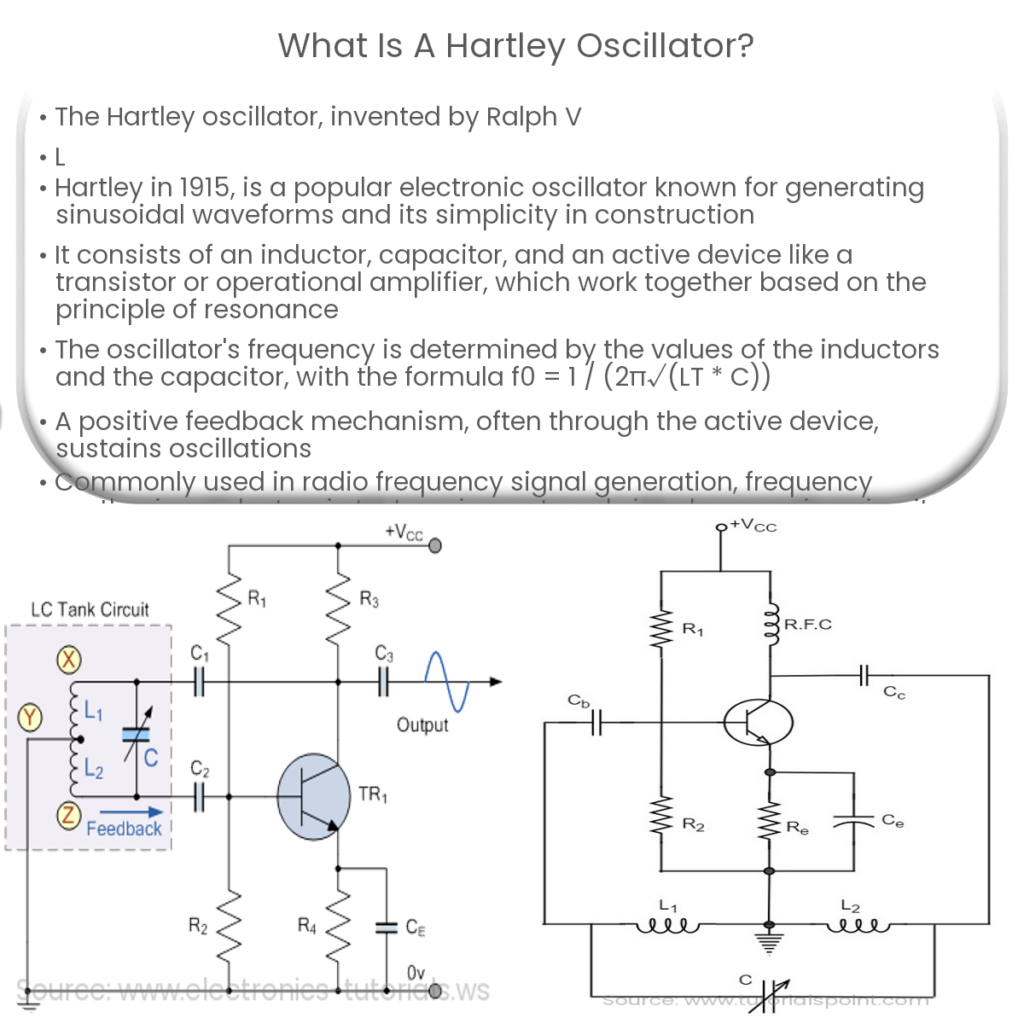
A Hartley oscillator is an electronic oscillator that generates sinusoidal waveforms, used in radio frequency applications and signal processing circuits.
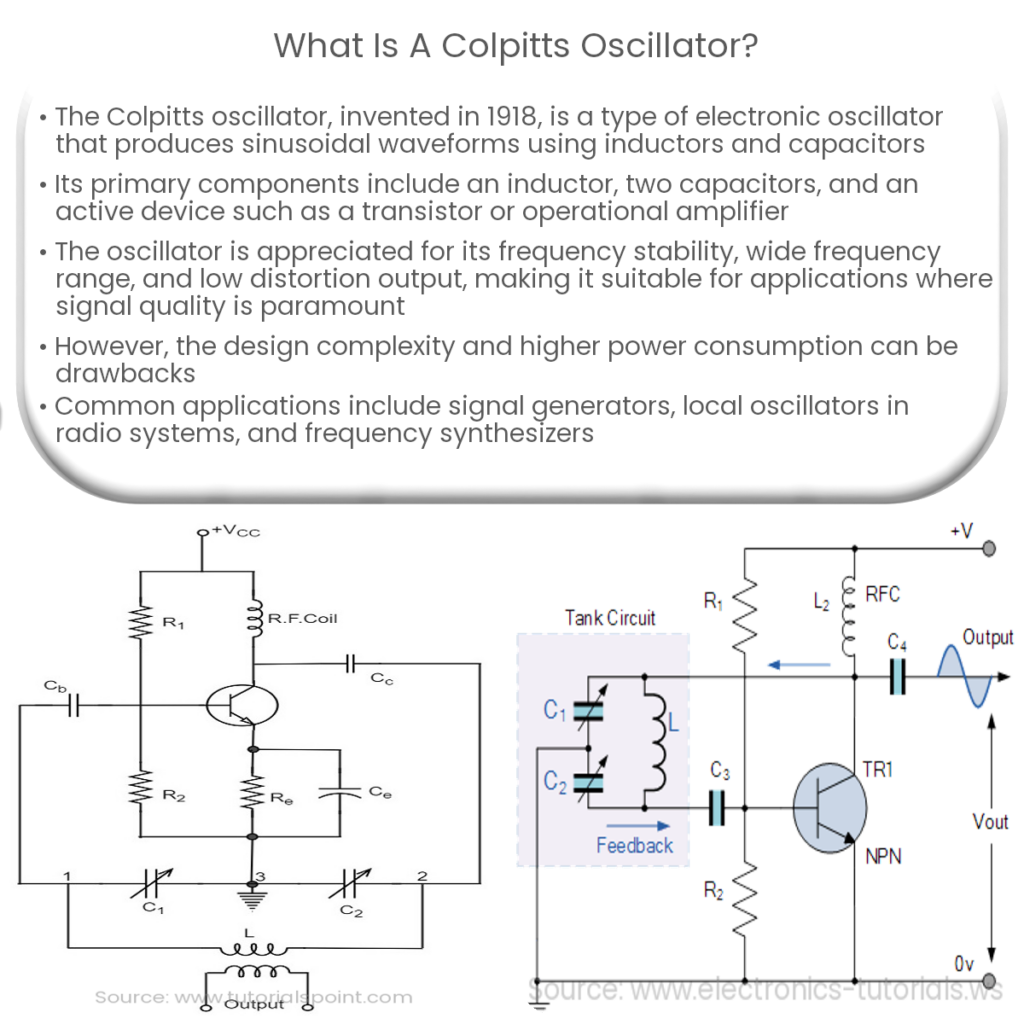
A Colpitts oscillator is an electronic oscillator that generates sinusoidal waveforms using inductors and capacitors, commonly used in RF applications.
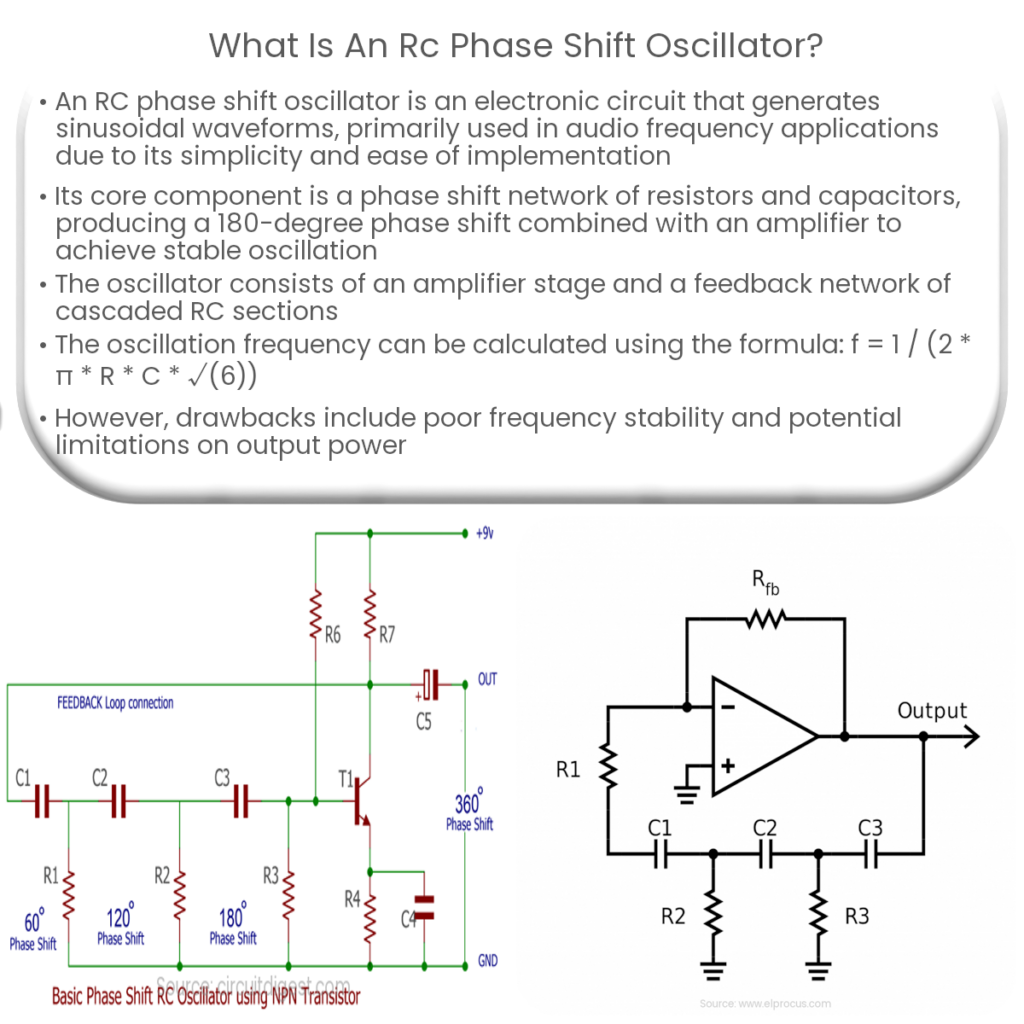
An RC phase shift oscillator is an electronic circuit generating sinusoidal waveforms using resistors and capacitors, often used in audio applications.

The primary purpose of this project is to help the public to learn some exciting and important information about electricity and magnetism.
Our Website follows all legal requirements to protect your privacy. Visit our Privacy Policy page.
The Cookies Statement is part of our Privacy Policy.
The information contained on this website is for general information purposes only. This website does not use any proprietary data. Visit our Editorial note.
It’s simple:
1) You may use almost everything for non-commercial and educational use.
2) You may not distribute or commercially exploit the content, especially on another website.
