
Explore the importance, types, selection, installation, and maintenance of cable management panels for efficient IT infrastructure.
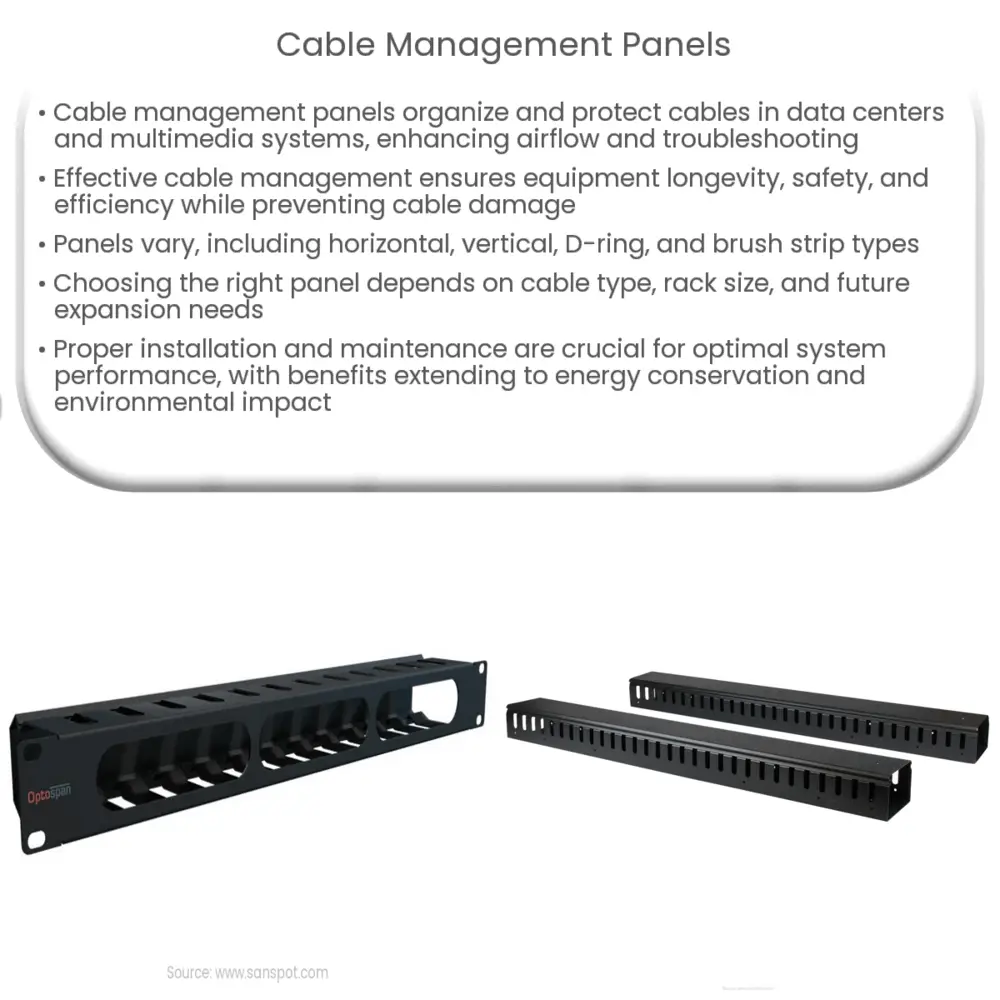
Understanding Cable Management Panels
Cable management panels are an indispensable component of today’s data-driven world, designed to simplify and organize the labyrinth of cables found in network cabinets, data centers, and multimedia systems. With an array of styles and sizes, they serve to keep your equipment tidy, improve airflow, and enhance troubleshooting capabilities.
The Importance of Cable Management Panels
Dealing with a tangled mess of cables can be a daunting task for IT professionals. Beyond the aesthetic appeal, effective cable management offers numerous practical advantages. The right panel system promotes increased longevity of your equipment, enhanced safety, easier maintenance, and overall efficiency. It prevents cable damage, such as bends and twists that could compromise data transmission and power supply.
Types of Cable Management Panels
- Horizontal Panels: These are commonly used in server racks and network cabinets. They guide cables to the sides, creating an organized appearance and making it easier to identify and manage individual cables.
- Vertical Panels: Vertical panels are perfect for managing larger cable bundles, directing them safely along the rack’s sides. These are often used in high-density network environments.
- D-Ring Panels: D-ring panels provide an open structure that makes them suitable for managing both horizontal and vertical cable runs.
- Brush Strip Panels: These panels, equipped with brush strips, allow cables to pass through while minimizing dust intrusion and maintaining proper airflow.
Choosing the Right Cable Management Panel
Selecting the appropriate cable management panel depends on your unique requirements. Factors to consider include the number of cables, the types of cables (e.g., Ethernet, power, audio/video), the size of the server rack or cabinet, and the need for future expansion.
Installation of Cable Management Panels
Installation of a cable management panel can be a straightforward process, but it requires careful planning to achieve optimal results. First, identify where the cables will enter and exit the panel. Next, plan your routing paths. Remember to maintain appropriate bend radii to prevent cable damage.
The installation process typically involves mounting the panel onto the rack, threading the cables through the panel, and then securing them using ties or clamps. For larger installations, it may be necessary to consider professional installation services.
Maintenance of Cable Management Panels
After installation, proper maintenance is essential to keep your cable management system in optimal condition. Regular checks for damaged or loose cables, dust accumulation, and airflow restrictions will contribute to a well-functioning network. Where necessary, replace or reroute cables to ensure the system continues to work efficiently.
The Role of Cable Management Panels in Data Centers
In large-scale data centers, the importance of cable management panels cannot be overstated. These environments often have a high density of cables that, without effective management, can become a significant operational risk. Data centers use complex combinations of horizontal and vertical panels, often alongside other cable management tools such as trays and ladders, to maintain orderly cable routes and maximize cooling efficiency.
Environmental Impact of Cable Management Panels
While not immediately apparent, efficient cable management also has positive implications for energy use and, therefore, the environment. Better airflow around devices means less overheating and, as a result, less cooling is required. This can lead to a significant reduction in energy consumption, especially in large-scale IT environments.
Final Thoughts on Cable Management Panels
In the world of networking, the phrase “out of sight, out of mind” does not apply. Even though they may be hidden behind racks or panels, cables require careful attention and management. Cable management panels are an essential tool in maintaining an organized, efficient, and safe cable infrastructure. They offer tangible benefits in terms of maintenance, troubleshooting, equipment longevity, and even environmental impact.
In conclusion, investing in a good cable management panel system is a critical decision for anyone involved in IT infrastructure management. From small server closets to large data centers, the principles remain the same: effective cable management contributes to smoother operations, improved performance, and a safer working environment.



