
How do you use a Wheatstone bridge to measure unknown resistance?

A Wheatstone bridge measures unknown resistance by balancing the bridge and using known resistances to calculate the unknown resistor’s value.
A Wheatstone bridge measures unknown resistance by balancing the bridge and using known resistances to calculate the unknown resistor’s value.

The Wheatstone Bridge is a circuit that measures unknown resistance by balancing two legs of a bridge, widely used in scientific and industrial applications.

To calculate equivalent resistance, identify series and parallel combinations, then use respective formulas and simplify the network step by step.

Consider resistance value, tolerance, power rating, TCR, package size, environmental conditions, noise, cost, and availability when selecting a resistor.

To design a circuit with specific resistance and power dissipation, choose appropriate components, create a series connection, and verify the circuit.
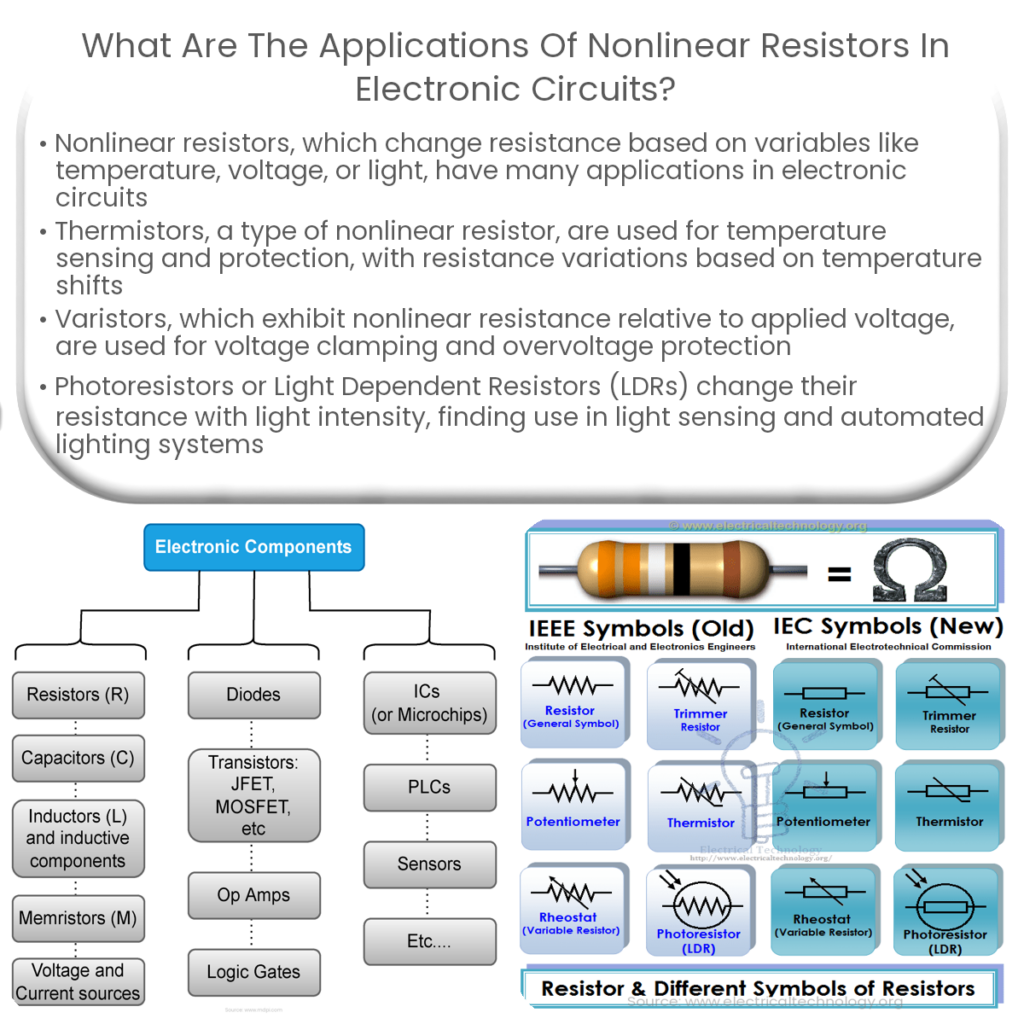
Nonlinear resistors, like thermistors, varistors, and photoresistors, are used for temperature sensing, voltage regulation, light sensing, and component protection.

Linear resistors maintain constant resistance, following Ohm’s Law. Nonlinear resistors have varying resistance based on factors like temperature or voltage.

Resistors impact gain control, stability, frequency response, biasing, and protection in amplifiers and active electronic devices, shaping performance.
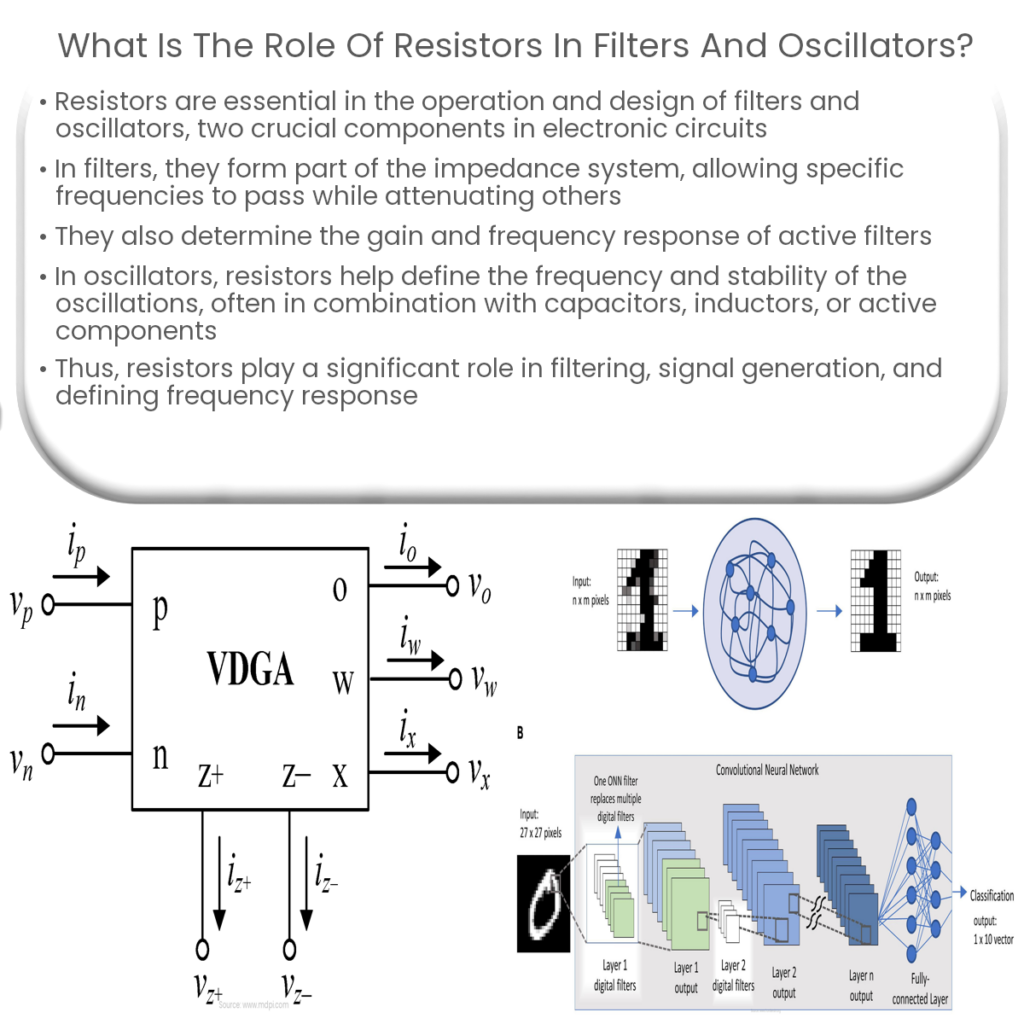
Resistors help define frequency response and stability in filters and oscillators, shaping their performance for specific applications.
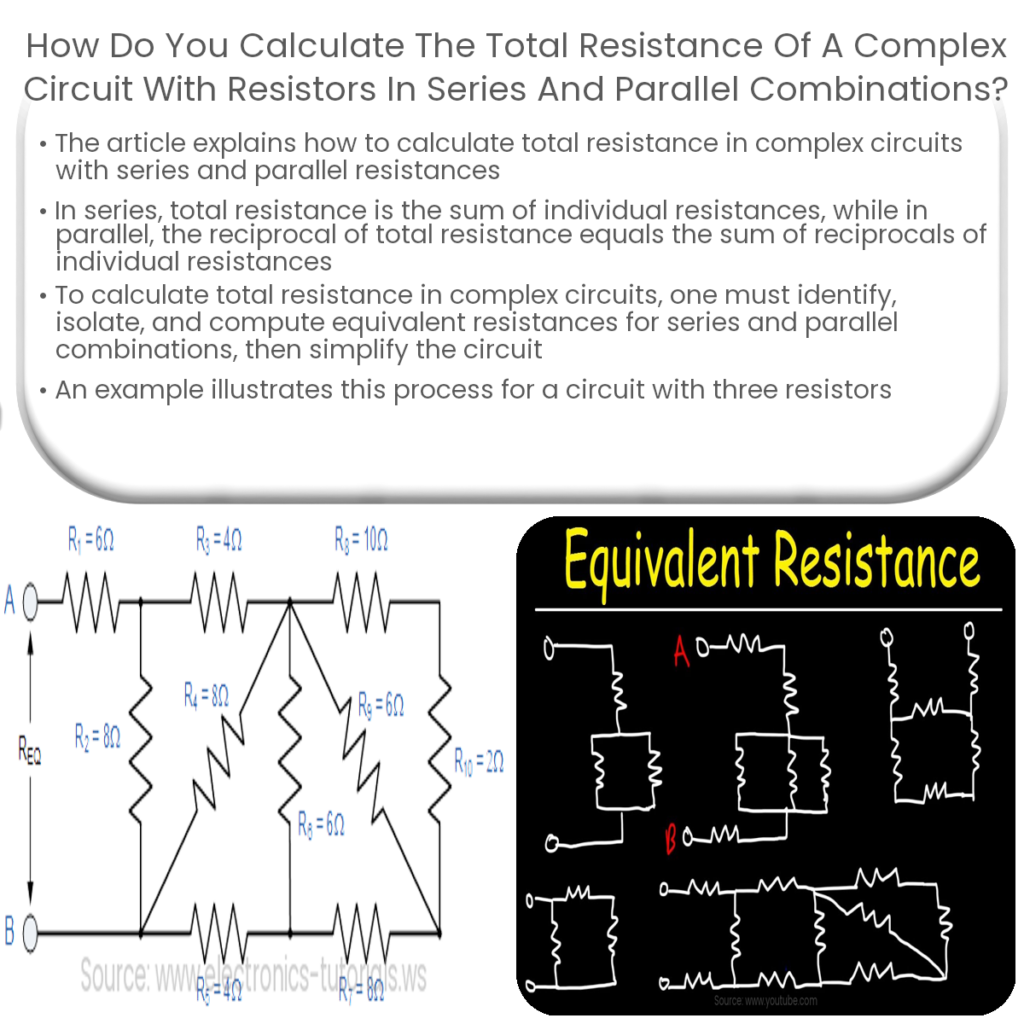
To calculate total resistance in a complex circuit, first simplify series and parallel combinations, then combine the equivalent resistances.

The primary purpose of this project is to help the public to learn some exciting and important information about electricity and magnetism.
Our Website follows all legal requirements to protect your privacy. Visit our Privacy Policy page.
The Cookies Statement is part of our Privacy Policy.
The information contained on this website is for general information purposes only. This website does not use any proprietary data. Visit our Editorial note.
It’s simple:
1) You may use almost everything for non-commercial and educational use.
2) You may not distribute or commercially exploit the content, especially on another website.


