
What are the different types of magnetic materials?

Magnetic materials are classified into diamagnetic, paramagnetic, ferromagnetic, and antiferromagnetic based on their response to magnetic fields.
Magnetic materials are classified into diamagnetic, paramagnetic, ferromagnetic, and antiferromagnetic based on their response to magnetic fields.

The torque acting on a magnetic dipole in a magnetic field is directly proportional to the magnetic moment and the magnetic field strength.

The magnetic moment represents an object’s magnetism strength and orientation, and it directly affects the magnetic field produced by the object.
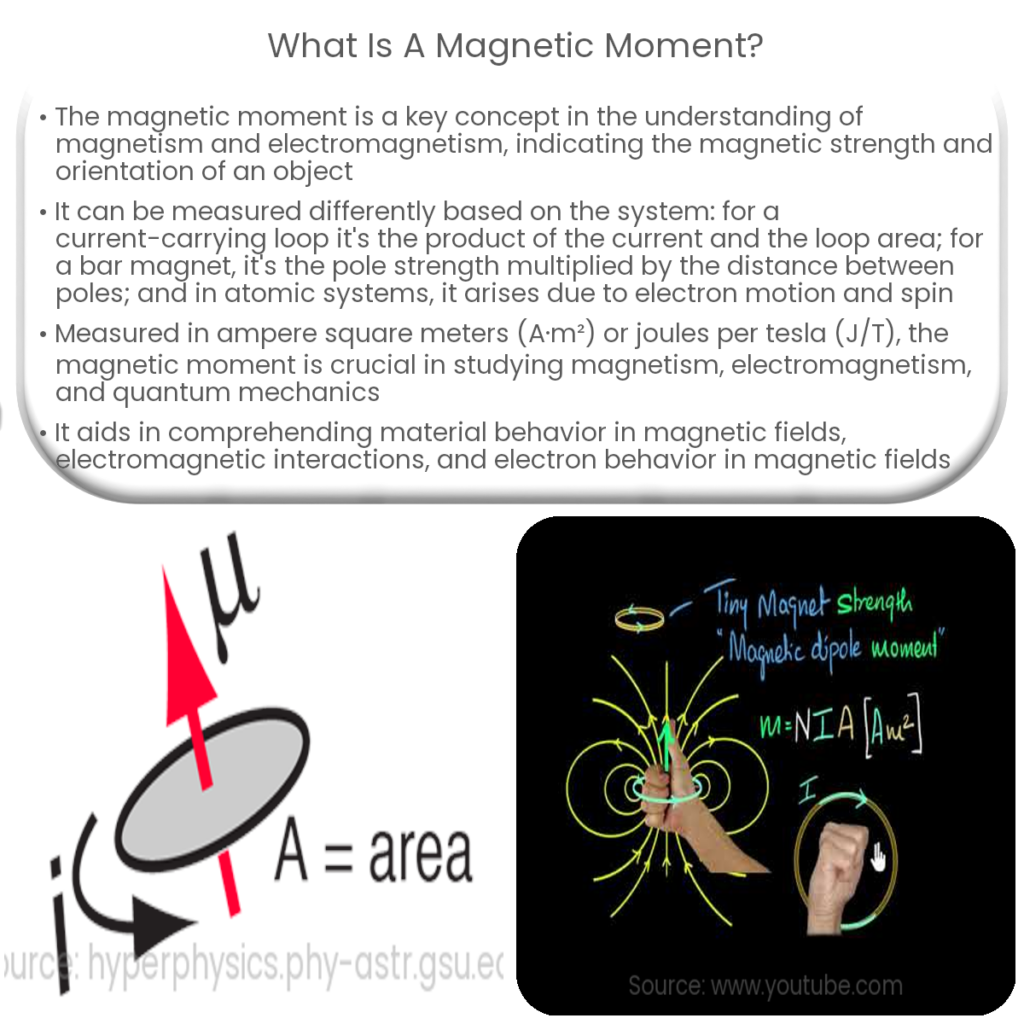
A magnetic moment is a vector quantity representing an object’s magnetic properties, including strength and direction, crucial in magnetism studies.

To calculate a magnetic dipole’s field, determine the dipole moment and use formulas for axial or equatorial fields, considering the field’s vector nature.

A magnetic dipole is a simple magnetic system with a north and south pole, generating a magnetic field. It helps understand complex magnetic systems.

The magnetic field inside a toroid is uniform and calculated using B = (μ0 * N * I) / (2 * π * R), with no external magnetic field presence.

A toroid creates a magnetic field by passing an electric current through a wire wrapped around a donut-shaped core, concentrating the field inside.

The magnetic field inside a solenoid is uniform and parallel to the axis, with strength determined by the coil’s turns, current, and material permeability.
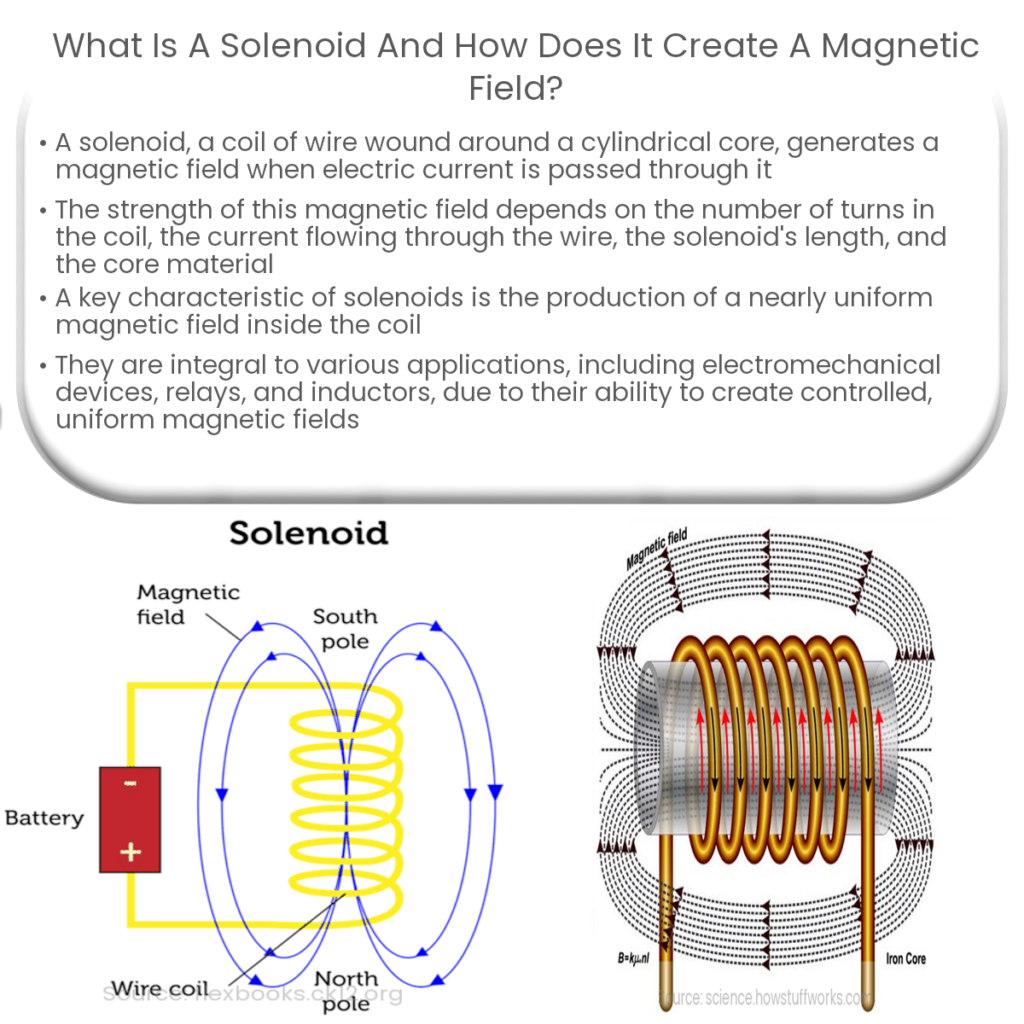
A solenoid is a coil of wire that generates a magnetic field when current flows through it. Its uniform field is used in various applications.

The primary purpose of this project is to help the public to learn some exciting and important information about electricity and magnetism.
Our Website follows all legal requirements to protect your privacy. Visit our Privacy Policy page.
The Cookies Statement is part of our Privacy Policy.
The information contained on this website is for general information purposes only. This website does not use any proprietary data. Visit our Editorial note.
It’s simple:
1) You may use almost everything for non-commercial and educational use.
2) You may not distribute or commercially exploit the content, especially on another website.


