
Servos
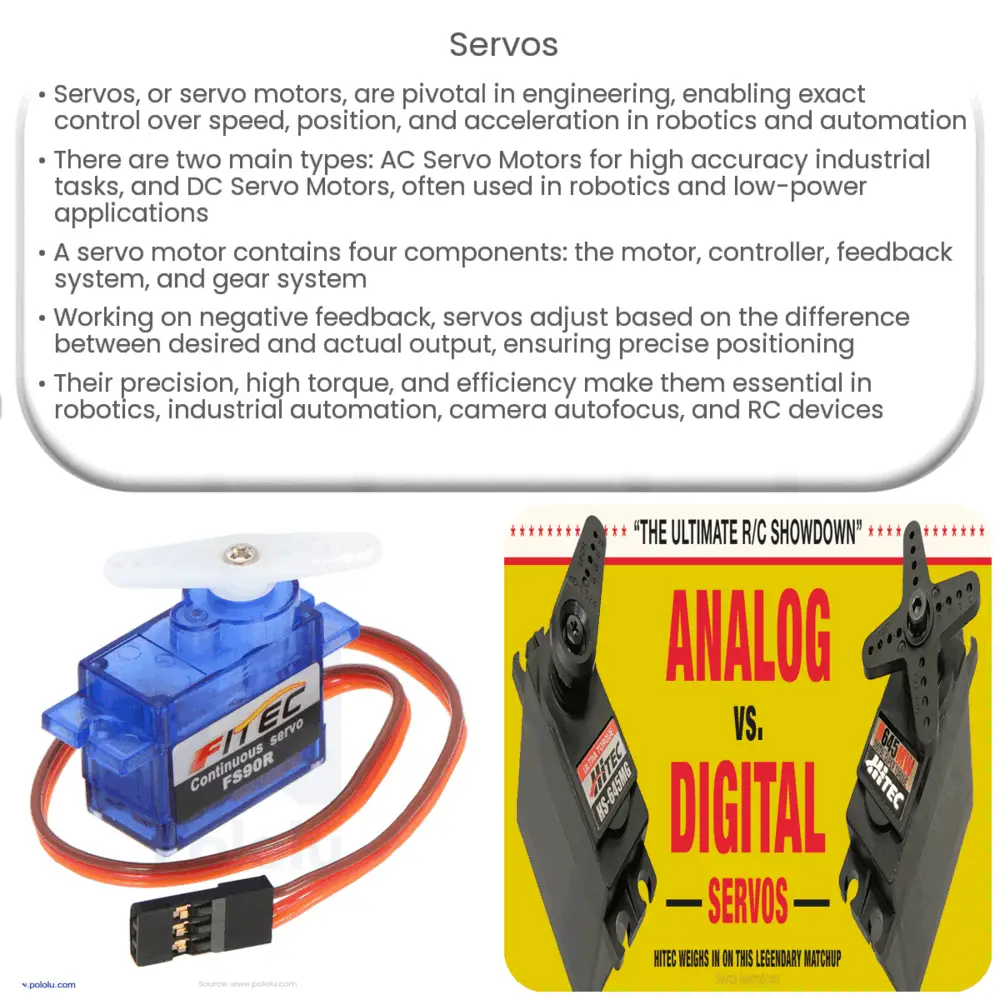
Explore the world of servo motors – their types, working principle, applications, benefits, and their pivotal role in advancing technology.
Explore the world of servo motors – their types, working principle, applications, benefits, and their pivotal role in advancing technology.

The sectorless Wimshurst machine motor is an improved electrostatic generator, offering higher voltages, consistent output, and simpler construction.

Piezoelectric motors offer precision motion control, fast response, and energy efficiency, ideal for applications in medical, aerospace, and nanotechnology.

The Pidgeon machine motor combines Stirling engine & maglev technologies for eco-friendly, efficient, low-maintenance, and quiet power applications.

The Leyden jar motor is an early electric motor that utilizes electrostatic repulsion, marking the beginning of electrical engineering advancements.

The Kelvin water dropper motor is a device that converts gravitational potential energy of falling water droplets into electrical energy through electrostatic forces.
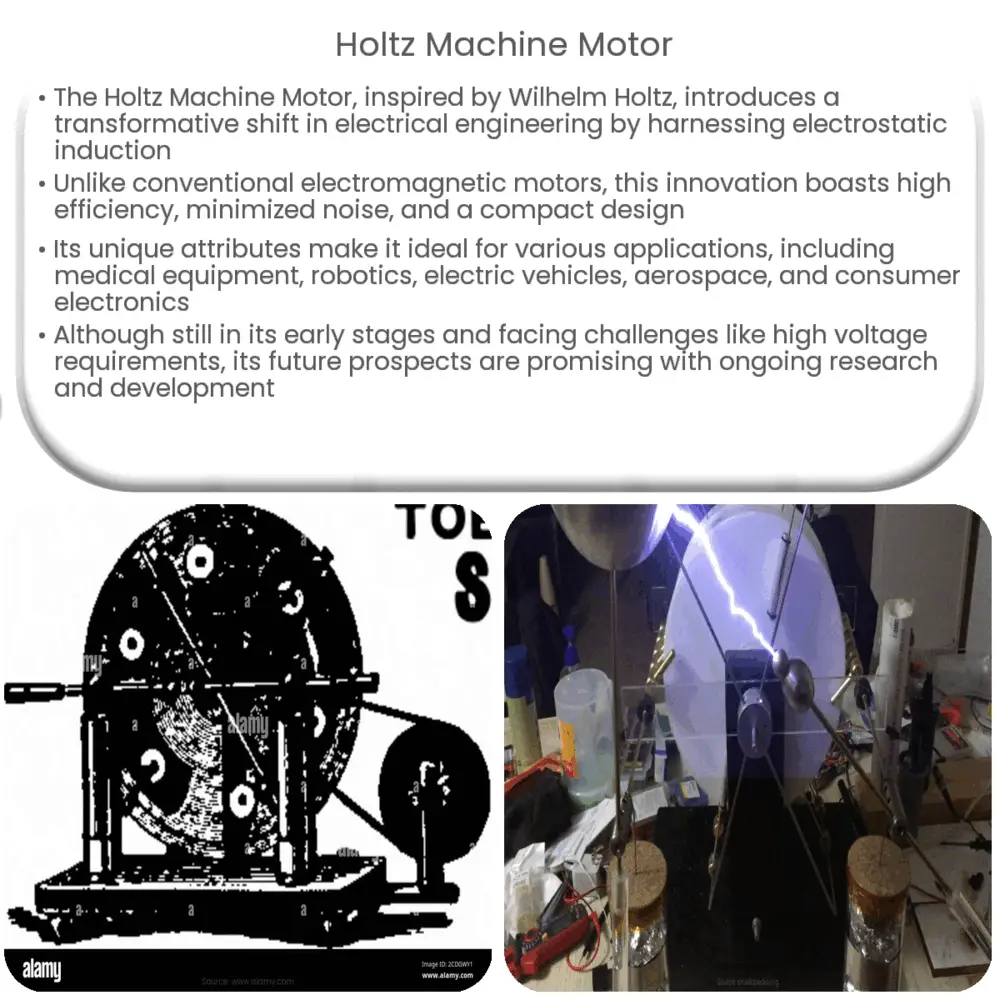
The Holtz Machine Motor is an innovative electrostatic motor offering high efficiency, low noise operation, and a compact design for various applications.
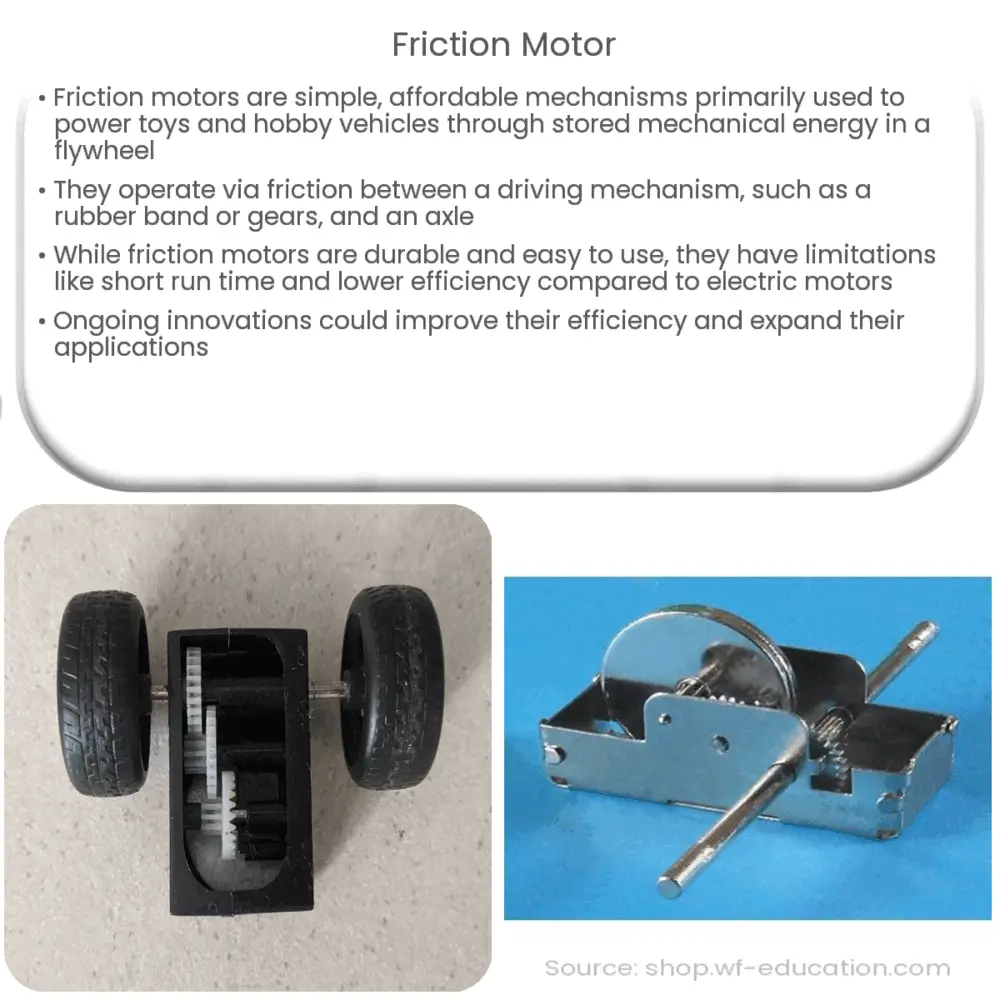
Friction motors utilize a flywheel, driving mechanism, and axle to convert stored mechanical energy into motion, often found in toys and small vehicles.

The Electrophorus motor is an innovative electric propulsion system with higher efficiency, reduced energy consumption, and a smaller environmental footprint.
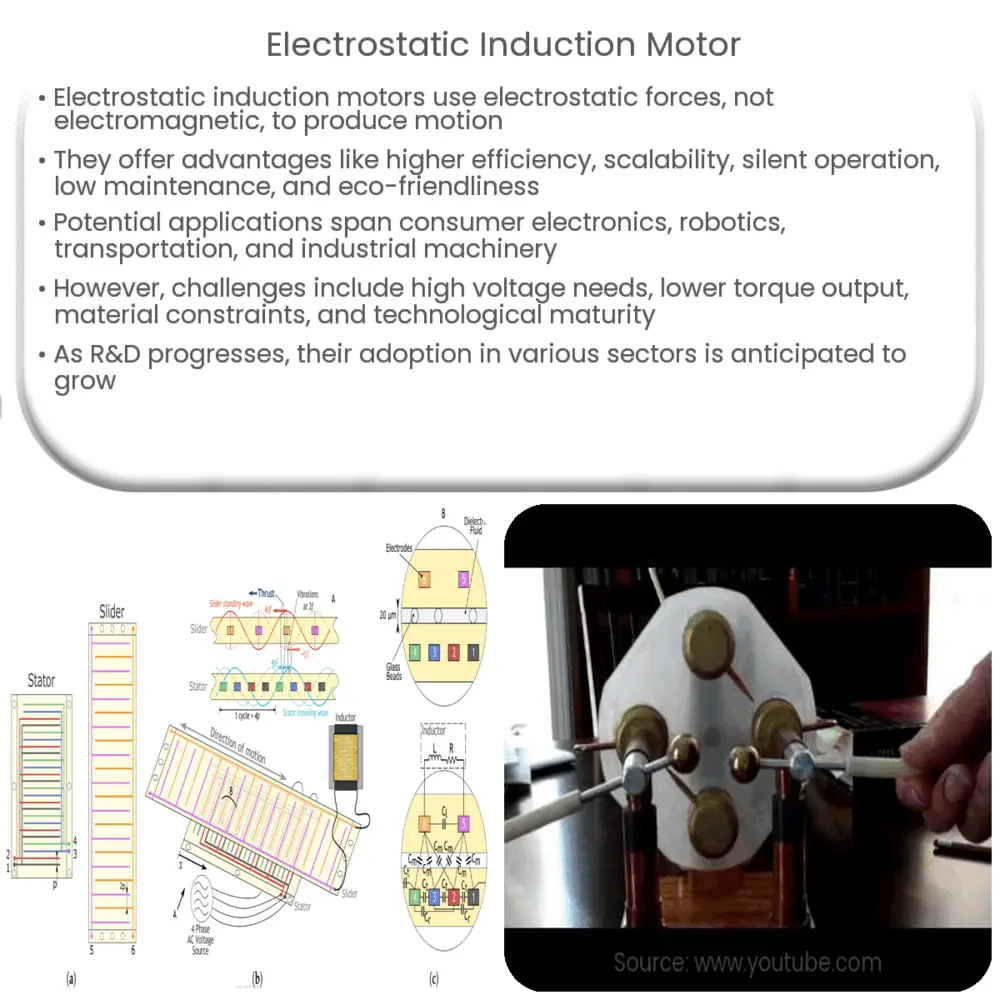
Electrostatic induction motors use electrostatic forces for motion, offering high efficiency, silent operation, and low maintenance in various applications.

The primary purpose of this project is to help the public to learn some exciting and important information about electricity and magnetism.
Our Website follows all legal requirements to protect your privacy. Visit our Privacy Policy page.
The Cookies Statement is part of our Privacy Policy.
The information contained on this website is for general information purposes only. This website does not use any proprietary data. Visit our Editorial note.
It’s simple:
1) You may use almost everything for non-commercial and educational use.
2) You may not distribute or commercially exploit the content, especially on another website.


