
The Holtz Machine Motor is an innovative electrostatic motor offering high efficiency, low noise operation, and a compact design for various applications.
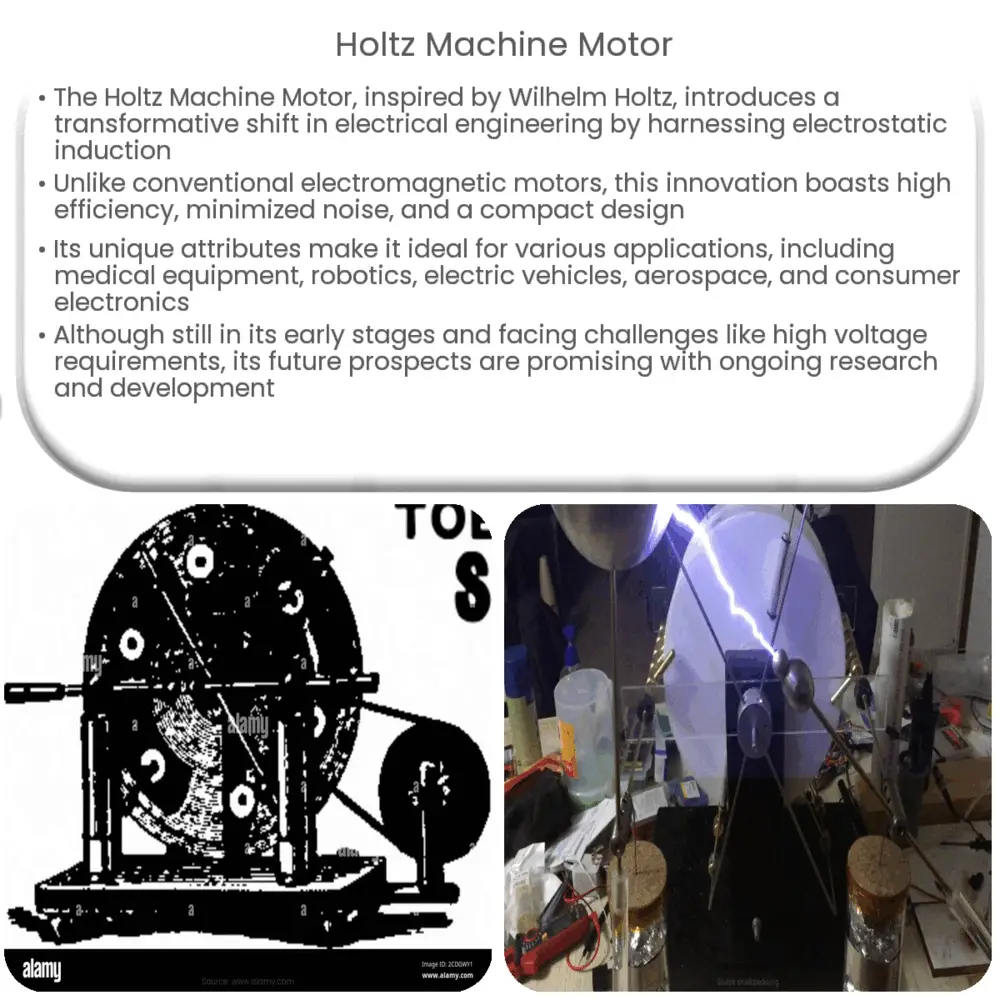
Holtz Machine Motor: An Innovative Leap in Electrical Engineering
The Holtz Machine Motor, named after its inventor Wilhelm Holtz, has emerged as a game-changing innovation in the field of electrical engineering. Combining the principles of electrostatic induction with advanced motor technology, the Holtz Machine Motor is poised to revolutionize industries requiring high levels of efficiency and precision. In this article, we will explore the fundamentals of the Holtz Machine Motor, its unique features, and potential applications in various sectors.
Understanding the Holtz Machine Motor
The Holtz Machine Motor is a groundbreaking innovation in electrostatic motor technology that operates based on electrostatic induction, as opposed to traditional electromagnetic principles. This unique design enables the motor to deliver high performance and efficiency, while also reducing energy consumption and operational noise.
The fundamental concept behind the Holtz Machine Motor is the use of a high-voltage electrostatic field to induce rotation in a conductive rotor. This is achieved by employing a specially designed stator, which generates a strong electrostatic field that acts upon the rotor. The resulting interaction causes the rotor to spin, ultimately converting the electrostatic energy into mechanical energy. This method of energy conversion is highly efficient, making the Holtz Machine Motor an attractive option for various applications.
Key Features of the Holtz Machine Motor
1. High Efficiency: The use of electrostatic induction allows the Holtz Machine Motor to achieve superior efficiency levels compared to traditional motors. This results in reduced energy consumption and lower operational costs, making it an environmentally-friendly option for industries seeking to reduce their carbon footprint.
2. Low Noise Operation: Unlike conventional motors that rely on electromagnetism, the Holtz Machine Motor operates with minimal noise due to its unique electrostatic design. This feature is especially beneficial in applications where noise reduction is a critical factor, such as medical equipment or sensitive research instruments.
3. Compact Design: The innovative design of the Holtz Machine Motor enables it to have a smaller footprint compared to traditional motors. This compact size allows for easier integration into various systems and devices, enabling new possibilities for engineers and designers.
Potential Applications of the Holtz Machine Motor
The Holtz Machine Motor’s unique combination of high efficiency, low noise operation, and compact design makes it an attractive option for a wide range of applications. Some of these potential applications include:
1. Medical Equipment: In the medical field, the Holtz Machine Motor’s low noise operation and high efficiency make it a suitable choice for devices such as MRI machines, ventilators, and surgical robots.
2. Robotics: The compact size and high performance of the Holtz Machine Motor can greatly benefit robotics applications, enabling the development of smaller and more efficient robots for various tasks, including industrial automation, rescue operations, and exploration.
3. Electric Vehicles: The Holtz Machine Motor’s high efficiency and compact design make it an ideal candidate for integration into electric vehicles. Its reduced energy consumption could lead to longer driving ranges and lower charging times, improving the overall performance of electric cars and contributing to a more sustainable transportation future.
4. Aerospace Industry: The lightweight and efficient nature of the Holtz Machine Motor could offer significant advantages in aerospace applications, such as drones and small satellites. The reduced energy consumption and weight could allow for extended flight times, improved maneuverability, and a reduced environmental impact.
5. Consumer Electronics: The Holtz Machine Motor’s compact size and low noise operation make it an attractive option for integration into various consumer electronics, including home appliances, personal computers, and cooling systems. Its high efficiency and low energy consumption could lead to reduced electricity usage and a smaller environmental footprint for these devices.
Challenges and Future Development
While the Holtz Machine Motor shows great promise, it is not without its challenges. One of the primary concerns is the need for high voltage to generate the electrostatic field, which could pose safety risks and require specialized components for voltage management. Additionally, the technology is still relatively new and may face obstacles related to scaling and mass production.
However, ongoing research and development efforts are addressing these challenges, and as the technology matures, it is expected that the Holtz Machine Motor will become an increasingly viable and competitive option in various industries. Continued advancements in materials science, voltage management solutions, and manufacturing processes will likely contribute to the motor’s widespread adoption and success.
Conclusion
The Holtz Machine Motor represents a significant innovation in the field of electrical engineering, with its unique electrostatic induction principle offering numerous advantages over traditional electromagnetic motors. Its high efficiency, low noise operation, and compact design make it an attractive option for a diverse range of applications, from medical equipment and robotics to electric vehicles and consumer electronics. As the technology continues to evolve, the Holtz Machine Motor has the potential to reshape the landscape of motor-driven devices, paving the way for a more sustainable and efficient future.



