
Analog ohmmeters measure electrical resistance using a needle-based display, offering real-time response, reliability, and cost-effectiveness.
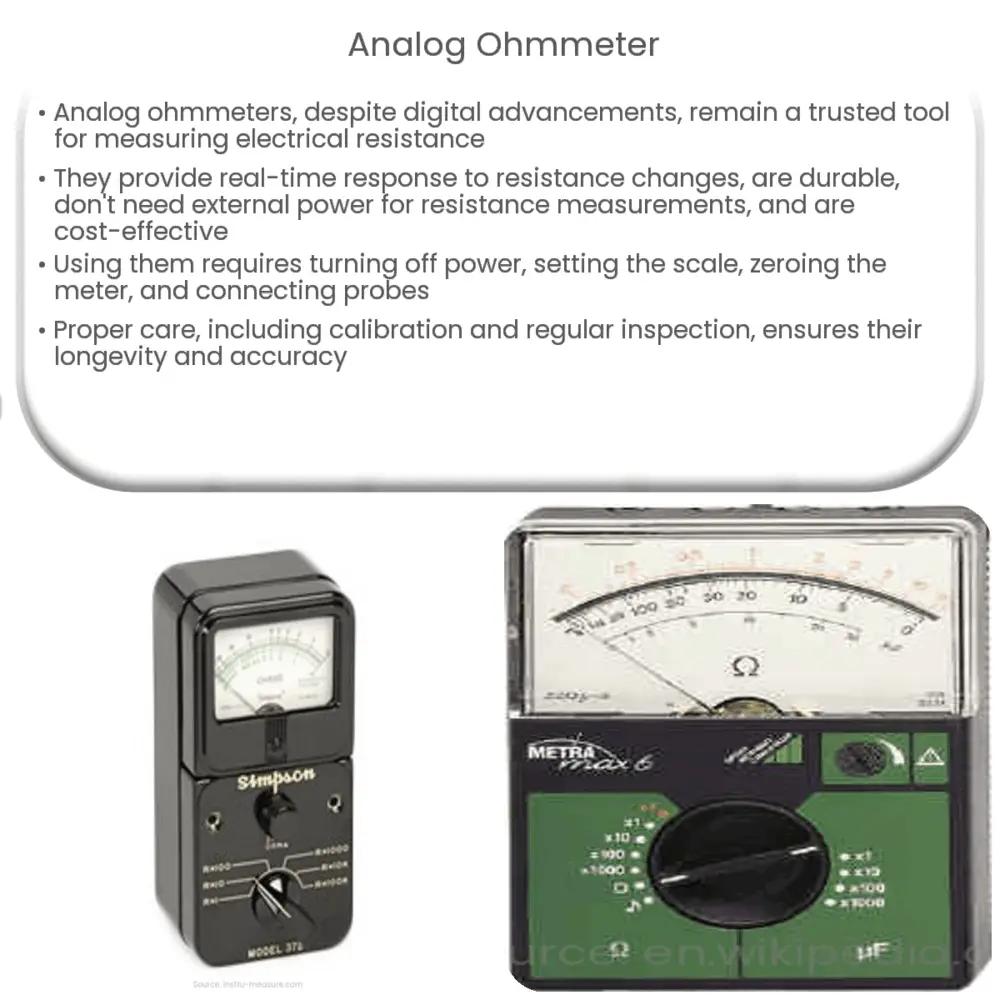
Analog Ohmmeter: Understanding and Using the Classic Electrical Testing Tool
Introduction
Analog ohmmeters have been an essential tool for electrical professionals and hobbyists alike for decades. Despite the proliferation of digital multimeters, these classic devices still hold their own when it comes to measuring resistance in electrical circuits. In this article, we will explore the fundamentals of analog ohmmeters, their advantages, and how to use them effectively.
What is an Analog Ohmmeter?
An analog ohmmeter is a device used to measure electrical resistance, expressed in ohms (Ω). It typically consists of a needle-based display, called a galvanometer, which indicates the resistance value by the position of the needle on a graduated scale. The ohmmeter is part of a larger family of electrical testing instruments, including voltmeters, which measure voltage, and ammeters, which measure current.
Advantages of Analog Ohmmeters
While digital multimeters are widely used today, analog ohmmeters still offer several advantages:
- Instant Response: Analog ohmmeters provide an immediate response to changes in resistance, allowing the user to observe fluctuations in real-time. This can be helpful when troubleshooting intermittent issues or adjusting components in a circuit.
- Reliability: With fewer components and a simpler design, analog ohmmeters are often more durable and less prone to failure than their digital counterparts.
- Battery Independent: Unlike digital multimeters, analog ohmmeters do not require an external power source for resistance measurements. This makes them a convenient tool for fieldwork or situations where battery access is limited.
- Cost-effective: Analog ohmmeters are generally less expensive than digital multimeters, making them an accessible option for hobbyists and professionals on a budget.
How to Use an Analog Ohmmeter
Using an analog ohmmeter is a straightforward process, but it is essential to follow these steps to ensure accurate and safe measurements:
- Turn off the power: Disconnect the power source from the circuit or device being tested to avoid damage to the ohmmeter or potential injury.
- Set the scale: Choose the appropriate resistance scale on the ohmmeter, usually indicated by a range of values (e.g., x1, x10, x100, etc.). Selecting a higher range can help prevent overloading the meter and damaging its internal components.
- Zero the meter: Before taking any measurements, short the test probes together and adjust the zero-ohm control knob until the needle points to zero on the scale. This ensures that the meter is calibrated and ready for accurate readings.
- Connect the probes: Touch the test probes to the circuit or component being tested. The meter’s needle will indicate the resistance value on the selected scale. If the needle doesn’t move or exceeds the scale, try adjusting to a higher range and retest.
Troubleshooting with an Analog Ohmmeter
Analog ohmmeters are valuable tools for identifying and diagnosing electrical issues. Here are some common troubleshooting applications:
- Checking Continuity: By measuring resistance, you can verify if there is an electrical connection between two points in a circuit. A low resistance value (close to 0Ω) indicates good continuity, while a high resistance value (approaching infinity) suggests a break in the connection or an open circuit.
- Testing Resistors: You can use an analog ohmmeter to verify the resistance values of individual resistors in a circuit. Compare the measured value to the labeled or expected value to determine if the resistor is within its specified tolerance.
- Identifying Short Circuits: A short circuit occurs when a low-resistance path connects two points in a circuit that should not be directly connected. An analog ohmmeter can help detect short circuits by measuring the resistance between these points. A near-zero resistance reading may indicate a short circuit.
Maintaining and Caring for Your Analog Ohmmeter
Proper care and maintenance of your analog ohmmeter can ensure its longevity and accuracy:
- Storage: Keep your ohmmeter in a clean, dry, and temperature-controlled environment to prevent damage to its internal components.
- Calibration: Regularly calibrate your ohmmeter by adjusting the zero-ohm control knob as described earlier. This ensures consistent and accurate measurements.
- Inspection: Inspect your ohmmeter periodically for any signs of wear or damage, particularly to the test probes and cables. Replace any worn or damaged parts as needed.
- Battery: If your analog ohmmeter has a built-in battery for additional functions (e.g., voltmeter or ammeter), make sure to replace it as needed and remove it if the ohmmeter will not be used for an extended period.
Conclusion
Despite the widespread use of digital multimeters, analog ohmmeters continue to be a reliable and cost-effective option for measuring resistance in electrical circuits. By understanding their advantages and learning how to use them properly, both professionals and hobbyists can benefit from this classic electrical testing tool. With proper care and maintenance, an analog ohmmeter can serve as a valuable asset in your toolbox for years to come.



