
Air bubble level sensors accurately measure fluid levels in various industries, offering reliability, compatibility, and low maintenance.
Air Bubble Level Sensor: Understanding Its Applications and Benefits
Introduction
Air bubble level sensors are innovative devices that have gained significant popularity in various industries due to their accuracy and reliability in measuring fluid levels. These sensors play a crucial role in ensuring the proper functioning of systems and preventing costly damage or inefficiencies. In this article, we will explore the working principle, applications, and benefits of air bubble level sensors.
Working Principle
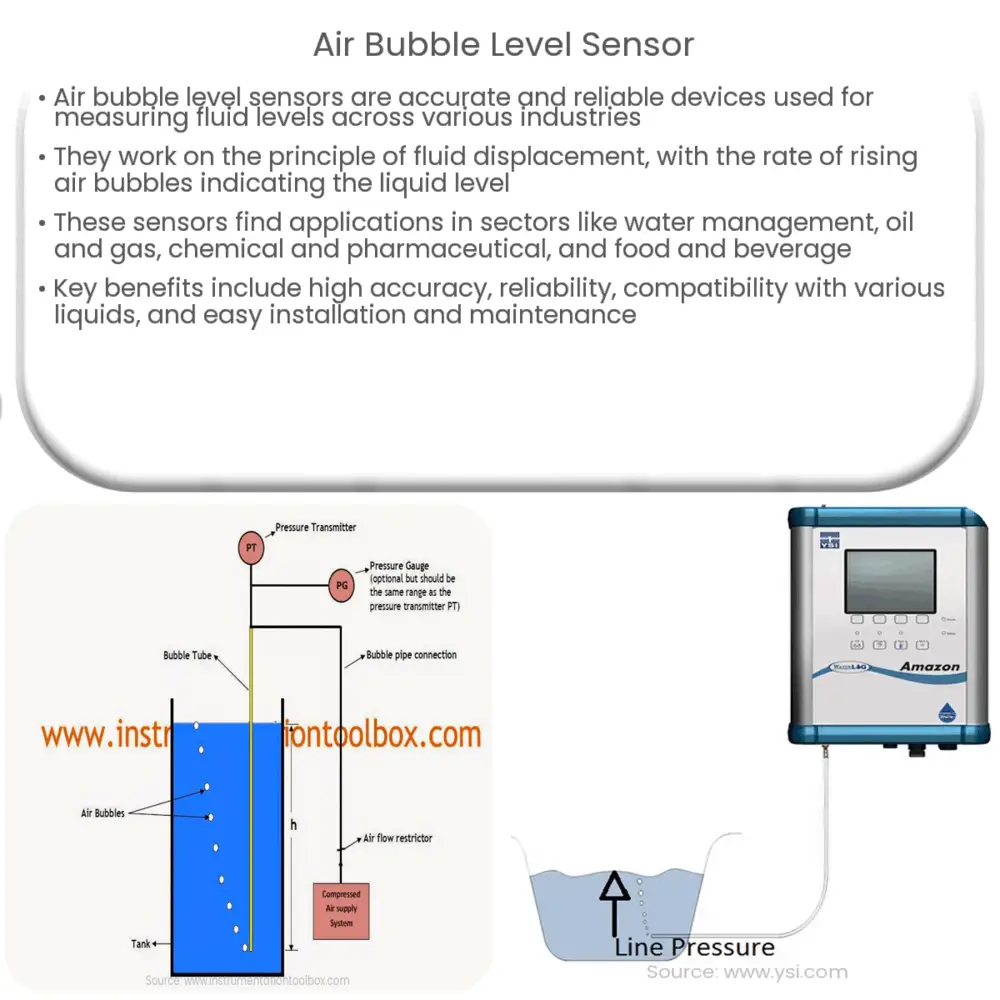
The air bubble level sensor operates based on the principle of fluid displacement. The sensor is typically installed in a closed container or tank, filled with the liquid whose level needs to be measured. A small air compressor or a hand pump is used to generate air pressure that is injected into the sensor. The air pressure creates bubbles in the liquid, and the rate at which the bubbles rise to the surface is directly proportional to the liquid level.
As the air bubbles rise, they displace the fluid, and the pressure inside the sensor changes. This pressure change is measured using a pressure transducer, which is connected to the sensor. The transducer then converts the pressure change into an electrical signal, which is further processed and analyzed by a control unit. Based on the pressure change, the control unit calculates the liquid level and displays it on a screen or sends it to a remote monitoring system.
Applications
Air bubble level sensors are widely used in various industries due to their versatility and adaptability. Some common applications include:
- Water and wastewater management: Accurate level monitoring is essential in water and wastewater treatment plants to control the flow of liquids and maintain operational efficiency. Air bubble level sensors are commonly used for monitoring water levels in tanks, sumps, and basins.
- Oil and gas industry: Level measurement is critical in the oil and gas sector, as it helps in maintaining the correct balance of fluids in storage tanks and ensures the smooth functioning of pipelines. Air bubble level sensors are used to monitor levels in oil storage tanks, separators, and other process vessels.
- Chemical and pharmaceutical industries: Precise level monitoring is necessary in chemical and pharmaceutical processes for the safe and efficient production of various products. Air bubble level sensors are employed to measure the levels of corrosive, toxic, or viscous fluids in tanks and reactors.
- Food and beverage industry: Maintaining the proper levels of fluids is vital in the food and beverage industry to ensure product quality and safety. Air bubble level sensors are utilized for level measurement in storage tanks, mixing tanks, and other processing equipment.
Advantages of Air Bubble Level Sensors
There are several benefits associated with the use of air bubble level sensors in various industries. Some of the key advantages include:
- Accuracy: Air bubble level sensors provide highly accurate measurements, ensuring the efficient functioning of systems and processes. The pressure-based sensing mechanism is less susceptible to errors caused by changes in liquid properties, such as density, viscosity, or temperature.
- Reliability: These sensors are known for their reliability and long service life. The non-contact measurement technique eliminates the need for moving parts, which can wear out or fail over time, ensuring a longer lifespan and lower maintenance requirements.
- Compatibility: Air bubble level sensors can be used with a wide range of liquids, including corrosive, viscous, or foaming fluids. The non-contact nature of the measurement process prevents contamination or damage to the sensor, making it suitable for various applications.
- Easy installation and maintenance: Installing and maintaining air bubble level sensors is relatively simple, as they can be mounted externally or internally and do not require any additional modifications to the container or tank. Maintenance is minimal, as the absence of moving parts reduces the likelihood of failures.
Conclusion
Air bubble level sensors are an efficient and reliable solution for measuring fluid levels in various industrial applications. Their high accuracy, versatility, and low maintenance requirements make them an ideal choice for numerous sectors, including water and wastewater management, oil and gas, chemical and pharmaceutical, and food and beverage industries. By implementing air bubble level sensors in these processes, companies can improve operational efficiency, maintain product quality, and ensure the safety of their systems.



