
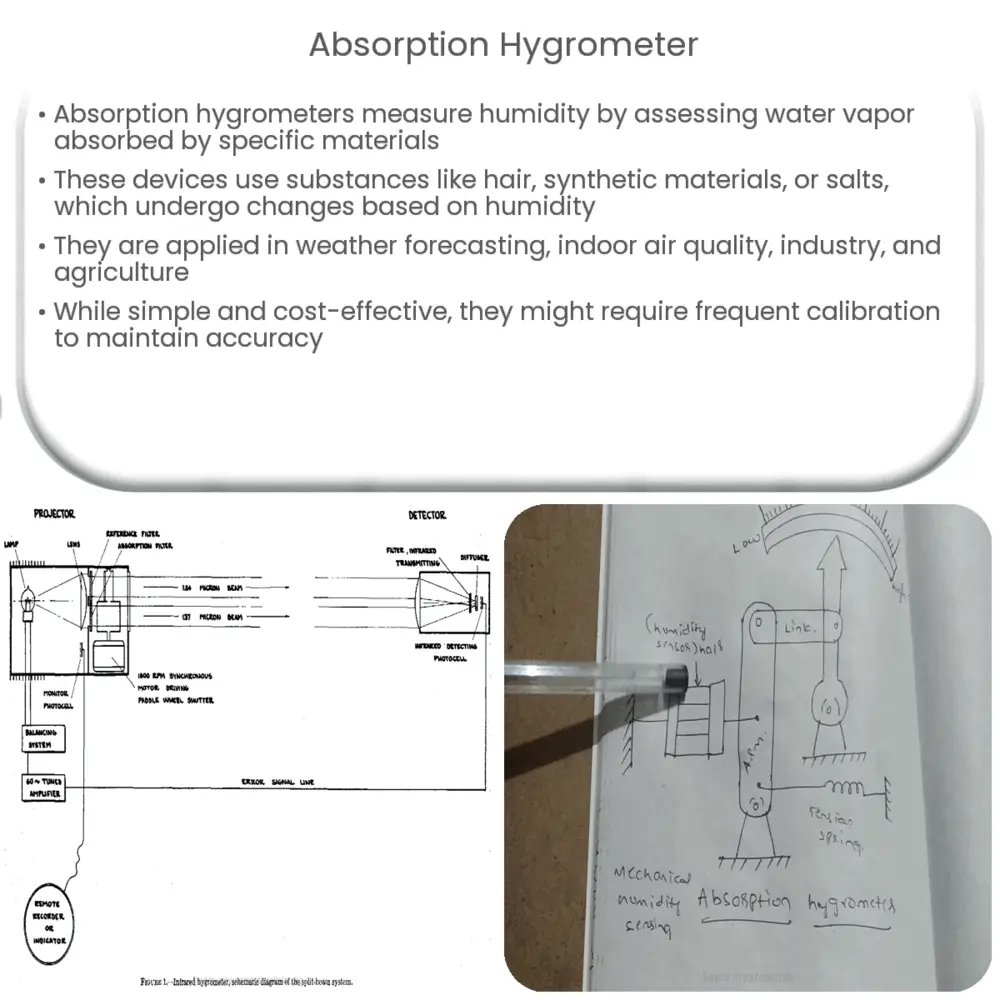
An absorption hygrometer measures humidity levels by detecting water vapor absorbed by a specific substance, aiding in various industries and applications.
Absorption Hygrometer: A Comprehensive Guide
Introduction
An absorption hygrometer is an instrument used to measure humidity levels in the air by determining the amount of water vapor that is absorbed by a specific substance. As humidity is an important factor in various industries and applications, understanding the functionality and benefits of absorption hygrometers is essential for accurate and efficient moisture measurements.
Principle of Absorption Hygrometers
The principle behind absorption hygrometers is based on the fact that some materials absorb water vapor from the air when exposed to it. As the material absorbs the water vapor, it undergoes physical or chemical changes, which can be measured to determine the humidity level. Typically, absorption hygrometers use hair, synthetic materials, or salts as hygroscopic substances that exhibit a change in their properties in response to variations in humidity.
Types of Absorption Hygrometers
There are several types of absorption hygrometers, each utilizing different hygroscopic materials and methods to measure humidity. Some common types include:
- Hair Hygrometer: This type of hygrometer uses a human or animal hair, which elongates or contracts with changes in humidity. The hair is attached to a mechanical pointer, and as it changes length, the pointer moves along a calibrated scale indicating the humidity level.
- Film Hygrometer: A film hygrometer uses a thin film made of a polymer or other synthetic material that absorbs moisture. As the film absorbs water vapor, its electrical resistance, capacitance, or thickness changes, which can be measured to determine the humidity.
- Chilled Mirror Hygrometer: This type of hygrometer measures humidity by cooling a mirror until condensation forms on its surface. The temperature at which condensation occurs is called the dew point, and it is directly related to the humidity level. A temperature sensor measures the dew point, which can then be used to calculate the humidity.
- Gravimetric Hygrometer: A gravimetric hygrometer measures humidity by weighing a hygroscopic substance before and after exposure to air. The weight gain is directly proportional to the amount of moisture absorbed, allowing for the calculation of humidity.
Applications of Absorption Hygrometers
Absorption hygrometers have a wide range of applications in various industries and settings, including:
- Weather Forecasting: Hygrometers are essential tools in meteorology for measuring humidity levels, which are critical for predicting weather conditions such as precipitation, fog, and dew formation.
- Indoor Air Quality Monitoring: Maintaining appropriate humidity levels in residential and commercial spaces is important for health and comfort, as well as preventing mold growth and structural damage. Absorption hygrometers help monitor and control indoor humidity levels.
- Industrial Processes: Many industries, such as food, pharmaceutical, and electronics, require precise humidity control to ensure product quality and consistency. Absorption hygrometers play a crucial role in monitoring and maintaining optimal humidity levels during manufacturing and storage.
- Agriculture: Measuring humidity is essential for monitoring the growth and health of crops, as well as for managing irrigation systems and greenhouses.
Advantages and Disadvantages of Absorption Hygrometers
Like any instrument, absorption hygrometers have their own set of advantages and disadvantages:
Advantages:
- Simple Design: Absorption hygrometers often have straightforward designs, making them easy to use and maintain.
- Cost-effective: Many absorption hygrometers, such as hair and film hygrometers, are relatively affordable compared to other types of hygrometers.
- Compact Size: Some absorption hygrometers, particularly film hygrometers, can be designed in compact sizes for convenient and unobtrusive use in various applications.
Disadvantages:
- Accuracy: Absorption hygrometers can be less accurate than other types of hygrometers, such as capacitive or resistive hygrometers, particularly at very high or very low humidity levels.
- Response Time: Some absorption hygrometers, like hair hygrometers, may have slower response times to changes in humidity levels.
- Drift: Over time, the properties of the hygroscopic material in absorption hygrometers may change, leading to a drift in the measurements. Regular calibration is necessary to ensure accurate readings.
Maintenance and Calibration
To ensure accurate and reliable measurements, absorption hygrometers require regular maintenance and calibration. Here are some general guidelines:
- Keep the hygrometer clean: Dust, dirt, and other contaminants can affect the performance of the hygroscopic material. Clean the hygrometer according to the manufacturer’s recommendations.
- Check for damage: Inspect the hygrometer for signs of damage, such as cracks or loose connections, which may impact its accuracy.
- Calibrate regularly: Over time, the hygrometer’s measurements may drift due to changes in the hygroscopic material or other components. Calibrate the hygrometer at regular intervals, following the manufacturer’s guidelines, to ensure accurate readings.
- Store properly: When not in use, store the hygrometer in a clean, dry, and temperature-controlled environment to protect it from damage and maintain its accuracy.
Conclusion
Absorption hygrometers are versatile instruments that play a crucial role in various industries and applications. By understanding their principles, types, advantages, and disadvantages, as well as proper maintenance and calibration procedures, users can make informed decisions on selecting the right hygrometer for their specific needs. Whether for weather forecasting, indoor air quality monitoring, industrial processes, or agriculture, absorption hygrometers provide a valuable tool for measuring and controlling humidity levels.



