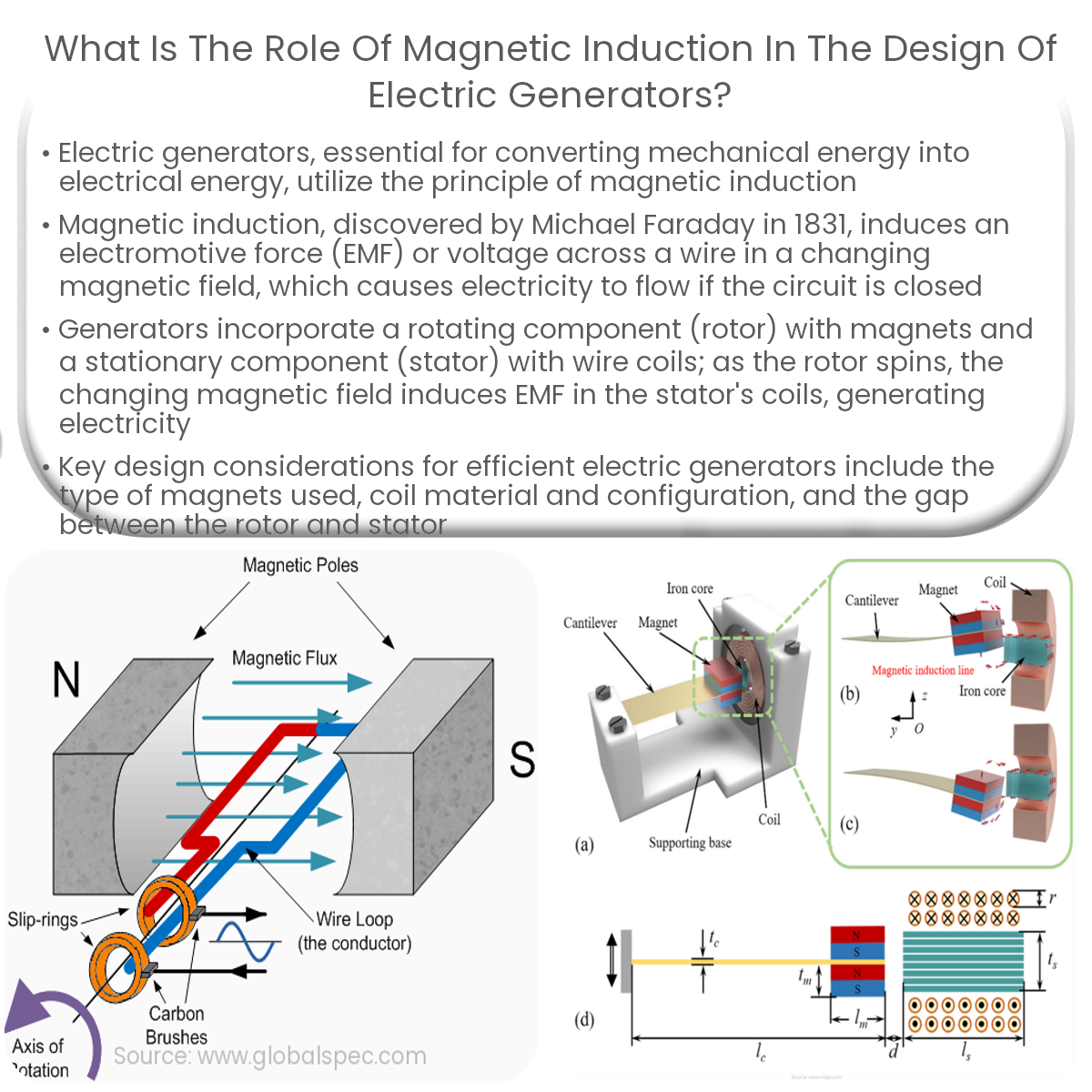
Magnetic induction is crucial in electric generator design, as it enables the conversion of mechanical energy into electrical energy through a changing magnetic field.
The Role of Magnetic Induction in the Design of Electric Generators
Electric generators are essential devices that convert mechanical energy into electrical energy, powering our homes, industries, and various appliances. At the core of their design lies the principle of magnetic induction, which enables this transformation. This article explores the role of magnetic induction in the design of electric generators and its significance in their operation.
Understanding Magnetic Induction
Magnetic induction, also known as electromagnetic induction, is a fundamental principle discovered by Michael Faraday in 1831. It states that a change in the magnetic field within a closed loop of wire induces an electromotive force (EMF) or voltage across the wire. This induced EMF causes a current to flow if the circuit is closed, producing electricity.
How Electric Generators Utilize Magnetic Induction
Electric generators harness the principle of magnetic induction to convert mechanical energy into electrical energy. They typically consist of a rotating component called a rotor, which houses magnets, and a stationary component called a stator, which contains the wire coils. As the rotor spins, it creates a changing magnetic field that induces EMF in the stator’s wire coils, generating an alternating current (AC).
- Turbine-Driven Generators: In these generators, mechanical energy is obtained from an external source like wind, water, or steam, which drives the rotor. The rotation induces an EMF in the stator’s coils, generating electricity.
- Internal Combustion Engine Generators: Fueled by gasoline, diesel, or natural gas, these generators use the energy produced during combustion to rotate the rotor and produce electricity through magnetic induction.
Design Considerations for Electric Generators
Several factors related to magnetic induction play a crucial role in designing efficient electric generators, such as:
- Magnet Type: Permanent magnets or electromagnets can be used in the rotor. The choice depends on factors like cost, required field strength, and operational temperature range.
- Coil Material and Configuration: The wire coils in the stator need to have low electrical resistance and high thermal conductivity. Copper is a common choice for its excellent electrical and thermal properties. The coil configuration also affects the generator’s efficiency and voltage output.
- Gap between Rotor and Stator: The distance between the rotor’s magnets and the stator’s coils influences the magnetic field strength and thus the induced EMF. Optimizing this gap is essential for maximizing efficiency.
In conclusion, magnetic induction is a fundamental principle that governs the design and operation of electric generators. It enables the conversion of mechanical energy into electrical energy, powering our modern world. Understanding and optimizing various design aspects related to magnetic induction ensures the efficiency and reliability of electric generators.