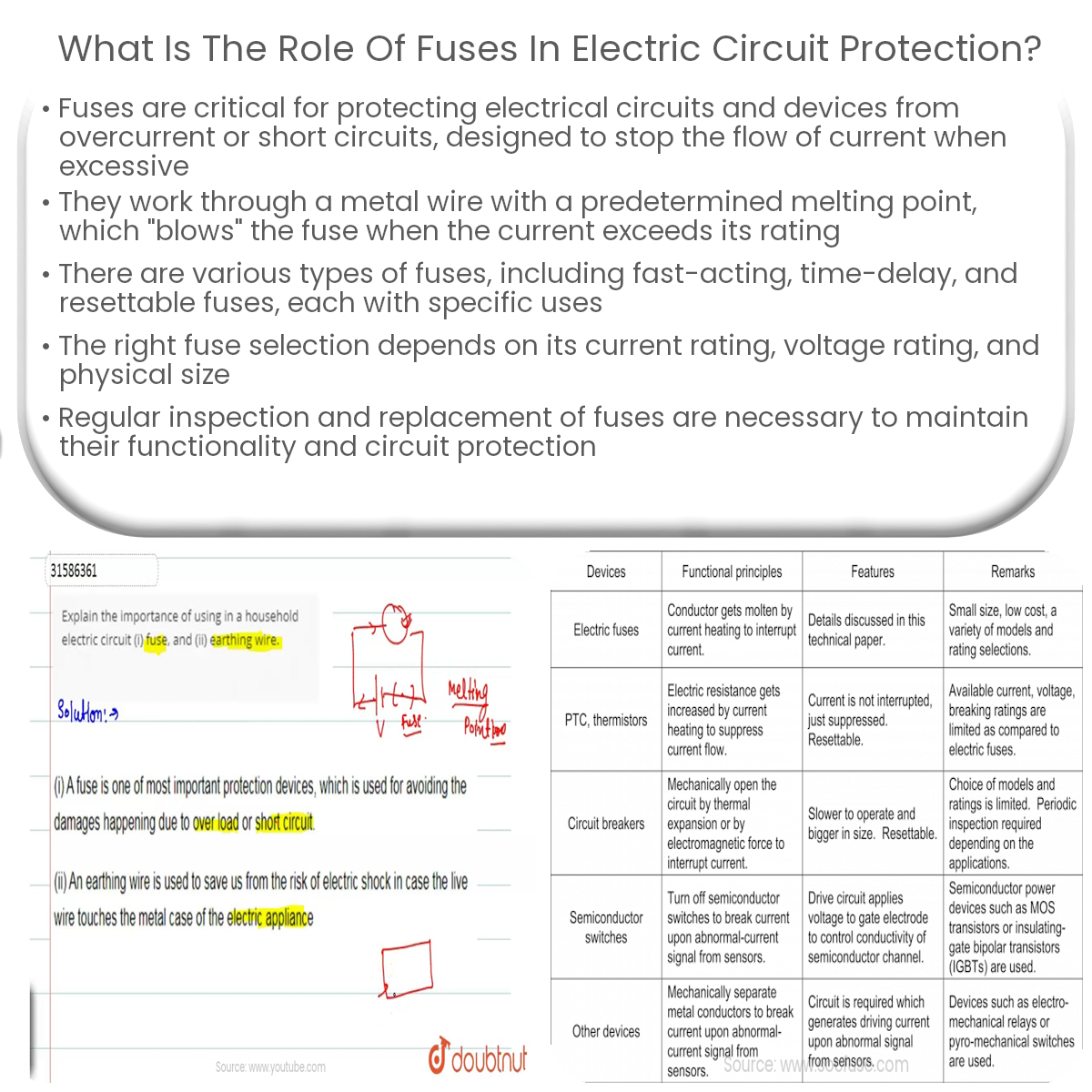
Fuses protect electrical circuits by breaking the circuit and stopping current flow when excessive current passes through, preventing damage.
Understanding Fuses: The Essential Component for Electric Circuit Protection
Fuses play a critical role in safeguarding electrical circuits and devices from damage caused by overcurrent or short circuits. They are designed to break the circuit and stop the flow of current when excessive current passes through them, thus providing an essential layer of protection.
How Fuses Work
Fuses are simple, yet effective devices that consist of a metal wire or filament enclosed in a non-conductive housing. The metal wire has a predetermined melting point, which means it will melt and break the circuit if the current exceeds the fuse’s rating. This process, known as “blowing” a fuse, stops the flow of electricity and prevents damage to the electrical components downstream.
Types of Fuses
Choosing the Right Fuse
Selecting the appropriate fuse for a specific application is crucial to ensure optimal protection. Key factors to consider include the fuse’s current rating, voltage rating, and physical size. The current rating is the maximum amount of current the fuse can handle before blowing, while the voltage rating indicates the maximum voltage the fuse can safely interrupt. Additionally, the physical size of the fuse must be compatible with the device or equipment it is designed to protect.
The Importance of Fuse Replacement
When a fuse blows, it is essential to replace it with a fuse of the same type and rating. Using an incorrect fuse may result in inadequate protection or the potential for further damage to the electrical circuit. Regular inspection and maintenance of fuses are also necessary to ensure they remain in good working condition.
Conclusion
In summary, fuses play a critical role in electric circuit protection by breaking the circuit and stopping the flow of current in the event of an overcurrent or short circuit. By selecting the right fuse and ensuring proper maintenance, you can protect your electrical devices and circuits from potentially severe damage.