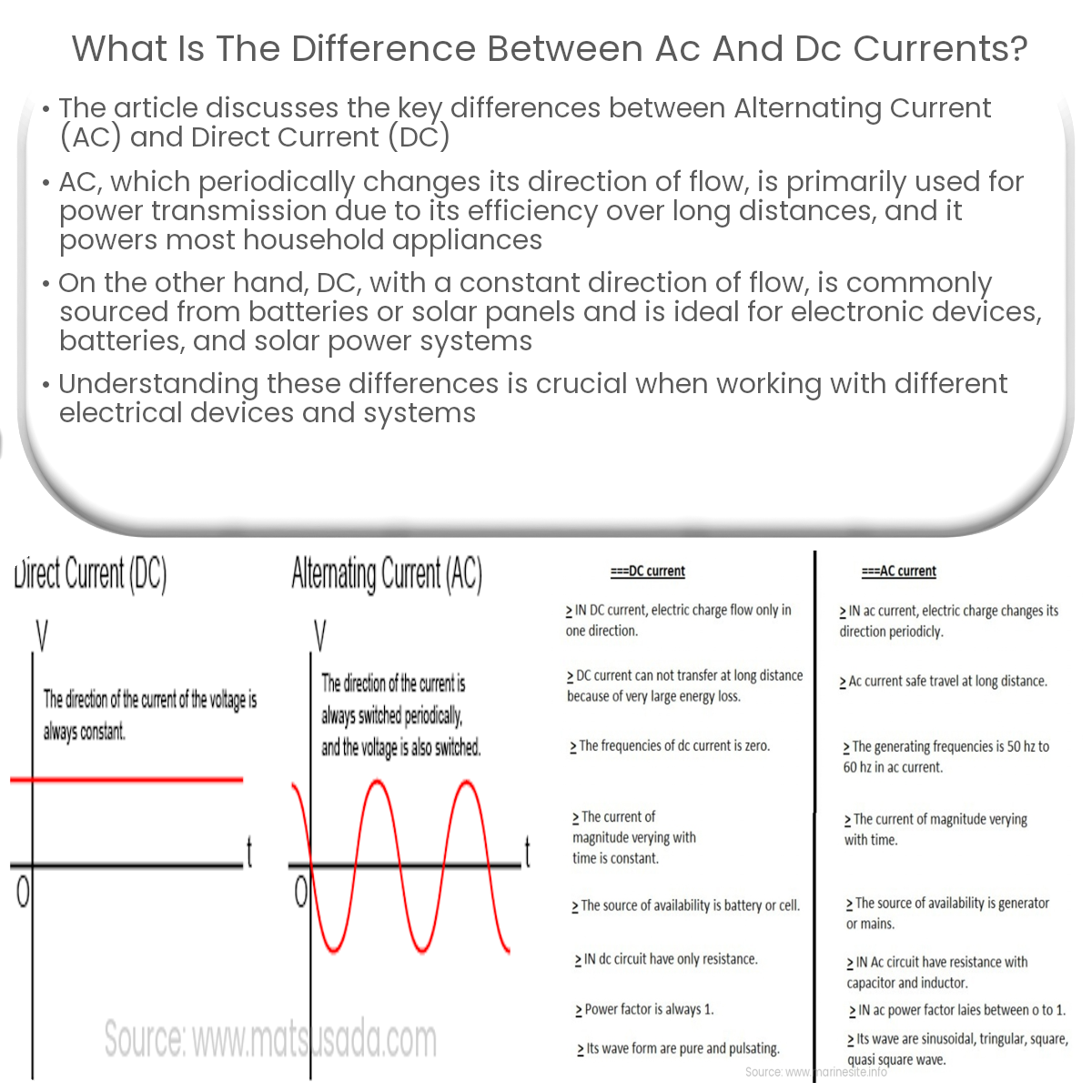
AC current periodically changes direction, while DC current flows in a single, constant direction. They have different sources and applications.
Understanding the Difference Between AC and DC Currents
Electric current, the flow of electric charge through a conductor, is crucial for powering various devices and appliances. Two primary types of electric current exist: Alternating Current (AC) and Direct Current (DC). This article will explore the differences between these two types of currents and their respective applications.
Alternating Current (AC)
Alternating Current is a type of electric current in which the flow of electric charge periodically changes direction. The voltage and current waveforms are typically sinusoidal, meaning they vary smoothly over time. AC is the most common form of electric power transmission and distribution for the following reasons:
- Efficient Transmission: AC can be transmitted over long distances with minimal power loss, primarily due to the ability to transform voltage levels using transformers.
- Generation and Conversion: AC is easily generated by power plants, and it can be readily converted to other forms of energy, such as mechanical energy in motors.
- Wide Application: AC is used to power a wide range of household appliances and industrial equipment.
Direct Current (DC)
Direct Current is a type of electric current in which the flow of electric charge occurs in a single, constant direction. DC is often found in the following contexts:
- Batteries: Batteries are a common source of DC power, used in portable devices such as flashlights, smartphones, and laptops.
- Electronic Devices: Many electronic devices, like computers and televisions, require a constant voltage to function properly, making DC the preferred choice.
- Solar Panels: Solar panels generate DC electricity, which can then be converted to AC for use in the electrical grid or stored in batteries for later use.
- Electric Vehicles: Electric vehicles (EVs) utilize DC power from their batteries to drive their electric motors, with an inverter converting the DC to AC for the motor.
Key Differences Between AC and DC Currents
- Direction of Flow: AC current flows periodically in both directions, while DC current flows in a single, constant direction.
- Source of Power: AC is generated by power plants and distributed through the electrical grid, whereas DC is typically sourced from batteries or solar panels.
- Applications: AC is widely used for power transmission and most household appliances, while DC is suited for electronic devices, batteries, and solar power systems.
In conclusion, the primary differences between AC and DC currents lie in the direction of charge flow, their sources, and their respective applications. Understanding these differences is essential for working with various electrical devices and systems.