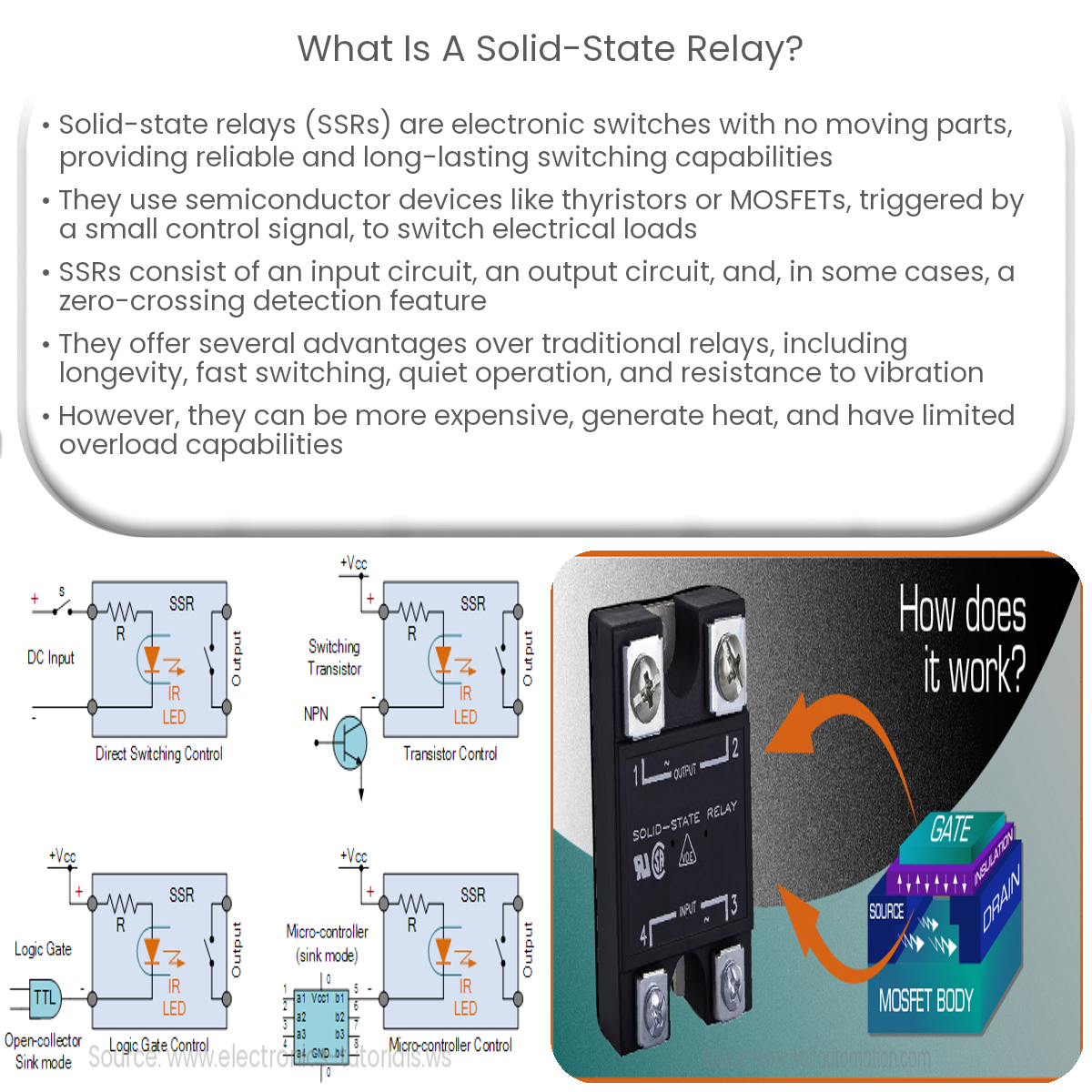
A solid-state relay (SSR) is an electronic switch with no moving parts, using semiconductor devices for fast, reliable, and long-lasting switching.
Introduction to Solid-State Relays
A solid-state relay (SSR) is an electronic switching device that functions similarly to an electromechanical relay but has no moving parts. It provides reliable, fast, and long-lasting switching capabilities with minimal wear and tear, making it ideal for various applications.
How Solid-State Relays Work
SSRs utilize semiconductor devices, such as thyristors, triacs, or MOSFETs, to switch electrical loads. These devices are triggered by a small control signal, usually a low-voltage DC input, which activates the switching element without requiring a coil or mechanical contacts. Solid-state relays can be designed for both AC and DC load switching.
Main Components of a Solid-State Relay
- Input Circuit: This section of the SSR receives the control signal and is typically optically isolated from the rest of the relay to ensure safety and prevent electrical noise from affecting the control signal.
- Output Circuit: The output circuit contains the switching element responsible for connecting or disconnecting the load. It can handle various voltages and currents, depending on the relay’s specifications.
- Zero Crossing Detection (AC SSRs): Some AC solid-state relays include zero crossing detection, which means they switch on or off when the AC voltage waveform crosses zero volts. This feature reduces electrical noise and inrush currents.
Advantages of Solid-State Relays
SSRs offer several benefits over traditional electromechanical relays, including:
- Longevity: With no mechanical parts, solid-state relays have a longer operational life and reduced maintenance requirements.
- Fast Switching: SSRs can switch on and off much faster than electromechanical relays, making them suitable for high-frequency applications.
- Quiet Operation: Solid-state relays operate silently, as there are no moving parts that generate noise during switching.
- Resistance to Vibration and Shock: The absence of mechanical components makes SSRs more resistant to vibration and shock, contributing to their durability and reliability.
Limitations and Applications
Despite their advantages, SSRs have some limitations, such as higher cost, potential heat generation, and limited ability to handle overloads compared to electromechanical relays. However, solid-state relays are ideal for applications that require long life, high-speed switching, and silent operation, such as industrial automation, lighting controls, and temperature control systems.