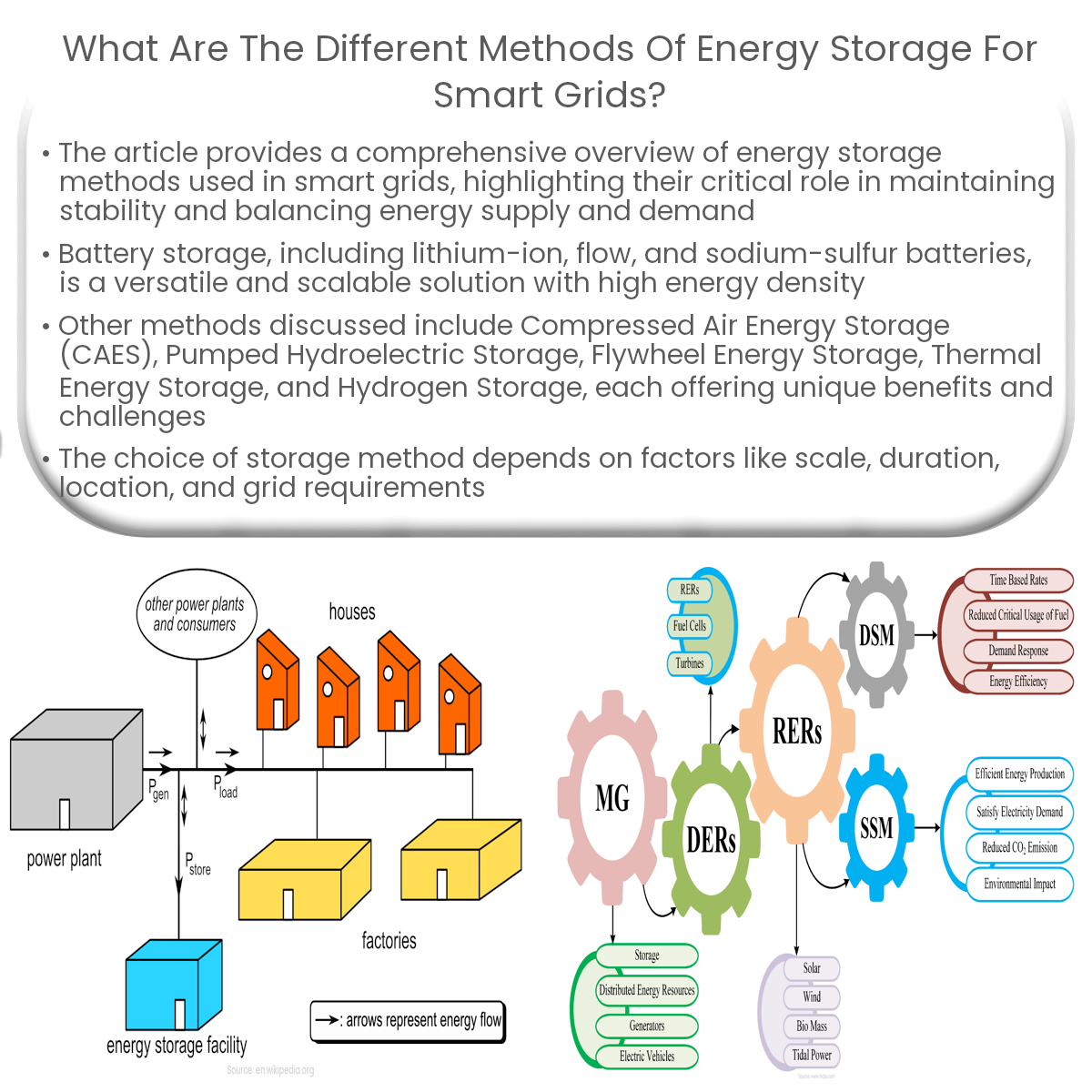
Energy storage methods for smart grids include batteries, compressed air, pumped hydro, flywheels, thermal storage, and hydrogen storage systems.
Introduction to Energy Storage Methods for Smart Grids
Energy storage is a critical component of smart grids, helping to maintain grid stability, integrate renewable energy, and balance supply and demand. This article explores the various methods of energy storage suitable for smart grid applications.
Battery Energy Storage
Batteries are a popular choice for smart grid energy storage due to their versatility, high energy density, and scalability. Different battery technologies include:
- Lithium-ion batteries: Known for their high energy density and long cycle life, lithium-ion batteries are widely used in various applications, from small-scale residential to large-scale grid storage.
- Flow batteries: Flow batteries store energy in liquid electrolytes, which allows for easy scalability and long-duration storage, making them suitable for grid applications.
- Sodium-sulfur batteries: These high-temperature batteries offer high energy density and long cycle life, but require special safety precautions due to their operating temperatures.
Compressed Air Energy Storage (CAES)
CAES systems store energy by compressing air in underground caverns, which is then released and heated to drive a turbine and generate electricity. CAES offers large-scale energy storage with relatively low costs and long lifetimes.
Pumped Hydroelectric Storage
Pumped hydroelectric storage is a mature technology that stores energy by pumping water uphill into a reservoir during periods of low demand. When demand increases, the water is released to flow downhill and generate electricity through hydroelectric turbines. This method offers large-scale, long-duration storage, but requires specific geographical features.
Flywheel Energy Storage
Flywheels store energy as kinetic energy in a spinning rotor. When energy is needed, the rotational energy is converted back into electricity. Flywheels are known for their rapid response time and high power density, making them suitable for short-duration, high-power applications.
Thermal Energy Storage
Thermal energy storage systems store energy as heat or cold in various mediums, such as water, molten salts, or phase change materials. These systems can be used to store excess solar or wind energy, which can then be released to produce electricity or provide heating and cooling services.
Hydrogen Storage
Hydrogen storage involves converting electricity into hydrogen through electrolysis, which can then be stored in tanks or underground caverns. When needed, the hydrogen can be converted back into electricity using fuel cells or combustion in gas turbines. This method offers long-duration, large-scale storage, but requires advancements in hydrogen production, storage, and conversion technologies.
Conclusion
Various energy storage methods are available to support smart grid applications, each with its unique advantages and limitations. The selection of an appropriate storage method depends on factors such as scale, duration, location, and specific grid requirements. As energy storage technologies continue to advance, their integration into smart grids will play a vital role in shaping a more sustainable and resilient energy future.