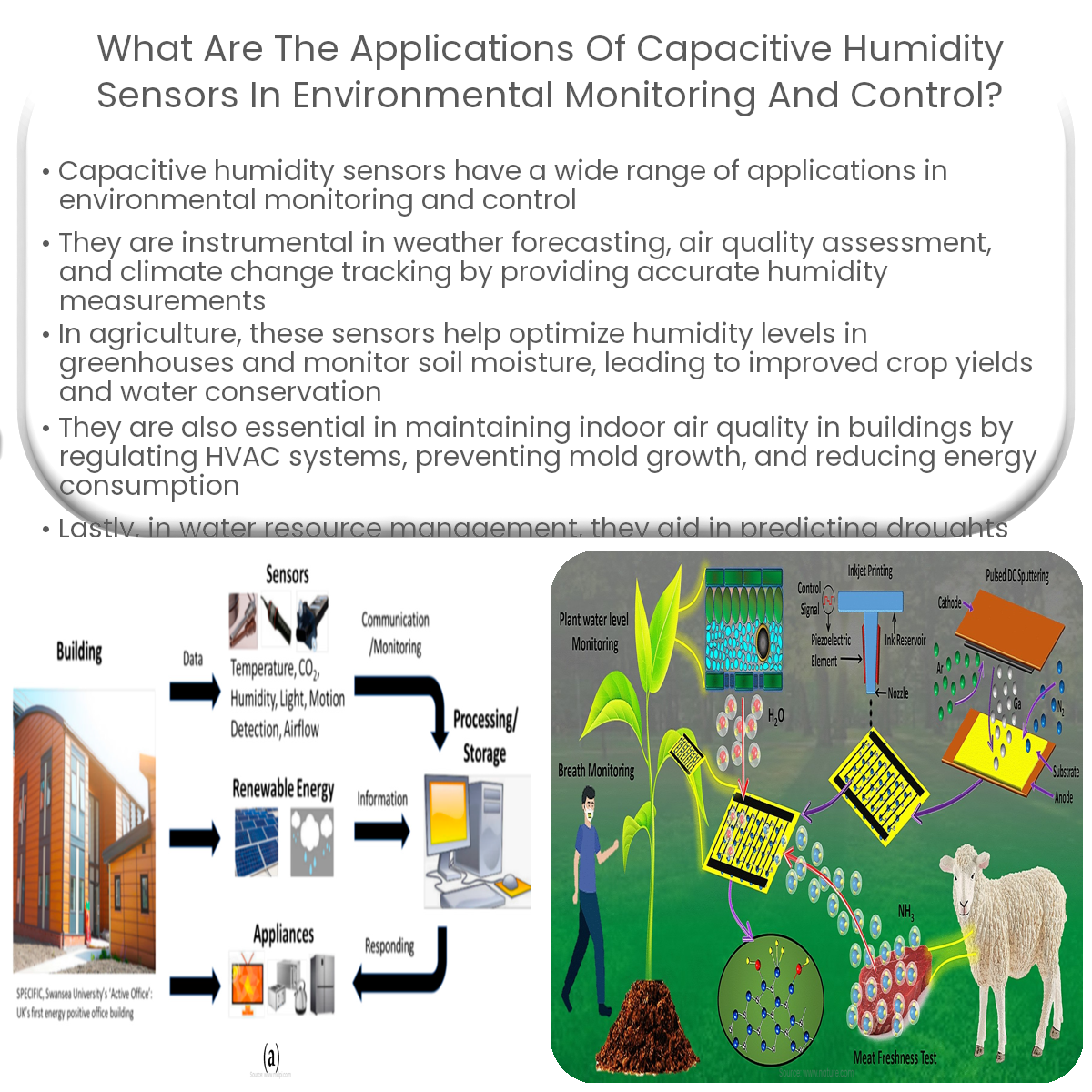
Capacitive humidity sensors are used in weather monitoring, air quality control, greenhouse systems, soil moisture monitoring, HVAC systems, and water resource management.
Applications of Capacitive Humidity Sensors in Environmental Monitoring and Control
Capacitive humidity sensors play a crucial role in environmental monitoring and control by providing accurate and reliable measurements of relative humidity. This article explores the various applications of these sensors in environmental monitoring and control systems.
Weather Monitoring
Capacitive humidity sensors are employed in weather stations and meteorological networks for measuring humidity levels in the atmosphere. Accurate humidity measurements are essential for generating precise weather forecasts, tracking storms, and monitoring climate changes.
Air Quality Monitoring
These sensors are utilized in air quality monitoring systems to assess humidity levels and provide valuable data for pollution control. By monitoring humidity, environmental scientists and policymakers can better understand the relationship between humidity and air pollution, facilitating the development of effective strategies to improve air quality.
Greenhouse Control Systems
In agriculture, capacitive humidity sensors are vital components of greenhouse control systems. They help maintain optimal humidity levels for plant growth and development, ensuring healthy crops and higher yields. By automating humidity control, farmers can create ideal growing conditions and minimize the risk of plant diseases related to excess moisture.
Soil Moisture Monitoring
Capacitive humidity sensors are also used for monitoring soil moisture in agricultural fields and gardens. Accurate soil moisture measurements enable farmers and gardeners to make informed decisions about irrigation, ultimately conserving water resources and optimizing crop growth.
Indoor Air Quality and HVAC Systems
In residential and commercial buildings, capacitive humidity sensors play an essential role in maintaining indoor air quality and regulating heating, ventilation, and air conditioning (HVAC) systems. By continuously monitoring indoor humidity levels, these sensors help prevent the growth of mold and mildew, ensuring a healthy living environment. Moreover, they allow HVAC systems to operate more efficiently by adjusting to changing humidity conditions, reducing energy consumption and associated costs.
Water Resource Management
Capacitive humidity sensors are employed in water resource management systems for measuring humidity levels in the environment. They provide valuable data for assessing water availability, predicting droughts and floods, and optimizing water usage in various sectors such as agriculture, industry, and residential areas.
In conclusion, capacitive humidity sensors are indispensable tools in environmental monitoring and control applications. They provide accurate and reliable humidity measurements, contributing to improved air quality, optimized agricultural practices, efficient water resource management, and enhanced indoor living conditions.