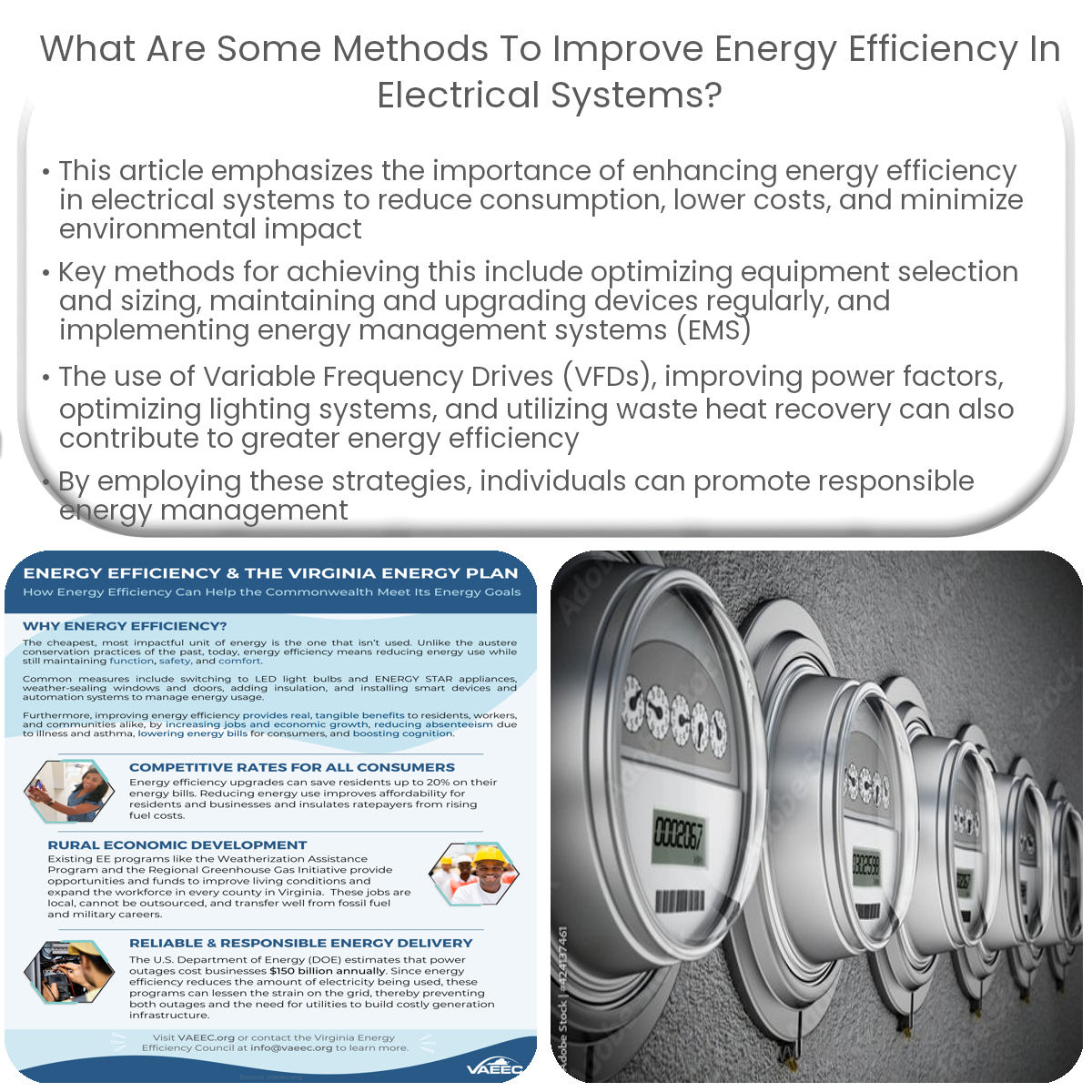
Methods to improve energy efficiency include optimizing equipment, regular maintenance, energy management systems, VFDs, improving power factor, and utilizing waste heat recovery.
Introduction
Improving energy efficiency in electrical systems is crucial for reducing energy consumption, lowering energy costs, and minimizing environmental impact. In this article, we will explore several methods for enhancing energy efficiency in electrical systems.
1. Optimize Equipment Selection and Sizing
Choosing the right equipment and sizing it correctly can significantly improve energy efficiency. Select energy-efficient devices such as motors, transformers, and lighting systems that meet or exceed energy performance standards. Ensure that equipment is appropriately sized to avoid overloading or underutilization, which can lead to inefficiencies.
2. Regular Maintenance and Upgrades
Regular maintenance of electrical equipment helps maintain its efficiency and extend its lifespan. Scheduled inspections, cleaning, and servicing of devices can prevent energy losses due to wear, dirt, or malfunction. Additionally, consider upgrading older equipment to newer, more energy-efficient models.
3. Implement Energy Management Systems
Energy management systems (EMS) help monitor, control, and optimize energy consumption in electrical systems. An EMS can identify inefficiencies, provide real-time data, and enable automated control of devices to improve energy efficiency. Implementing an EMS can result in significant energy savings and better overall system performance.
4. Use Variable Frequency Drives (VFDs)
Variable frequency drives (VFDs) control the speed of electric motors by varying the frequency and voltage of the input power. Using VFDs can optimize motor performance and reduce energy consumption, especially in applications with variable loads or speeds.
5. Improve Power Factor
A low power factor indicates that the electrical system is not utilizing energy efficiently. Improving the power factor can reduce energy losses and increase the efficiency of the system. Techniques to improve power factor include installing power factor correction capacitors, using synchronous motors, and selecting energy-efficient equipment.
6. Optimize Lighting Systems
Upgrading to energy-efficient lighting, such as LEDs or CFLs, can significantly reduce energy consumption. Implementing lighting controls like dimmers, timers, and occupancy sensors can further enhance energy efficiency by ensuring that lights are only used when needed.
7. Utilize Waste Heat Recovery
Electrical systems often generate waste heat that can be harnessed and reused for other processes. Implementing waste heat recovery systems can improve overall energy efficiency by reducing the need for additional heating or cooling equipment.
Conclusion
Improving energy efficiency in electrical systems is an essential aspect of responsible energy management. By implementing the methods outlined in this article, you can reduce energy consumption, lower costs, and minimize the environmental impact of your electrical system.