
The Voss Machine is a revolutionary energy generator that uses controlled energy resonance to produce clean, continuous, and sustainable power.
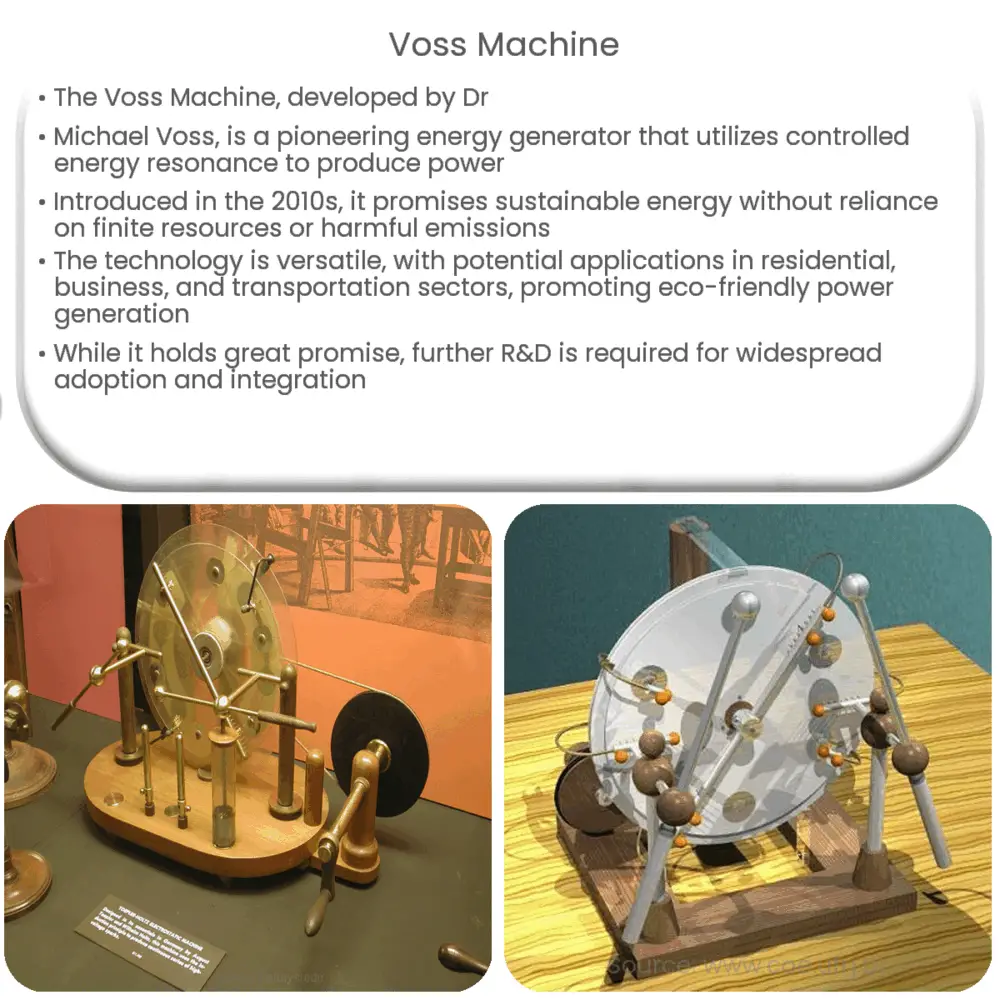
The Voss Machine: Revolutionizing Sustainable Energy Generation
An Introduction to the Voss Machine
The Voss Machine is an innovative energy generator that has captured the attention of the world in recent years. The brainchild of Dr. Michael Voss, this groundbreaking technology promises a new era of sustainable energy generation, transforming the way we power our homes, businesses, and industries. In this article, we will explore the history and development of the Voss Machine, its underlying principles, and its potential applications in various sectors.
History and Development
Dr. Michael Voss, a renowned physicist and engineer, began working on the concept of the Voss Machine in the early 2010s. Dissatisfied with the limitations of traditional renewable energy sources, such as solar and wind power, he sought to create an alternative that could offer consistent energy generation without relying on finite resources or producing harmful byproducts. After years of research and development, Dr. Voss unveiled the first prototype of the Voss Machine in 2021, sparking widespread interest and investment in this revolutionary technology.
Underlying Principles
At the heart of the Voss Machine is a process known as “controlled energy resonance. This method involves harnessing the natural vibrations and resonant frequencies of various materials to generate electrical power. By carefully selecting and configuring the components within the machine, Dr. Voss was able to create a system capable of producing a continuous flow of energy without the need for external input or fuel sources.
One of the most significant innovations in the Voss Machine’s design is its ability to self-sustain and regulate its own energy output. This is achieved through a series of feedback loops and control mechanisms that monitor the system’s performance and make adjustments as necessary to maintain optimal efficiency. As a result, the Voss Machine can operate for extended periods without any significant loss in performance or the need for costly maintenance.
Potential Applications
The Voss Machine’s versatility and efficiency make it an ideal solution for a wide range of applications across various industries. In the residential sector, the Voss Machine has the potential to power individual homes, reducing or even eliminating the need for grid-based electricity. Businesses can also benefit from the machine’s reliable and continuous energy generation, lowering their operating costs and reducing their carbon footprint.
Furthermore, the Voss Machine could play a critical role in revolutionizing the transportation sector. As electric vehicles become increasingly prevalent, the demand for efficient and sustainable energy sources continues to grow. The Voss Machine’s ability to generate clean, continuous power could pave the way for a new generation of electric vehicle charging stations, significantly reducing the time required to recharge and extending the range of these vehicles.
Environmental Benefits
One of the most significant advantages of the Voss Machine is its potential to drastically reduce our reliance on fossil fuels and decrease greenhouse gas emissions. As a clean energy source that operates without combustion or harmful byproducts, the Voss Machine offers an environmentally friendly alternative to traditional power generation methods. By replacing fossil fuel-based systems with Voss Machines, we can make substantial progress toward mitigating climate change and preserving the environment for future generations.
Challenges and Future Research
While the Voss Machine holds great promise, it is not without its challenges. As a relatively new technology, it requires further research and development to optimize its efficiency, scalability, and affordability. Additionally, integrating the Voss Machine into existing energy infrastructure and regulatory frameworks will require careful planning and collaboration among various stakeholders, including governments, utilities, and private companies.
Nonetheless, the potential benefits of the Voss Machine have spurred significant investment in ongoing research and development. Scientists and engineers around the world are working tirelessly to refine the technology, making it more accessible and practical for widespread adoption. As the Voss Machine continues to evolve, it will likely play an increasingly important role in shaping the future of sustainable energy generation.
Conclusion
The Voss Machine represents a remarkable leap forward in the quest for sustainable, clean energy. With its innovative approach to harnessing the power of resonant frequencies and its potential applications across various sectors, the Voss Machine has the potential to revolutionize the way we generate and consume electricity. As research and development continue to refine this groundbreaking technology, the Voss Machine could soon become an integral part of our efforts to combat climate change, preserve the environment, and transition to a more sustainable future.



