
A tension load cell is a device that measures tensile forces by converting mechanical force into an electrical signal for precise monitoring.
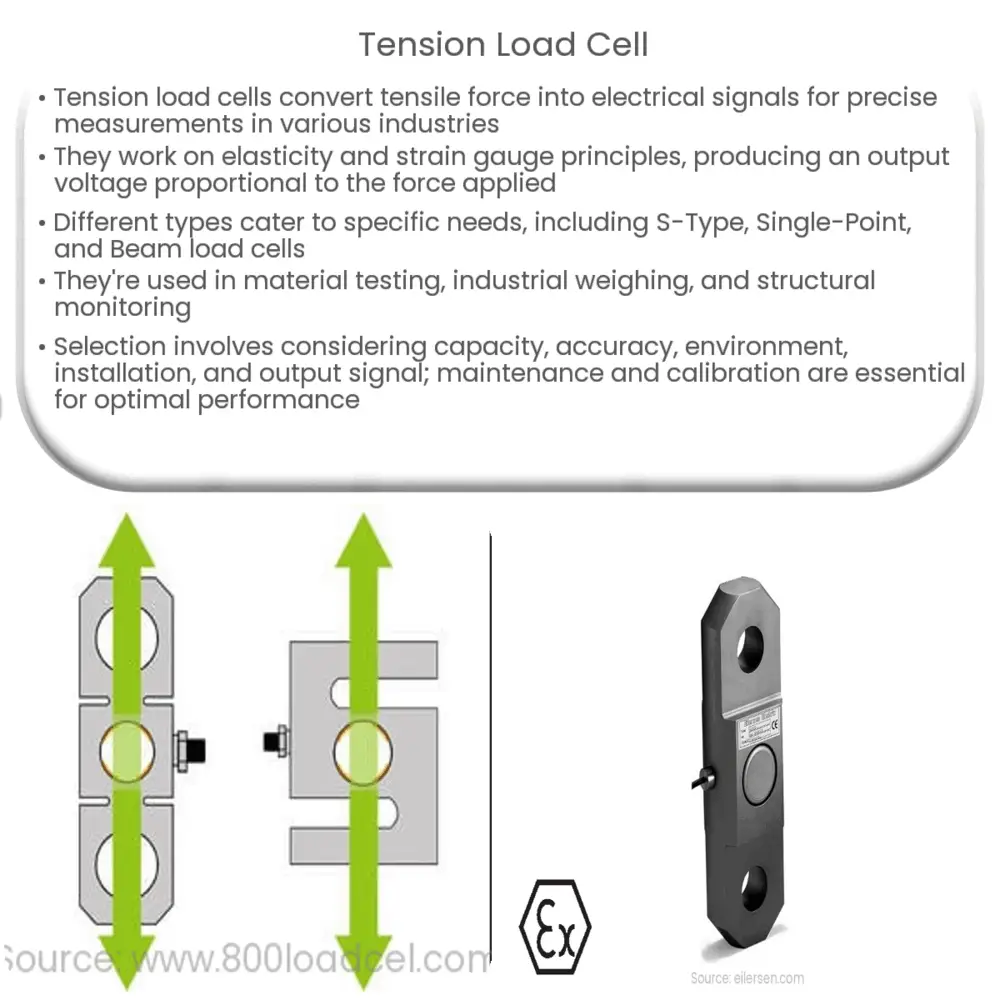
Tension Load Cell: Principles, Applications, and Selection
Introduction
A tension load cell is an essential component in various industries and applications that require precise measurements of tensile forces. These force transducers convert mechanical force into an electrical signal, allowing for easy monitoring and control of processes. In this article, we will explore the principles behind tension load cells, their applications, and how to select the appropriate type for your specific needs.
Principles of Tension Load Cells
Tension load cells rely on the principle of elasticity and strain gauge technology to measure force. When a force is applied to the load cell, it causes deformation in the sensing element, typically a metal spring element. This deformation results in a change in the electrical resistance of strain gauges attached to the element. The strain gauges are typically connected in a Wheatstone bridge configuration, which produces an output voltage proportional to the applied force.
The relationship between the applied force and output voltage is linear within the load cell’s specified range, allowing for accurate measurements. The output signal is typically amplified, filtered, and processed by a signal conditioning unit or a data acquisition system to display or record the force in engineering units, such as Newtons or pounds.
Types of Tension Load Cells
There are several types of tension load cells, each designed to cater to specific applications and requirements. Some common types include:
- S-Type Load Cells: These are versatile load cells with a compact design that can handle both tension and compression forces. They are widely used in material testing, crane scales, and industrial weighing applications.
- Single-Point Load Cells: Designed for off-center load measurements, single-point load cells are primarily used in platform scales and other weighing applications with limited space or where the load may not be applied uniformly.
- Beam Load Cells: These load cells are typically used in high-capacity applications, such as truck scales and silo weighing systems, where they provide reliable and accurate force measurements under heavy loads.
Applications of Tension Load Cells
Tension load cells find applications in a wide variety of industries and settings, including:
- Material Testing: Tension load cells are used to measure tensile strength, elongation, and other mechanical properties of materials, such as metals, plastics, and composites, in tensile testing machines.
- Industrial Weighing: They are used in crane scales, silo and tank weighing systems, and conveyor belt scales to ensure accurate and consistent weight measurements.
- Structural Monitoring: Tension load cells are employed to monitor the forces acting on structures, such as bridges and buildings, helping to assess their safety and performance.
- Capacity: Select a load cell with a capacity that matches the maximum force expected in your application. It’s advisable to choose a load cell with a slightly higher capacity than required to ensure the best performance and prevent overloading.
- Accuracy: Consider the desired accuracy of your measurements. Load cell accuracy is typically expressed as a percentage of the full-scale output. Select a load cell with an accuracy that meets or exceeds the requirements of your application.
- Environment: The operating environment can significantly impact the performance of a load cell. Consider factors such as temperature, humidity, and potential exposure to chemicals or corrosion, and choose a load cell with appropriate environmental protection.
- Mounting and Installation: Select a load cell that is compatible with your mounting requirements and available space. Consider the necessary hardware and accessories to ensure proper installation and operation.
- Output Signal: Load cells are available with various output signals, such as analog voltage, current, or digital signals. Choose an output type that is compatible with your data acquisition or control system.
- Visual Inspection: Regularly inspect the load cell for signs of damage, corrosion, or wear. Replace damaged or worn components as needed.
- Cleaning: Keep the load cell clean and free from debris or contaminants that could affect its performance. Use a soft brush or cloth to remove dirt and dust, and avoid using harsh chemicals that could damage the load cell or strain gauges.
- Electrical Connections: Check and maintain the electrical connections to ensure proper signal transmission between the load cell and the data acquisition or control system.
Selection Criteria for Tension Load Cells
Choosing the right tension load cell for your application requires consideration of several factors, including:
Maintaining and Calibrating Tension Load Cells
Regular maintenance and calibration of tension load cells are essential to ensure accurate and reliable performance. Maintenance tasks include:
Calibration of tension load cells should be performed periodically, typically once a year, or as required by your application. Calibration involves applying known forces to the load cell and adjusting its output to ensure it provides accurate and repeatable measurements. Calibration should be performed by trained personnel or specialized service providers to ensure accurate results.
Conclusion
Tension load cells are vital components in various applications requiring precise force measurement. Understanding their principles, applications, and selection criteria is essential for choosing the right load cell for your specific needs. Regular maintenance and calibration will ensure accurate and reliable performance, ultimately enhancing the efficiency and safety of your processes.



