
How do DC motors work?
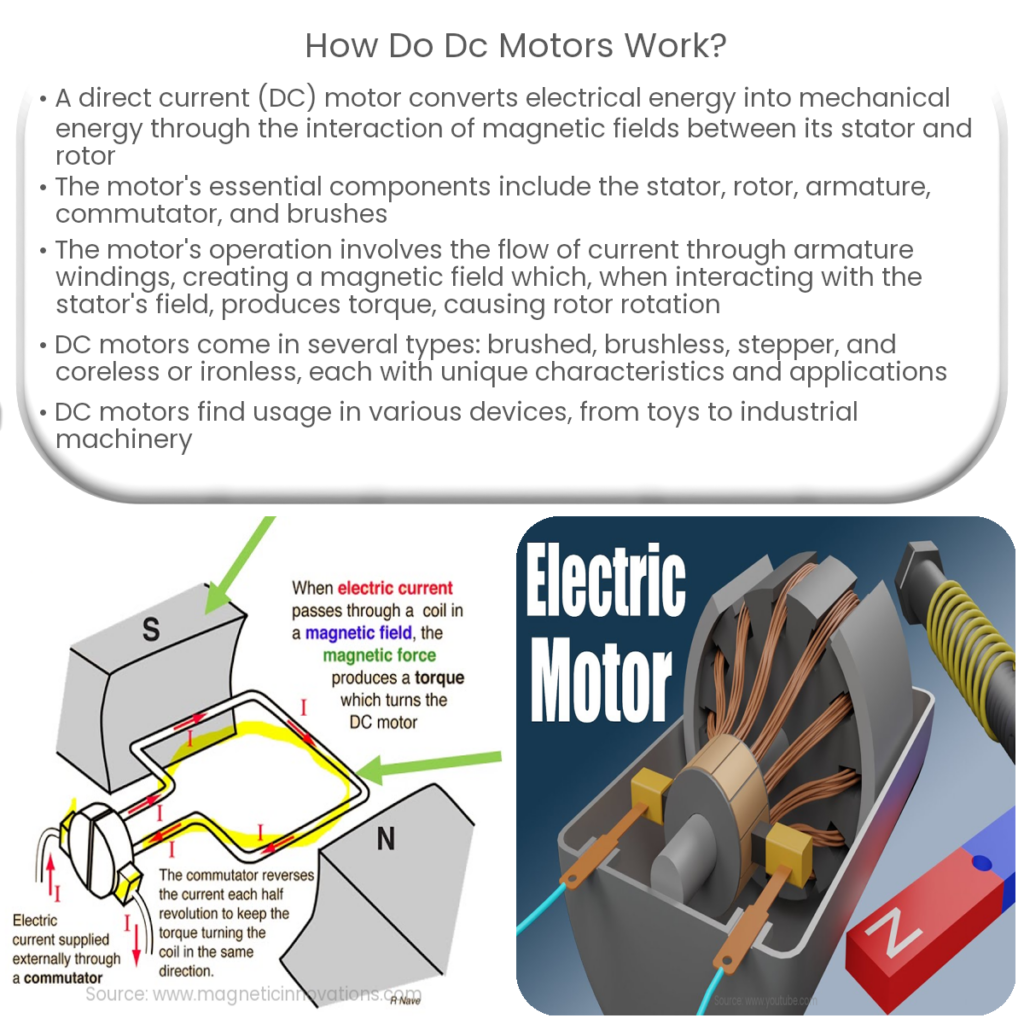
DC motors work by converting electrical energy into mechanical energy through the interaction of magnetic fields produced by the stator and rotor.
DC motors work by converting electrical energy into mechanical energy through the interaction of magnetic fields produced by the stator and rotor.

Mechanical relays have moving parts, while solid-state relays use electronic components. SSRs offer faster switching, longer life, and better resistance.

Relays are used in various applications, including industrial automation, automotive systems, home automation, security systems, communication, test equipment, power distribution, and control panels.

Voltage regulators are used in power supplies, battery charging, automotive electronics, communication devices, consumer electronics, medical equipment, renewable energy systems, and industrial control systems.

A relay is an electromechanical switch that allows a low-power control signal to control a high-power circuit, used in industrial, automotive, and home applications.
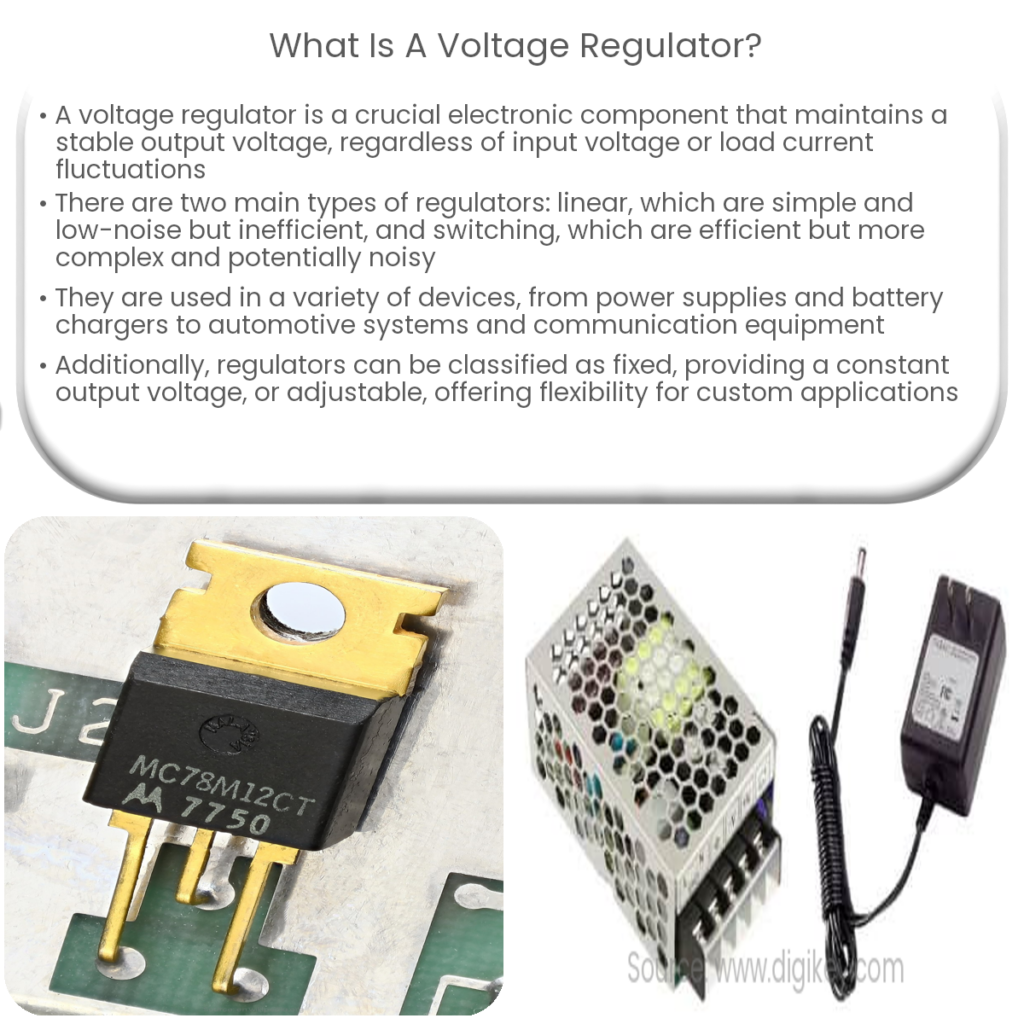
A voltage regulator is an electronic component that maintains a consistent output voltage, protecting devices from voltage fluctuations and ensuring stability.

Linear regulators maintain voltage using a series-pass transistor, while switching regulators use high-frequency switching elements for higher efficiency.
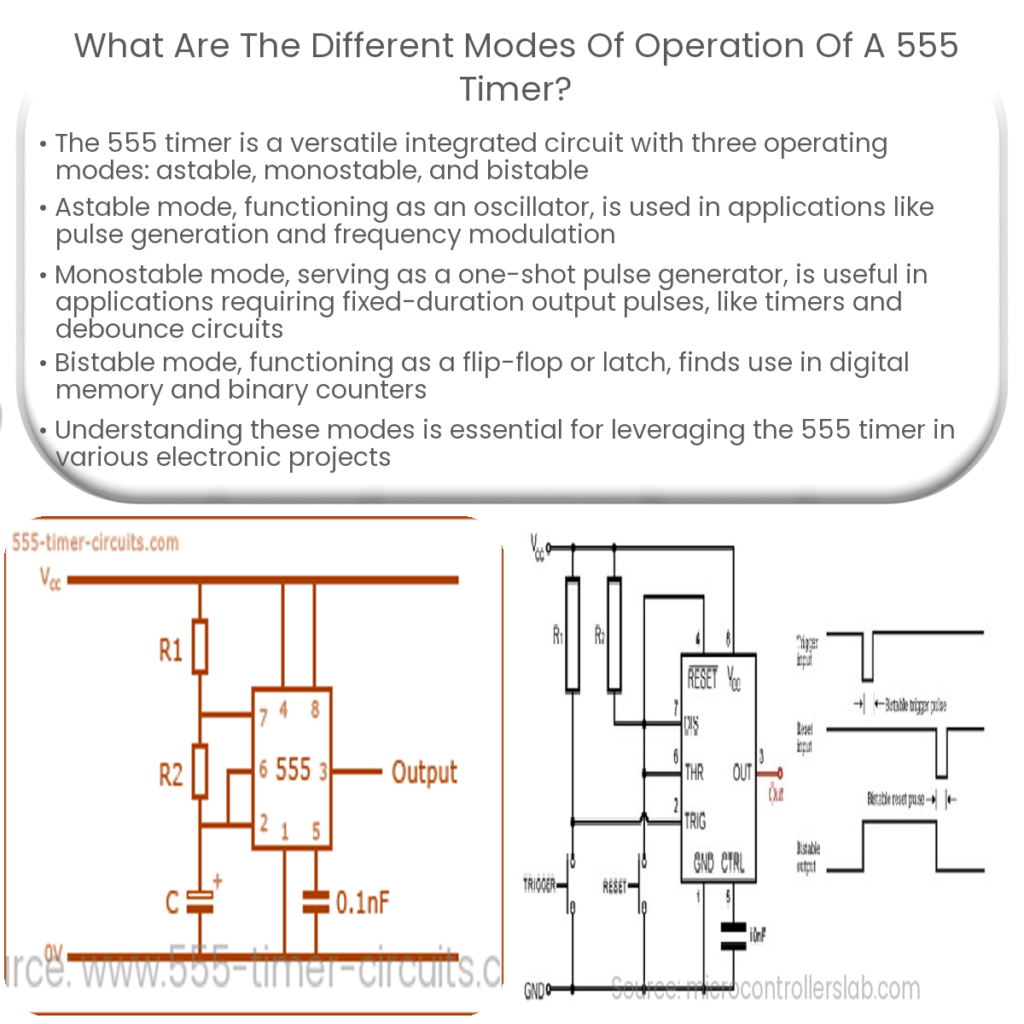
The 555 timer operates in three main modes: monostable mode (one-shot pulse generator), astable mode (oscillator), and bistable mode (flip-flop).

Calculate frequency with f = 1.44 / ((R1 + 2 * R2) * C) and duty cycle with D = (R1 + R2) / (R1 + 2 * R2) * 100% for a 555 timer in astable mode.
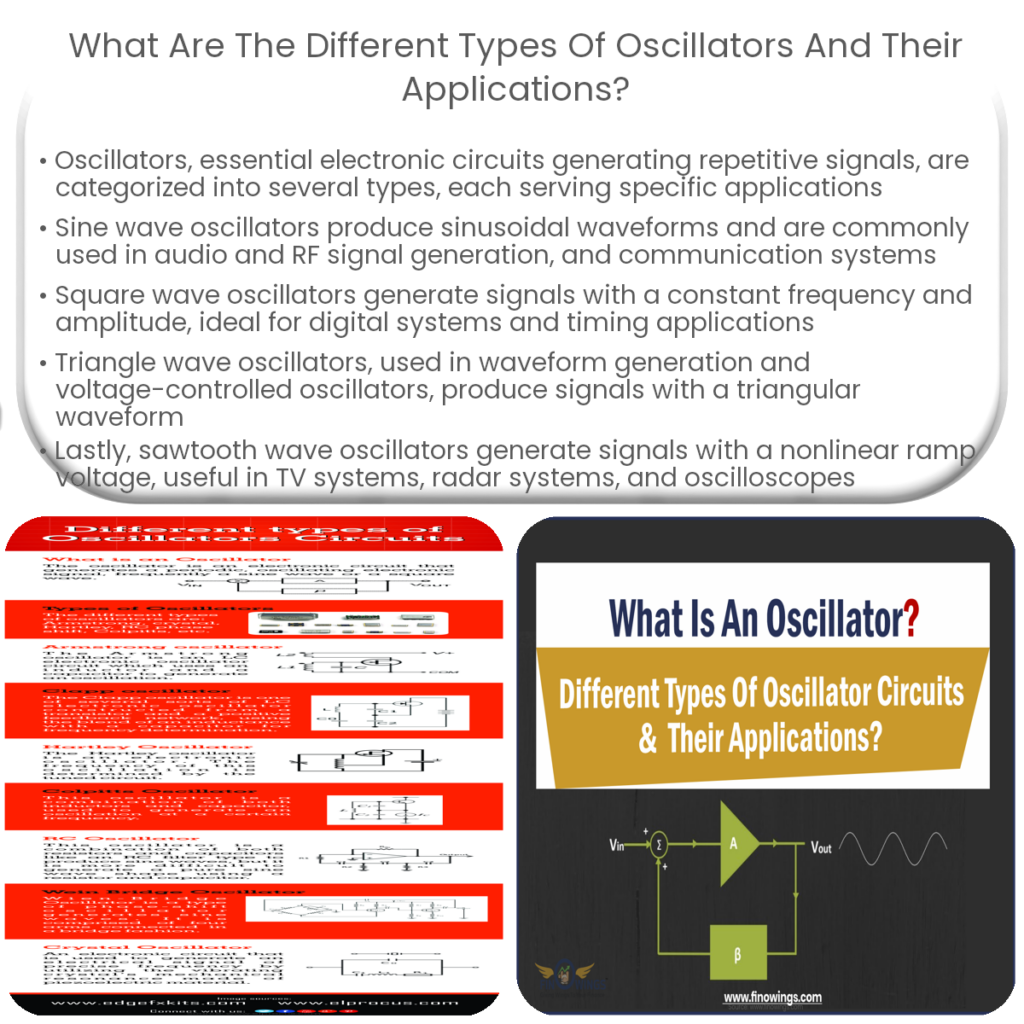
Oscillators are electronic circuits that produce repetitive signals. Types include sine, square, triangle, and sawtooth wave oscillators, each with specific applications.

The primary purpose of this project is to help the public to learn some exciting and important information about electricity and magnetism.
Our Website follows all legal requirements to protect your privacy. Visit our Privacy Policy page.
The Cookies Statement is part of our Privacy Policy.
The information contained on this website is for general information purposes only. This website does not use any proprietary data. Visit our Editorial note.
It’s simple:
1) You may use almost everything for non-commercial and educational use.
2) You may not distribute or commercially exploit the content, especially on another website.
