
Pulse Width Modulation (PWM) circuits
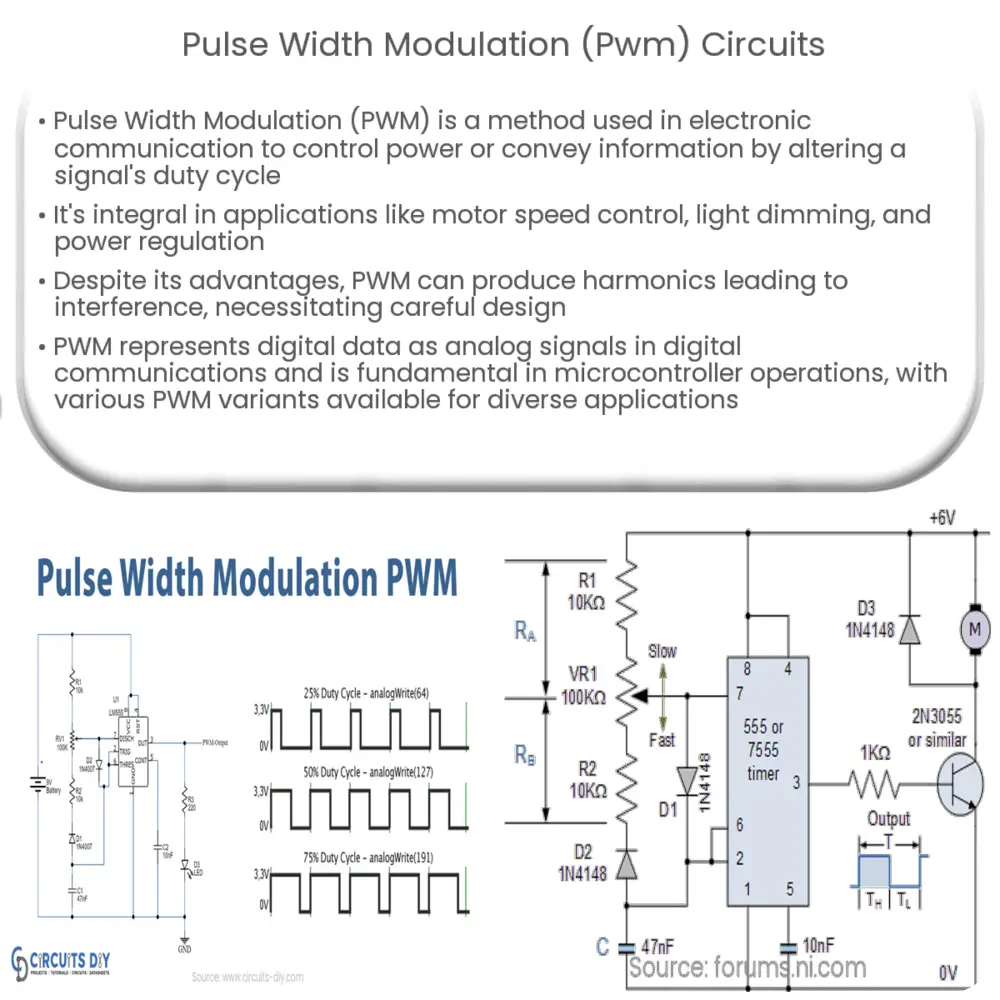
Explore Pulse Width Modulation (PWM) – its principles, applications, benefits, challenges, role in digital communication, and microcontrollers.
Explore Pulse Width Modulation (PWM) – its principles, applications, benefits, challenges, role in digital communication, and microcontrollers.
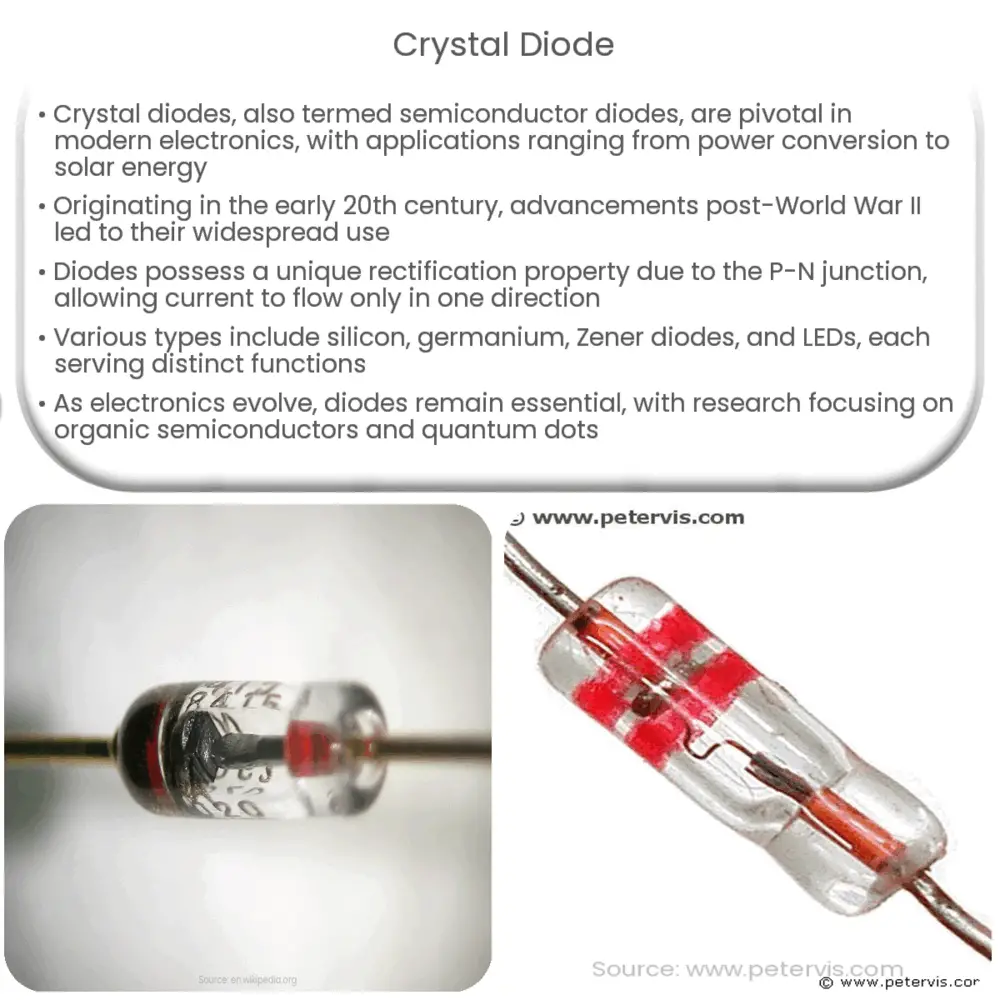
A crystal diode is a semiconductor device that allows current to flow in one direction, used in various electronic applications like rectifiers and LEDs.

Point contact diodes are simple semiconductor devices that allow current flow in one direction, used in radio detection, signal mixing, and pulse shaping.
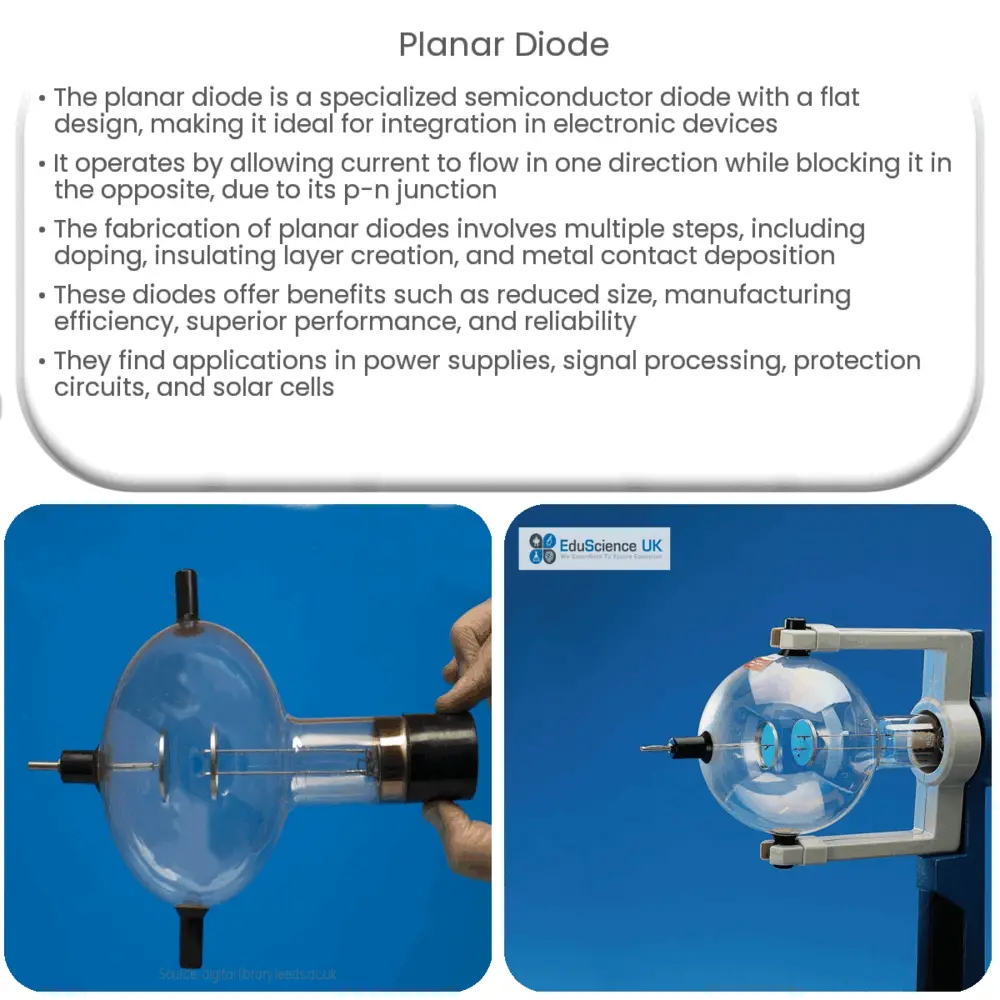
A planar diode is a thin, flat semiconductor diode with enhanced performance, used in applications like power supplies and signal processing.

The Gunn diode is a compact semiconductor device that generates and amplifies microwave frequencies, widely used in radar and communication systems.

The IMPATT diode is a high-power semiconductor device used for microwave generation in communication systems, radar systems, and electronic warfare.

The TRAPATT diode is a high-power semiconductor device used in microwave applications, known for its high efficiency and compact size.

A Silicon Controlled Rectifier (SCR) is a robust, high-voltage semiconductor device used for efficient power control in various applications.

The Shockley diode is a 4-layer semiconductor device with unique switching properties, used in voltage regulation and protection applications.

Explore the principles of Pulse Position Modulation (PPM), its advantages, limitations, applications, and future prospects in this detailed guide.

The primary purpose of this project is to help the public to learn some exciting and important information about electricity and magnetism.
Our Website follows all legal requirements to protect your privacy. Visit our Privacy Policy page.
The Cookies Statement is part of our Privacy Policy.
The information contained on this website is for general information purposes only. This website does not use any proprietary data. Visit our Editorial note.
It’s simple:
1) You may use almost everything for non-commercial and educational use.
2) You may not distribute or commercially exploit the content, especially on another website.
