
Force Sensitive Touchscreen
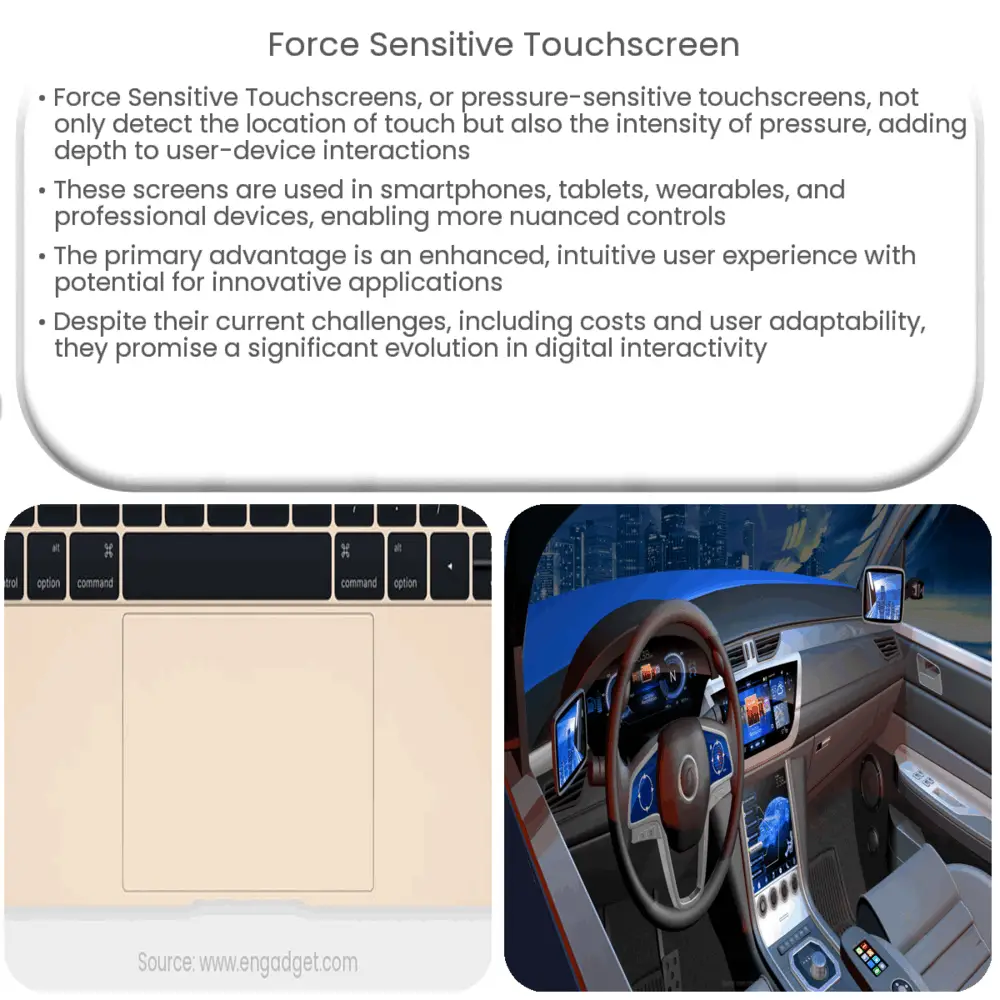
Explore the evolution of Force Sensitive Touchscreens, their working principle, applications, benefits, challenges, and future perspectives.
Explore the evolution of Force Sensitive Touchscreens, their working principle, applications, benefits, challenges, and future perspectives.

Explore the evolution, impact, and future of Multi-Touch Touchscreen technology. Discover its applications and potential in our digital world.

Explore the intricacies of single-touch touchscreen technology, its working mechanisms, pros and cons, applications, and future prospects.
Explore the vital role of EMI/RFI filters in electronic circuit design, their types, components, and importance in ensuring device reliability.

Explore the world of inductive touch sensors, their working principle, benefits, applications, and future trends in our comprehensive guide.

Explore the world of photovoltaic touch sensors – their design, benefits, challenges, advancements, and various applications.

Explore the world of electromagnetic touch sensors, their operating principles, applications, and future prospects in our detailed guide.

Explore the workings of ultrasonic touch sensors, their applications, advantages, disadvantages, and future potential in our detailed guide.

Explore the fundamentals of Projected Capacitive Touch (PCT) technology, its advantages, applications, and its role in modern touch-based devices.

Explore the world of flexible touch sensors, their types, applications, future trends, challenges, and their role in the IoT.

The primary purpose of this project is to help the public to learn some exciting and important information about electricity and magnetism.
Our Website follows all legal requirements to protect your privacy. Visit our Privacy Policy page.
The Cookies Statement is part of our Privacy Policy.
The information contained on this website is for general information purposes only. This website does not use any proprietary data. Visit our Editorial note.
It’s simple:
1) You may use almost everything for non-commercial and educational use.
2) You may not distribute or commercially exploit the content, especially on another website.
