
Explore the world of photovoltaic touch sensors – their design, benefits, challenges, advancements, and various applications.
Introduction to Photovoltaic Touch Sensors
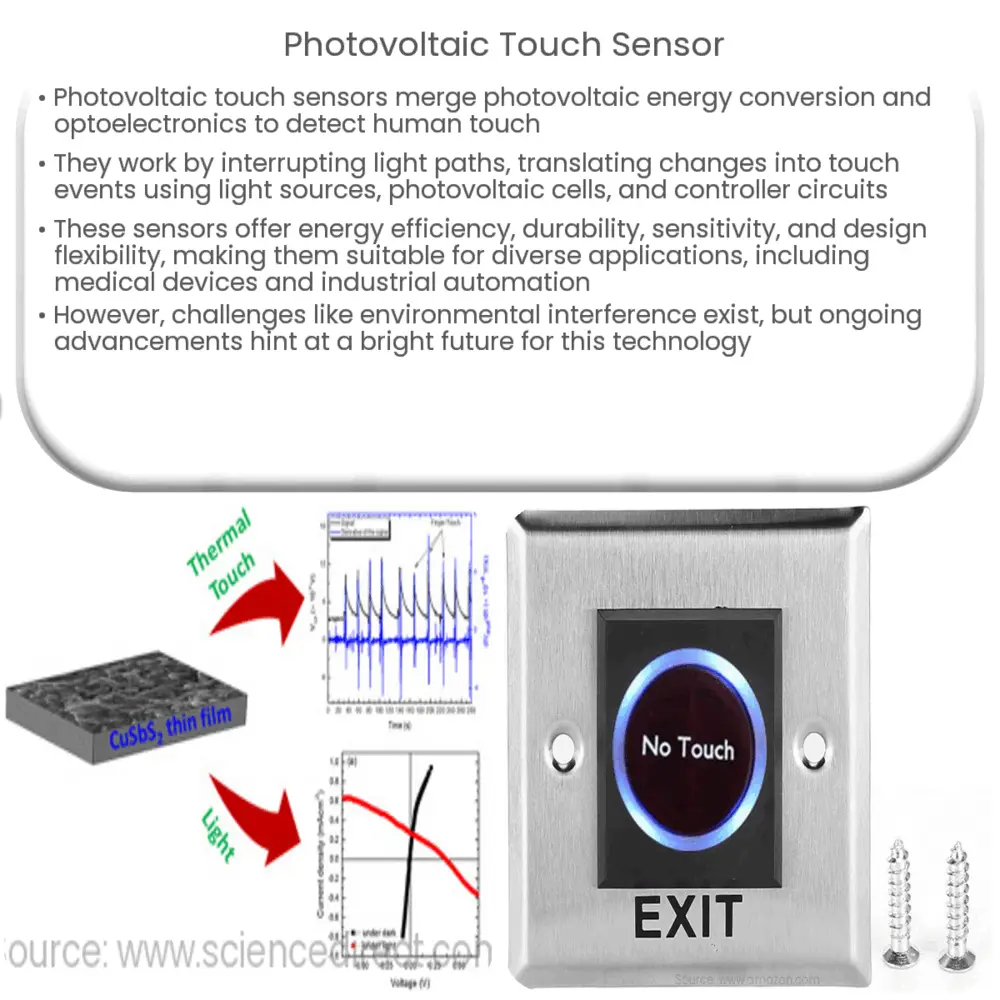
The application of photovoltaics in sensing technologies has led to the emergence of photovoltaic touch sensors. These unique devices harness the principles of photovoltaic energy conversion and optoelectronics to detect and respond to the presence of a human touch.
Concept of Photovoltaic Touch Sensors
A photovoltaic touch sensor operates based on the principle of light interference. The sensor is equipped with a light source and a photovoltaic cell. When a user’s finger approaches or touches the sensor surface, it interrupts the light path, causing a change in the light received by the photovoltaic cell. This change is then translated into an electrical signal, indicating a touch event.
Design and Construction
- Light Source: Infrared LEDs are commonly used due to their invisible light and high efficiency.
- Photovoltaic Cell: This component converts the light from the LED into electrical energy. Silicon-based photovoltaic cells are popular for their high responsiveness and energy conversion efficiency.
- Controller Circuit: This interprets the change in light intensity into a touch event.
Features and Benefits of Photovoltaic Touch Sensors
- Energy Efficiency: Photovoltaic touch sensors utilize the energy from the light source effectively, making them highly energy-efficient.
- Durability: As there are no moving parts, these sensors exhibit long lifespans and high reliability.
- Sensitivity: They are highly responsive and can detect even the slightest touch or proximity changes.
- Flexibility: They can be incorporated into a wide range of designs and applications due to their compact and versatile nature.
From smart home appliances to advanced medical devices, photovoltaic touch sensors have found their place in numerous applications. Their innovative approach to touch sensing not only enhances device functionality but also contributes to energy efficiency.
Challenges and Future Prospects
Despite the exciting prospects, photovoltaic touch sensors face some challenges. For instance, false touch events caused by environmental factors such as ambient light and shadows can affect sensor accuracy. Furthermore, the adoption of this technology requires careful design considerations to ensure optimal performance and reliability.
Yet, with ongoing advancements in photovoltaic technology and optoelectronics, the future of photovoltaic touch sensors seems promising. The potential for further miniaturization, improved sensitivity, and integration with other technologies could expand their use in a broader range of applications, from wearable tech to industrial automation.
Advancements in Photovoltaic Touch Sensors
The field of photovoltaic touch sensors is rapidly advancing, with researchers and engineers continuously exploring ways to overcome the challenges and limitations of this technology. Enhancements in light source technology, photovoltaic cells, and the integration of artificial intelligence are a few areas that have received significant attention.
- Light Source Technology: The development of more efficient and longer-lasting light sources can improve the overall performance and lifespan of photovoltaic touch sensors.
- Photovoltaic Cells: Innovations in photovoltaic technology, particularly in improving conversion efficiency and reducing the size of cells, can further enhance the application potential of these sensors.
- Artificial Intelligence Integration: The integration of AI can enhance the sensor’s ability to discriminate between intended and unintended touches, improving their reliability and functionality.
Applications in Various Fields
As the technology continues to evolve, the applications of photovoltaic touch sensors extend beyond consumer electronics. They are now finding their way into other fields such as:
- Medical Devices: In wearable devices for health monitoring, these sensors can provide touch-based user interfaces while keeping energy consumption to a minimum.
- Industrial Automation: The sensors’ high sensitivity and durability make them suitable for use in harsh environments.
- Automotive Industry: Their compactness and flexibility make them ideal for integration in car control systems.
Conclusion
In conclusion, photovoltaic touch sensors represent a revolutionary intersection of photovoltaic technology and touch sensing. Their unique design, high energy efficiency, and versatility have made them increasingly popular in various sectors. While challenges remain, ongoing advancements suggest a promising future for this technology, with potential for further improvements in performance, sensitivity, and applicability. The continuous evolution of photovoltaic touch sensors is poised to drive significant transformations in how we interact with technology in our daily lives.



