
Explore the world of solar generators: Understand their working, advantages, and considerations. Learn why they are a worthwhile investment for a sustainable future.
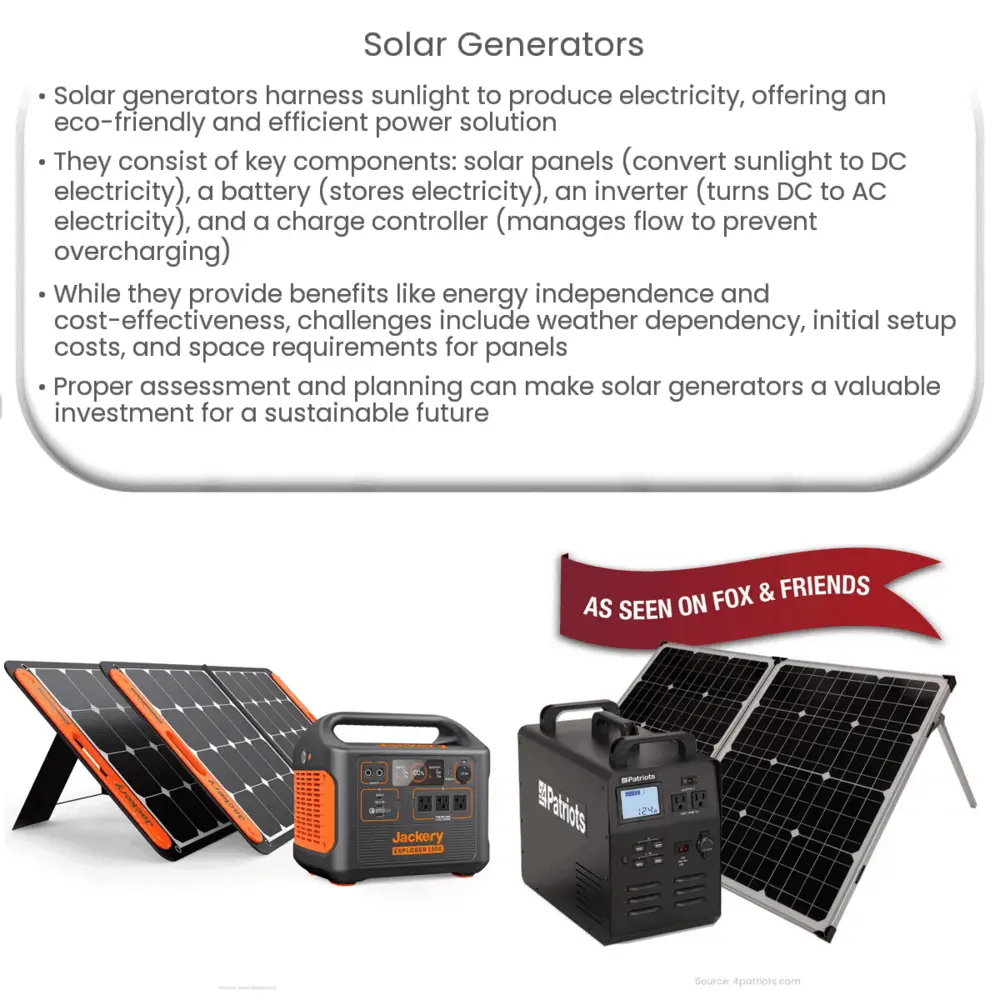
Introduction to Solar Generators
A shift towards renewable energy is no longer a thing of the future – it is happening here and now. Amidst various renewable energy technologies, solar generators have emerged as one of the most effective and popular solutions. But what exactly are solar generators, and how do they function?
Understanding Solar Generators
Solar generators are power solutions that use sunlight – a free and inexhaustible source of energy – to produce electricity. Unlike conventional generators that run on fossil fuels like petrol or diesel, solar generators harness the power of the sun using a series of components that work together to generate, store, and deliver electricity.
The Components of a Solar Generator
- Solar Panels: This is the most visible part of a solar generator. It absorbs sunlight and converts it into direct current (DC) electricity.
- Battery: The generated electricity is stored in the battery for later use, especially when sunlight is not available.
- Inverter: It converts the DC electricity from the solar panel or the battery into alternating current (AC) electricity, which most home appliances use.
- Charge Controller: This device manages the flow of electricity from the solar panels to the battery, preventing overcharging.
The beauty of a solar generator lies in its simplicity, efficiency, and eco-friendliness. The system operates without any noise or harmful emissions, and the primary source of energy – sunlight – is unlimited and free of charge.
Advantages of Solar Generators
- Eco-friendly: Solar generators produce clean, renewable energy, reducing our reliance on fossil fuels and contributing to the fight against climate change.
- Cost-effective: While the upfront cost can be high, solar generators are a long-term investment. After installation, the operational costs are minimal as sunlight is free. Also, maintenance costs are typically low.
- Energy Independence: With a solar generator, you’re not dependent on the power grid or fuel supply. This can be particularly beneficial in remote locations or during power outages.
Drawbacks and Considerations
Despite the myriad of benefits, solar generators do have certain limitations that need to be considered. Among them, weather dependency, initial setup cost, and space requirements for solar panels are the most prominent.
Weather Dependency
Solar generators are dependent on sunlight, which can be a challenge during cloudy or rainy days. However, with efficient energy management and the use of high-capacity batteries, this challenge can be mitigated. Some solar generators come with hybrid options that can use grid electricity or another generator as a backup.
Initial Setup Cost
The initial investment for a solar generator can be substantial, depending on the capacity of the system. However, it’s important to see this as a long-term investment. Over time, the cost savings from not having to purchase fuel, combined with low maintenance costs and potential energy bill savings, usually outweigh the initial expenditure.
Space Requirement for Solar Panels
- Residential Applications: In residential settings, the roof is usually the best place for solar panel installation. However, not all roofs are suitable. The solar panels require ample sun exposure and must be installed at an optimal angle.
- Commercial and Industrial Applications: In commercial and industrial applications, more extensive space is required. Large-scale solar generators need substantial square footage for solar panel installation, which can be a challenge in urban or densely populated areas.
Conclusion
Despite certain challenges, solar generators represent a remarkable step forward in harnessing renewable energy. The shift towards cleaner, sustainable power sources is not only crucial in combating climate change but also presents a significant opportunity for energy independence and long-term savings. Whether you’re a homeowner looking to offset your energy bills, or a business aiming to reduce your carbon footprint, solar generators are an investment in a sustainable future.
The key to successfully implementing a solar generator is to assess your energy needs accurately, understand the initial investment required, and consider the physical and environmental conditions of your location. Solar energy is not a one-size-fits-all solution, but with the right planning and consideration, it can be a highly effective and rewarding choice.



