
Soft potentiometers are flexible, lightweight sensors that detect position, pressure, and movement, revolutionizing industries like medical, sports, and wearables.
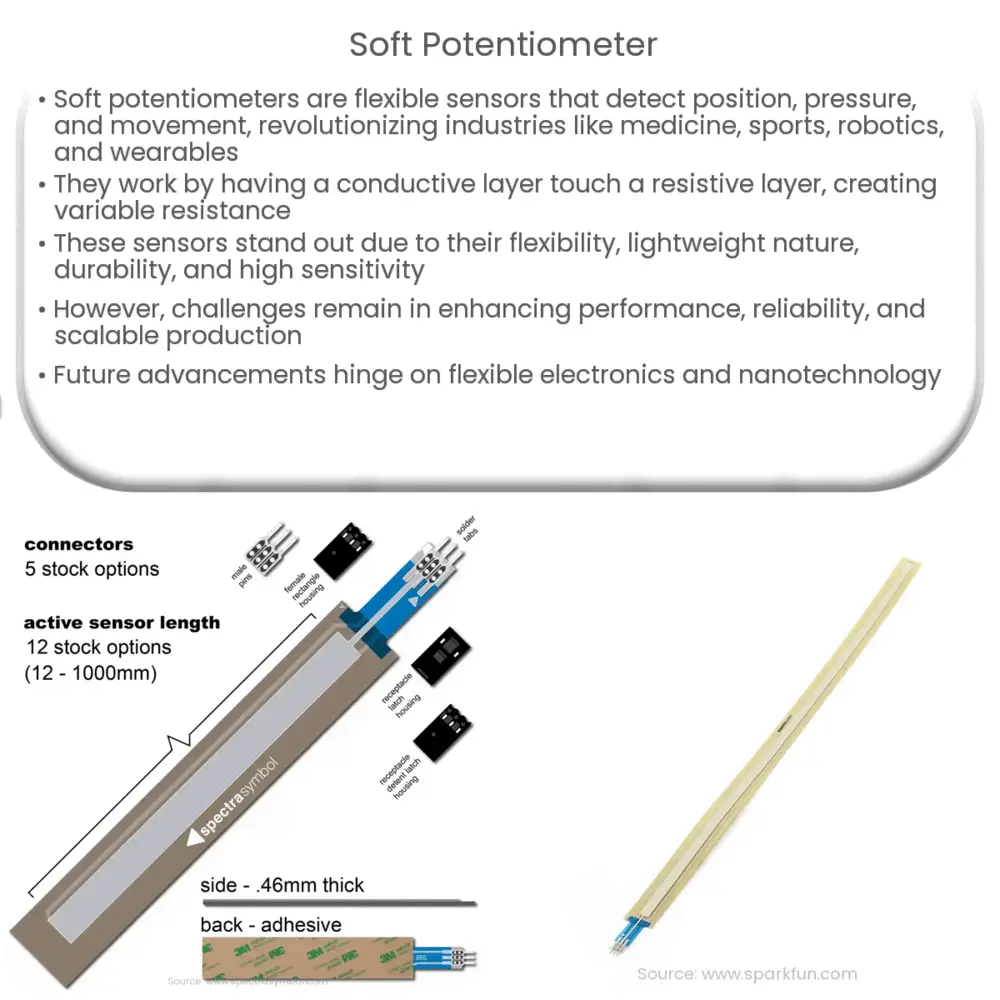
Soft Potentiometer: An Innovative Sensor Technology
Introduction
Soft potentiometers, also known as soft potentiometer sensors or fabric potentiometers, are a groundbreaking development in the field of electronics and sensing technology. They are flexible, wearable, and lightweight devices that can detect position, pressure, and movement. These sensors have opened up a new world of possibilities in various industries, including medical, sports, robotics, and wearable technology. In this article, we will explore the working principles, applications, and advantages of soft potentiometer technology.
Working Principle of Soft Potentiometers
Soft potentiometers operate on the same basic principles as traditional potentiometers, but they are made from flexible, conductive materials like fabric, polymer, or silicone. The sensor consists of two layers: a resistive layer and a conductive layer. The resistive layer is made of a soft, flexible material with a known electrical resistance, while the conductive layer is made of a similar material with a lower resistance.
When pressure is applied to the sensor, the conductive layer comes into contact with the resistive layer, creating a variable resistance across the device. The position of the pressure point on the sensor determines the ratio of resistances between the top and bottom layers. By measuring the voltage across the device, the position, pressure, or movement can be accurately determined.
Applications of Soft Potentiometers
Soft potentiometers have found applications in various fields due to their unique properties and flexibility. Some of the most prominent applications include:
- Medical: Soft potentiometers can be used to monitor body movements, postures, and vital signs in patients. They can be integrated into smart clothing, wearable devices, or even medical implants to provide real-time feedback on patient health and recovery.
- Sports: Athletes can benefit from soft potentiometer technology by incorporating it into their training gear. These sensors can provide valuable data on body movements, performance, and fatigue levels, helping athletes optimize their training and prevent injuries.
- Robotics: Soft potentiometers have the potential to revolutionize the field of robotics by providing a more sensitive and accurate means of measuring joint angles and force exerted by robotic limbs. This could lead to the development of more advanced and responsive robotic systems.
- Wearable Technology: As wearable technology continues to advance, soft potentiometers can be integrated into various devices, such as smartwatches, fitness trackers, and smart clothing, to enhance their functionality and provide a more comfortable user experience.
Advantages of Soft Potentiometers
Soft potentiometers offer several advantages over traditional potentiometers and other sensing technologies. Some of these benefits include:
- Flexibility: The soft and flexible nature of these sensors allows them to be easily integrated into various applications, including wearable devices, textiles, and robotics.
- Lightweight: Due to the use of flexible materials, soft potentiometers are lightweight, making them ideal for wearable technology and reducing the overall weight of electronic devices.
- Durability: Soft potentiometers are less prone to mechanical wear and tear compared to traditional potentiometers, as they do not rely on moving parts. This results in a longer lifespan and reduced maintenance requirements.
- High Sensitivity: These sensors can detect small changes in position, pressure, or movement, making them suitable for various applications where high sensitivity is required.
- Customizability: Soft potentiometers can be easily tailored to specific applications and requirements by adjusting the size, shape, and materials used in their construction.
Challenges and Future Developments
Despite the numerous advantages and promising applications, soft potentiometers still face some challenges. One of the primary issues is the need for further research and development to improve the overall performance, reliability, and durability of these sensors. Additionally, the manufacturing process can be complex, and scaling up production may prove to be a challenge.
Future developments in soft potentiometer technology are expected to focus on overcoming these challenges and expanding the range of applications. Researchers are exploring the use of novel materials and fabrication techniques to enhance the performance and durability of these sensors. Advances in flexible electronics and nanotechnology may also play a crucial role in the development of next-generation soft potentiometers.
Conclusion
Soft potentiometers represent an innovative and versatile sensing technology that has the potential to revolutionize various industries, from medical to wearable technology. The flexibility, lightweight nature, and high sensitivity of these sensors make them ideal for a wide range of applications. As research and development in this field continue to progress, we can expect to see even more exciting advances and applications for soft potentiometer technology in the future.



